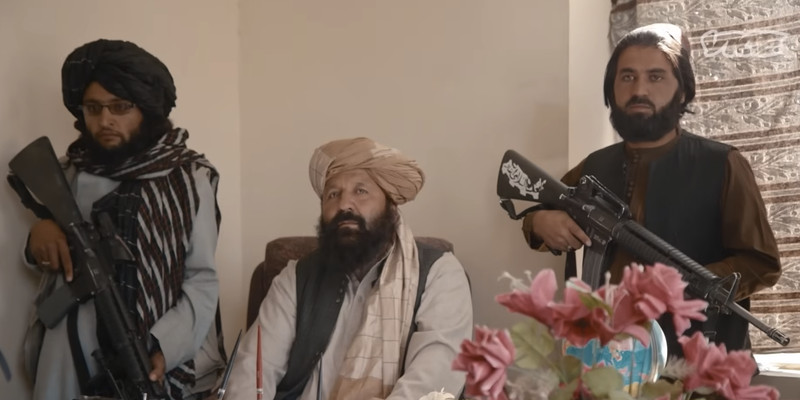

The Taliban has issued a new legal decree outlining rules for marriage, divorce, and family disputes, including provisions involving child brides and so-called “virgin girls,” according to reports from Afghan media.
The 31-article regulation titled “Principles of Separation Between Spouses” was approved by Taliban Supreme Leader Hibatullah Akhundzada and published in the regime’s official gazette in mid-May, according to the outlet.
Under the new rules, girls who are married as minors are will be permitted to seek annulment only after reaching puberty, and only if a Taliban court grants approval. The decree also states that the silence of a “virgin girl” may be interpreted as consent to marriage.
The law sets out procedures governing separation between spouses and includes provisions addressing child marriage, missing husbands, forced separation, breastfeeding relations, and adultery allegations.
The regulations place authority over child marriages largely in the hands of fathers and grandfathers. Those marriages may be challenged in some cases if guardians are deemed abusive, mentally unfit, or morally corrupt.
Reports from human rights groups say families facing severe poverty in Afghanistan have arranged marriage deals involving infant girls in exchange for money or debt relief.
According to advocacy group Girls Not Brides, nearly one-third of Afghan girls are married before age 18. Human rights groups have also reported that child brides can be exchanged for sums ranging from $500 to $3,000.
Since returning to power in August 2021, the Taliban has introduced a series of restrictions on women and girls, including limits on education, employment, and public movement. Organizations including Amnesty International have described the system as gender apartheid.
GB News reported that Taliban legal rules do not explicitly prohibit sexual or psychological violence against women, and that husbands may physically discipline wives if no visible bodily injury is left.
"Child marriage is not marriage in any meaningful sense. A child cannot properly consent, and treating silence as consent is dangerous because it removes a girl’s voice completely,” political commentator Fahima Mahomed told the outlet.
“As a Muslim, I would also strongly reject the idea that this reflects Islam as a whole. The Qur’an itself speaks against compulsion and mistreatment of women, so the Taliban’s position should not be presented as ‘Islamic law’ in a broad sense.
“It is their political and extremist interpretation, enforced through power and fear.”
The 31-article regulation titled “Principles of Separation Between Spouses” was approved by Taliban Supreme Leader Hibatullah Akhundzada and published in the regime’s official gazette in mid-May, according to the outlet.
Under the new rules, girls who are married as minors are will be permitted to seek annulment only after reaching puberty, and only if a Taliban court grants approval. The decree also states that the silence of a “virgin girl” may be interpreted as consent to marriage.
The law sets out procedures governing separation between spouses and includes provisions addressing child marriage, missing husbands, forced separation, breastfeeding relations, and adultery allegations.
The regulations place authority over child marriages largely in the hands of fathers and grandfathers. Those marriages may be challenged in some cases if guardians are deemed abusive, mentally unfit, or morally corrupt.
Reports from human rights groups say families facing severe poverty in Afghanistan have arranged marriage deals involving infant girls in exchange for money or debt relief.
According to advocacy group Girls Not Brides, nearly one-third of Afghan girls are married before age 18. Human rights groups have also reported that child brides can be exchanged for sums ranging from $500 to $3,000.
Since returning to power in August 2021, the Taliban has introduced a series of restrictions on women and girls, including limits on education, employment, and public movement. Organizations including Amnesty International have described the system as gender apartheid.
GB News reported that Taliban legal rules do not explicitly prohibit sexual or psychological violence against women, and that husbands may physically discipline wives if no visible bodily injury is left.
"Child marriage is not marriage in any meaningful sense. A child cannot properly consent, and treating silence as consent is dangerous because it removes a girl’s voice completely,” political commentator Fahima Mahomed told the outlet.
“As a Muslim, I would also strongly reject the idea that this reflects Islam as a whole. The Qur’an itself speaks against compulsion and mistreatment of women, so the Taliban’s position should not be presented as ‘Islamic law’ in a broad sense.
“It is their political and extremist interpretation, enforced through power and fear.”