
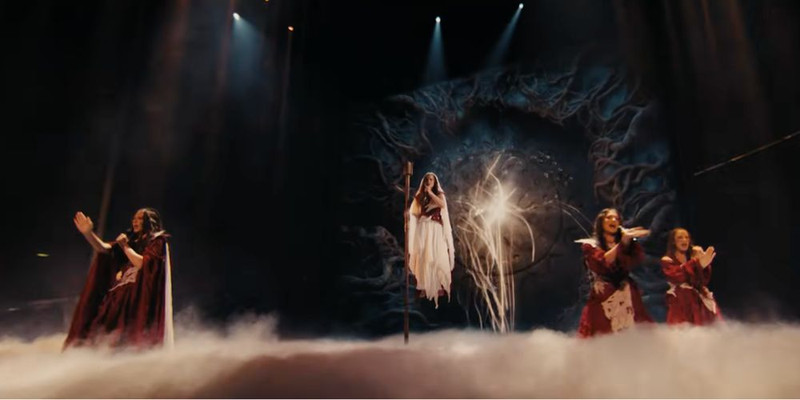

Croatia’s entry for the 2026 Eurovision Song Contest sparked controversy after it included historical themes and imagery that were interpreted by Turkish media outlets as anti-Ottoman and anti-Turkish.
The Croatian ethno-pop group Lelek represented the country at Eurovision 2026 with the song “Andromeda,” which was released by the group in January of this year. The performance drew attention for its references to “sicanje,” a traditional tattooing practice that is associated with Catholic Croatian women during centuries of Ottoman rule. Members of the group were seen with henna tattoos similar to these, which include crosses and other symbolic markings, on their faces and arms.
The song’s lyrics reference war, trauma, and resistance, with lines including: "Why did so many choose the grave? Our mothers did not give birth to slaves.” Another line translates to “Why is history written all over again?”
Turkish media and some on social media criticized the performance and have been pushing back against the song since earlier this year, arguing that its lyrics and visuals were a negative portrayal of Ottoman rule and implied anti-Turkish messaging.
Lelek did not explicitly frame the song as such, however. Some have described the song as representing women’s suffering and cultural survival.
The group represented Croatia at the song contest after winning the country’s Eurovision national final, Dora 2026. Lelek performed the song at the grand final on May 16, with the performance receiving 124 points and finishing in 15th place.