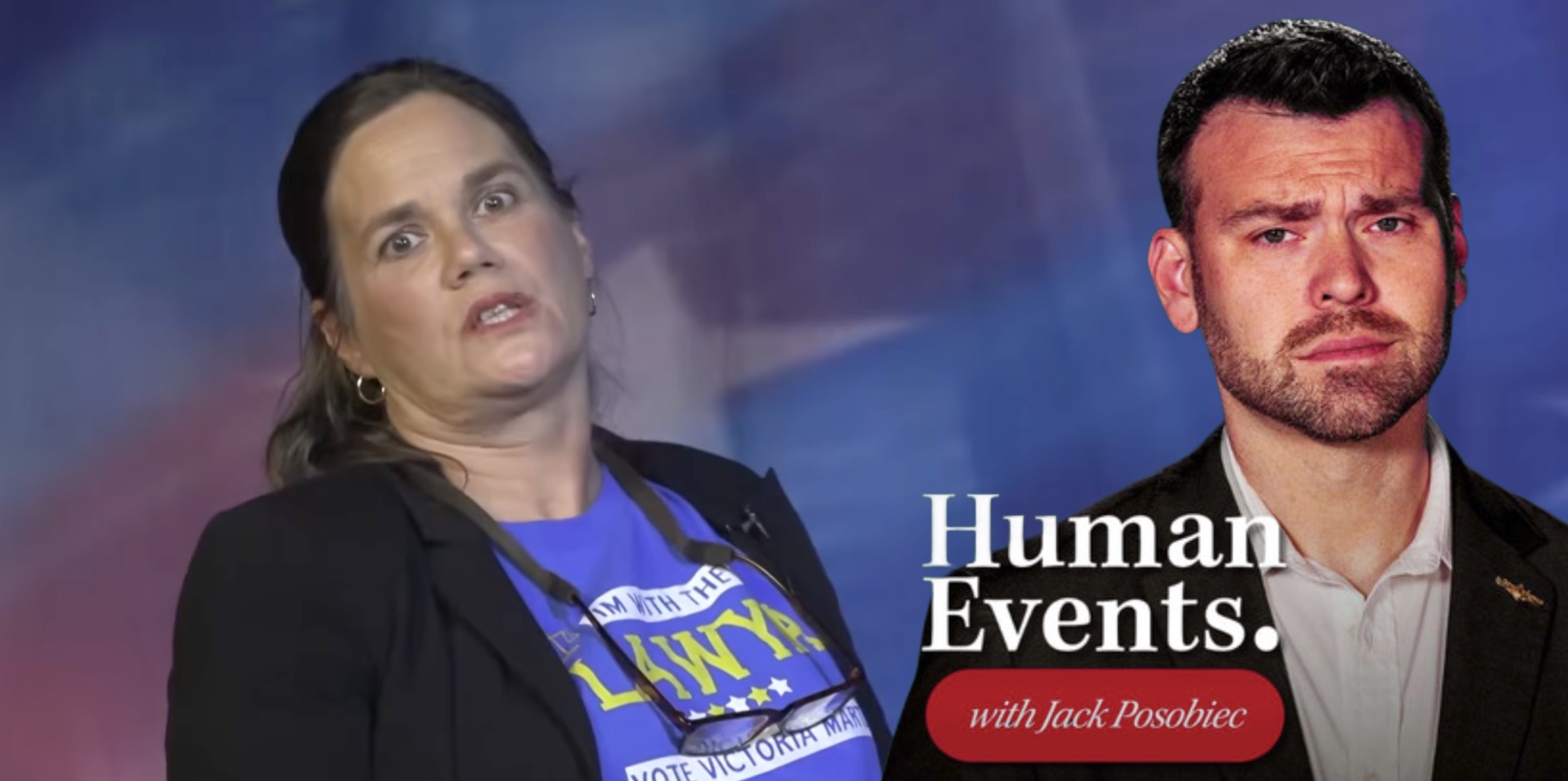


Human Events Daily host Jack Posobiec is launching a three-episode series this week examining US-led regime change efforts and their long-term consequences. The series, titled “Tales of Regime Change,” begins Monday with Afghanistan, continues Tuesday with Iraq, and concludes Wednesday with Ukraine.
Monday’s episode is titled “Tales of Regime Change: Afghanistan — Graveyard of Empires.” The series introduction look at how American foreign policy repeatedly takes part in overseas conflicts with goals and limited understanding of local realities.
"Introducing Tales of Regime Change,” Posobiec said. “Tales of Regime Change is a journey through the modern American habit of wandering into far-off lands with big plans, big budgets, and even bigger blind spots.”
Posobiec said US interventions often begin with the same institutional process. “It always starts with a briefing,” he said. “Crisp suits in the intelligence community, whispering about windows of opportunity, humanitarian obligations, or the chance to shape the region.” He described the framing used by policymakers as consistently optimistic. “The language is polished, the PowerPoints are convincing, and the mission, we’re told, is noble, spreading stability, democracy, liberal order.”
Posobiec said that behind the official language sits a broader assumption about American influence. “Behind the curtain, there’s another engine running,” he said. “The quiet belief that American involvement can always bend the arc of the world toward some vision of globalist liberal hegemony.”
“They’d never call it that,” Posobiec added. “They’d call it maintaining influence, supporting partners, managing outcomes, a soft empire wrapped in the language of progress.” He said that these interventions frequently produce outcomes that policymakers fail to anticipate.
“Every single time the same thing happens,” Posobiec said. “The law of unintended consequences strolls in like it owns the place.”
Monday’s episode focuses on Afghanistan, which Posobiec described as a historical constant for failed imperial ambitions. “Which brings us to episode one, Afghanistan, the graveyard of empires,” he said.
“For generations, Afghanistan has devoured the ambitions of great powers.” Posobiec contrasted American intervention with earlier efforts by other empires. “The British marched in with confidence of empire,” he said. “The Soviets rolled in with tanks and ideology.”
“And the Americans arrived with a cocktail of counterterrorism, nation building, and the belief that we could turn the Hindu Kush into a Jeffersonian democracy project by sheer will and a few trillion dollars.” He said intelligence assessments repeatedly underestimated local realities. “The intelligence briefing said the Taliban would crumble,” Posobiec said. “The analysts predicted we could reshape a tribal warrior society into a centralized government.”
“The architects of liberal order imagined Kabul as the next success story.” Instead, he said, Afghanistan followed its own historical path. “Afghanistan had its own narrative,” Posobiec said. “Ancient, rugged, unyielding.”
“You can enter Afghanistan on your own terms,” he added, “but you do not leave on them.”
Posobiec said the series will rely on original source material. “We’re going to peel back the curtain,” he said. “We’ll sift through the documents, the declassified cables, the speeches, the promises, and the fallout.” He also grounded the series in his own experience. “I’m not just talking about something that I’ve read about in books,” Posobiec said. “I spent a year at Guantanamo Bay in the interrogation cell. I’ve met these people.”
“This is an ideology that I am intimately familiar with,” he added. “Why? Because I was at Gitmo.”
Monday’s episode is titled “Tales of Regime Change: Afghanistan — Graveyard of Empires.” The series introduction look at how American foreign policy repeatedly takes part in overseas conflicts with goals and limited understanding of local realities.
"Introducing Tales of Regime Change,” Posobiec said. “Tales of Regime Change is a journey through the modern American habit of wandering into far-off lands with big plans, big budgets, and even bigger blind spots.”
Posobiec said US interventions often begin with the same institutional process. “It always starts with a briefing,” he said. “Crisp suits in the intelligence community, whispering about windows of opportunity, humanitarian obligations, or the chance to shape the region.” He described the framing used by policymakers as consistently optimistic. “The language is polished, the PowerPoints are convincing, and the mission, we’re told, is noble, spreading stability, democracy, liberal order.”
Posobiec said that behind the official language sits a broader assumption about American influence. “Behind the curtain, there’s another engine running,” he said. “The quiet belief that American involvement can always bend the arc of the world toward some vision of globalist liberal hegemony.”
“They’d never call it that,” Posobiec added. “They’d call it maintaining influence, supporting partners, managing outcomes, a soft empire wrapped in the language of progress.” He said that these interventions frequently produce outcomes that policymakers fail to anticipate.
“Every single time the same thing happens,” Posobiec said. “The law of unintended consequences strolls in like it owns the place.”
Monday’s episode focuses on Afghanistan, which Posobiec described as a historical constant for failed imperial ambitions. “Which brings us to episode one, Afghanistan, the graveyard of empires,” he said.
“For generations, Afghanistan has devoured the ambitions of great powers.” Posobiec contrasted American intervention with earlier efforts by other empires. “The British marched in with confidence of empire,” he said. “The Soviets rolled in with tanks and ideology.”
“And the Americans arrived with a cocktail of counterterrorism, nation building, and the belief that we could turn the Hindu Kush into a Jeffersonian democracy project by sheer will and a few trillion dollars.” He said intelligence assessments repeatedly underestimated local realities. “The intelligence briefing said the Taliban would crumble,” Posobiec said. “The analysts predicted we could reshape a tribal warrior society into a centralized government.”
“The architects of liberal order imagined Kabul as the next success story.” Instead, he said, Afghanistan followed its own historical path. “Afghanistan had its own narrative,” Posobiec said. “Ancient, rugged, unyielding.”
“You can enter Afghanistan on your own terms,” he added, “but you do not leave on them.”
Posobiec said the series will rely on original source material. “We’re going to peel back the curtain,” he said. “We’ll sift through the documents, the declassified cables, the speeches, the promises, and the fallout.” He also grounded the series in his own experience. “I’m not just talking about something that I’ve read about in books,” Posobiec said. “I spent a year at Guantanamo Bay in the interrogation cell. I’ve met these people.”
“This is an ideology that I am intimately familiar with,” he added. “Why? Because I was at Gitmo.”