DAVID KRAYDEN: Mark Carney is performing a tight-rope act between backing the US and angering Liberal, Arab voters
Carney is now inching towards a direct military commitment even though doing so will almost certainly divide his caucus and the base of his Liberal Party.
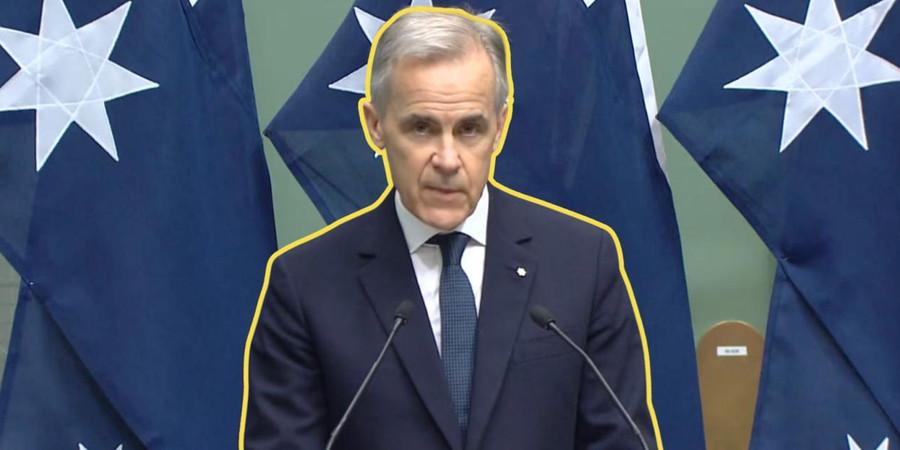
Canadian Prime Minister Mark Carney is between an Israeli rock and an Iranian hard place. Carney, who can never decide whether President Donald Trump is an existential threat to Canada or the “transformative” and “transformational” leader that he declared him to be at their White House summits, was quick to approve of the US attack on Iran, though his foreign affairs minister was almost as swift in declaring that Canada played no military role in that attack.
But Carney is now inching towards a direct military commitment even though doing so will almost certainly divide his caucus and the base of his Liberal Party. Carney really doesn’t want more involvement because fighting the Arab world will divide his caucus and voters. The Liberals have always managed to somehow appease both the vital Jewish vote and the emerging Muslim vote. This fragile voting block could easily implode if the war explodes.
Direct Canadian participation in the war at this point would serve absolutely no point, although military involvement might ultimately prove to be unavoidable simply because Canada, as a member of NATO, might be forced, along with a lot of other countries, to join the fight. And while that might be an appropriate response as a founding member of the alliance, it could also escalate the war beyond a regional conflict into a world war.
At the moment, Canada can contribute little to the war except aging F-18/A fighter jets that should have been replaced a decade or so ago. Canada recently took delivery of its first F-35 Joint Strike Fighter, years after the aircraft had become the frontline fighter jet of Canada’s principal allies and training partners: the US, the UK and Australia. The Carney government is still dithering on exactly how many F-35s the Royal Canadian Air Force (RCAF) will actually purchase and continues to contemplate a mixed fighter force that would also contain Gripen jets produced by Sweden’s Saab aviation.
Carney muses about the Gripen whenever he wants to annoy Trump. US Ambassador to Canada Pete Hoekstra has correctly noted that Canada cannot fly both the F-35 and the Gripen and be an interoperable partner in the NORAD alliance that has defined US-Canadian continental defense for almost 70 years. And even as Carney pledged solidarity to the US strike on Iran, woke Europeans were still applauding Carney’s speech at the World Economic Forum AGM in Davos, where the Canadian prime minister offered a blistering attack on US foreign policy that received a condemnation from Trump the following day.
So if the US really doesn’t want or need Canada’s decrepit fighter jets in this phase of the war, could it rely on Canadian soldiers to bolster any ground offensive? Well, that’s another difficult question and one that certainly must scare the hell out of Carney.
With the exception of the prolonged struggle to contain the civil war in the former Yugoslavia, where this writer served, Canada has been loath to contribute ground forces in support of distinctly American wars. It hesitated during the first Gulf War just long enough until the fighting was over. It categorically rejected such involvement in Iraq. Canada sent troops to Afghanistan but that was always seen as a containment mission.
Whether Carney wants to join the effort or not, under that legendary article five of the NATO agreement, Canada, as well as all members of the alliance, is basically already at war with Iran because Iran has attacked US forces and an attack on one member of NATO is an attack on all.
Trump’s attitude towards NATO has been mercurial to say the least. He demanded that deadbeat countries like Canada pay their 2% of their GDP membership dues and now wants 5%. He has repeatedly said that NATO has done nothing for the United States while NATO would be virtually powerless without America’s contribution.
So maybe Trump will see the war in Iran – if, God forbid, it escalates into a phase 2 ground war – as another way for all those NATO grifters to finally pay the price of membership in this club that should really should have been retired along with the Warsaw Pact at the end of the Cold War and the collapse of the Soviet Union in 1991.
But full NATO involvement would almost certainly provoke a response from Iran’s Russian and Chinese allies. And the rest could all be history – disseminated with the winds of a nuclear war.
Related
More Politics