
We just witnessed a third assassination attempt on President Donald Trump's life, and thankfully, everyone came out alive. Who do we have to thank for that? The strong men, that's who. Thank God for the men.
In a crisis such as this, it is hard to miss a basic truth: the overwhelming amount of protective and security roles in these situations are carried out by men. This is not because of ideology, but because these roles demand a particular set of physical and psychological traits that are more inherent in men. Men have strength, composure under threat, rapid decision-making skills, and a willingness to put themselves between danger and others. When lives are on the line, those traits are not theoretical. They are what stop violence from becoming a catastrophe.
In other words, on Saturday night, after bullets were fired at the White House Correspondence Dinner, we were reminded how important brave, strong men are.
In video footage of the moment the gunshots were heard in the ballroom, Secret Service men jumped in front of the president with absolutely no hesitation to protect him. They leaped towards danger while the crowd ducked away from it.
The shooter was quickly detained, and the area was secured. While there were women present, the overwhelming share of the immediate protective response was carried out by men in security roles. It was apparent that the president and the thousands of other people who attended this event wouldn't have been nearly as safe if it weren't for the brave men who acted quickly.
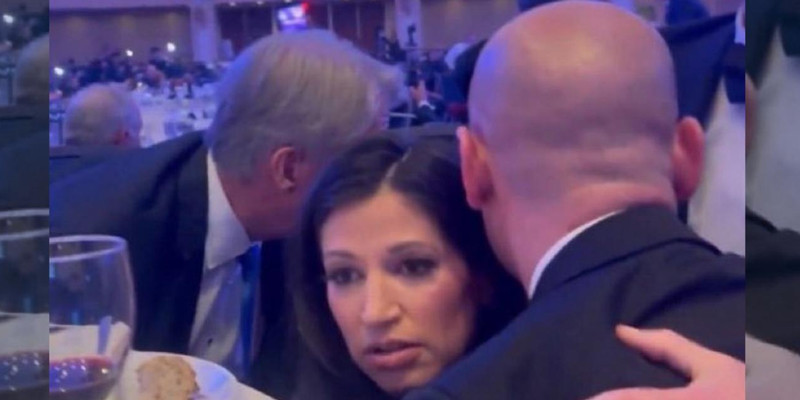
This goes beyond a security role. In the crowd, men, notably those from the Trump administration, were jumping in front of women to protect them. Stephen Miller was seen protecting his pregnant wife. FBI Director Kash Patel jumped up and told others to stay down, as did Secretary of War Pete Hegseth.
These images resonate because they reflect something deeply recognizable: the instinct of a man to place himself in harm's way to protect his family. Moments like that are instinctive, and they point to a core aspect of traditional masculinity: protection.
For years, cultural messaging on the left has often framed traditional masculinity in a negative light, frequently labeling it as "toxic." In doing so, the lines between harmful behaviors and healthy expressions of male strength, protectiveness, and resilience have been blurred.
Vague concepts like "rape culture" are used in ways that cast suspicion on ordinary male behavior rather than focusing on actual wrongdoing. As a result, boys and men have internalized the idea that their natural tendencies, such as being physically active, protective, competitive, or less verbally expressive, are inherently problematic. These ideas have left too many men demoralized.
Despite this massive smear campaign on masculine men, we have been blessed with conservative voices, such as Jordan Peterson's, who has helped many of these young men remember their importance. One viral video of Peterson sums up how important men are.
The interviewer asked him, "Is it okay for a man?" He responded with passion, "It's not okay. It's necessary! What the hell are we going to do without men?! You look around this city, and you see all these buildings going up. These men, they're doing impossible things." Jordan Peterson's pro-male message continues to resonate.
This moment shot rang out at the White House Correspondents' Dinner reminded us of something we tend to forget in times of comfort. Civilization does not hold itself together with idealistic beliefs. It is held together by people who are willing to act when fear is highest and consequences are immediate.
In those moments, it is men of substance, who are trained, disciplined, and willing to accept physical risk. It is also ordinary fathers, brothers, and strangers who will put their lives on the line to protect others. Men are essential because they have steadiness under pressure, rapid response in danger, and the willingness to absorb risk. It is strong men who stand between order and chaos, keeping society from collapsing when everything is on the edge. Thank God for strong men.
Pamela Garfield-Jaeger is a regular contributor to Human Events. She is the author of "A Practical Response to Gender Distress" and "Froggy Girl". You can find her on X as @pgarfieldjaeger and IG as @the.truthfultherapist.