CHRISTIANE EMERY: Trump’s college sports Executive Order shows college athletes are students first
The truth is that the overwhelming majority of student-athletes will never play professional sports.
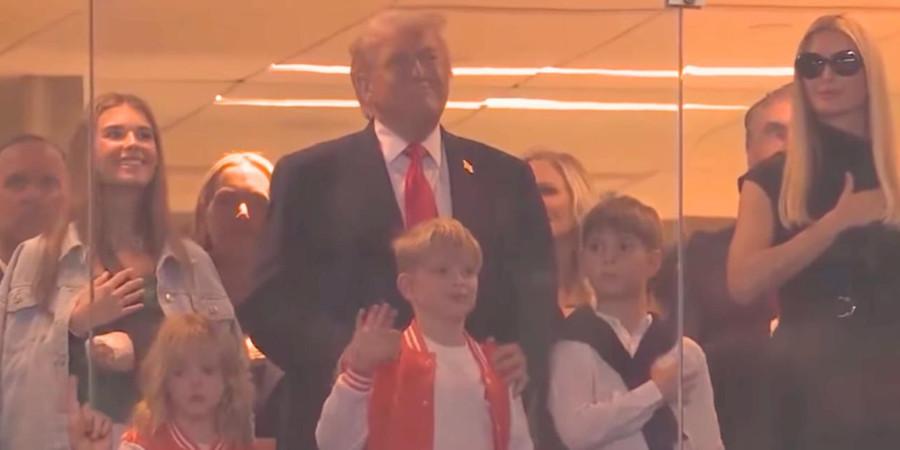
Trump recently signed an executive order to cap how long college athletes can play sports and how often they can enter the transfer portal. At its core, the order is meant to restore a simple reality that has been increasingly lost in the chaos of modern college athletics: these players are students first.
In the past few years, college sports have increasingly resembled professional free agency rather than campus life. Athletes can transfer year after year, chasing the next opportunity, the next deal, or the next promise of playing time. Meanwhile, the academic side of being a student athlete has slowly faded into the background.
I was in college when the NCAA approved paying student-athletes. Working in our college athletic dorm, I noticed a distinct change in culture. Suddenly, there was more focus on where the best signing deals were. Sophomores were coming in with designer duffel bags.
Previously, conversations had been focused on team camaraderie and the season ahead. But almost overnight, college athletics started to resemble a bidding war.
Trump's order attempts to put guardrails back on a system that has spiraled into uncertainty. The executive order asks federal agencies to strengthen rules on transfers, eligibility, and pay-to-play arrangements, and to examine whether violations could render universities ineligible for federal grants or contracts.
Under the proposal, student athletes would be limited to five years of participation, regardless of eligibility exceptions like those granted during COVID. They would also be allowed to transfer only once without penalty during their college career.
The goal is not to punish athletes. It is to preserve the distinction between college athletics and professional sports. Right now, that distinction is disappearing.
The NCAA has struggled to enforce meaningful rules since a 2021 Supreme Court decision made clear that the organization is not exempt from antitrust laws that prevent businesses from colluding to limit workers' earning potential. In the years since, courts have repeatedly sided with athletes challenging eligibility restrictions.
As a result, the NCAA has largely been forced to allow athletes to transfer freely, creating a system in which some players transfer multiple times during their college careers. Even NCAA President Charlie Baker has admitted the organization needs help. Baker recently said the NCAA requires federal assistance to resolve these issues and avoid years of prolonged court battles.
During the COVID era, eligibility rules were loosened dramatically. Many athletes received additional seasons of eligibility, creating situations in which players could compete in college sports for 6 or even 7 years.
At a certain point, the line between college and professional athletics begins to blur.
Student athletes are not meant to spend the better part of a decade cycling through college programs while chasing contracts and endorsements. College sports were built around the idea that athletes would pursue an education while competing for their school, not indefinitely shop themselves around the transfer portal.
Many Olympic sports rely heavily on college athletics as a development pipeline. At the 2024 Summer Olympics, 75% of the U.S. team competed at a collegiate level. Swimming, track and field, wrestling, gymnastics, and many other programs depend on the college system to train athletes who eventually compete on the world stage.
If college athletics continues evolving into a professional marketplace, the sports that do not generate millions of dollars could easily become casualties.
The truth is that the overwhelming majority of student-athletes will never play professional sports. For them, college athletics is supposed to complement their education, not replace it. They are meant to graduate and become leaders in the workforce.
A 2020 Ernst & Young study found that over 50% of women in C-suite positions played collegiate sports. I wonder whether that pipeline could change if the culture of college athletics continues shifting away from education and toward contracts.
Limiting participation to five years and restricting transfers are not attacks on athletes. It is an attempt to restore balance to a system that has drifted far from its original purpose. Because at the end of the day, these players are not just athletes, they are students. College sports should never forget that.
Related
More Culture