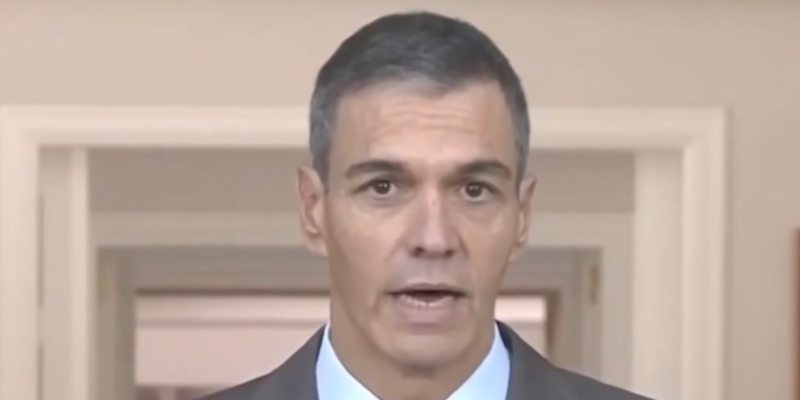

Spanish Prime Minister Pedro Sanchez has called a snap election for Nov 29. The claim is that this is due to recent protests over housing, but the crisis of mass migration has taken center stage after thousands of North African migrants flooded the tiny enclave of Ceuta and caused chaos.
The next election was originally scheduled for the summer of 2027. In recent months there have been protests over mass migration and recently those have been joined by housing protests, as well. These followed the eviction of an elderly woman in Madrid was evicted when she could not pay a large rent increase, according to the BBC. Sanchez’s government is expected to pass emergency legislation concerning the housing crisis on Tuesday.
The snap election may be risky for the socialist Sanchez, who has currently been Prime Minister for eight years. Some opinion polls suggest that it may be difficult for him to get enough support to win this election. It is expected that conservatives will be the largest party in snap vote, but they are expected to need the far-right leaning Vox party’s support in order to form a government.
The focus on housing may stimulate left-leaning voters to vote for him, and not focus on the migrant crisis, especially in Ceuta, which has attracted world-wide attention. Mainland cities saw protests against the lack of action taken to stem mass migration as well.
Sanchez claimed that a "very turbulent congress," and "Very powerful economic and social elites" are to blame. He claimed that these elites "do not take part in the elections" but "want to continue controlling our country" are the problem. He added, "The progressive government has not stopped working, and with it, Spain has not stopped advancing."
In September, tens of thousands protested Sanchez across Spain, waving Spanish flags and shouting slogans including, “Sanchez to prison” and “Invaders - go home.”
Ceuta is a North African territory of Spain where approximately 72,000 migrants illegally crossed the border with Morocco in July. Ceuta had a population of around 84,000 at that time. Vox leader Santiago Abascal called Senchez a “traitor to Spain, to the Spanish, to the people of Ceuta, even to his own party, his pledges, and his voters.”
Ceuta’s regional leader, Juan Jesus Vivas said during the official holiday for Ceuta, Sept. 2, when the protests occurred, “What happened to us was not a migratory crisis,” and added, “What happened was the violation of Spain’s territorial integrity.” Much of the blame for the Ceuta invasion has been directed at Sanchez.
In response, Sanchez said,” I want to send a message to all the citizens of Ceuta. We are not going to abandon you. I know that you are going through very difficult times and that most of you are tolerant and supportive people. We will not stop working until Ceuta emerges from this crossroads stronger, more prosperous, and more integrated with the rest of Spain and the European Union. It will not be easy but we will achieve it.”
There have also been reports of corruption investigations involving Sanchez’s wife and brother along with former members of government.
The leader of the conservative People’s Party, Alberto Nunez Feijoo, said that Spain will “at last say “what it thinks,” and Vox party Santiago Abascal said that he is “glad” about the timing of the election.