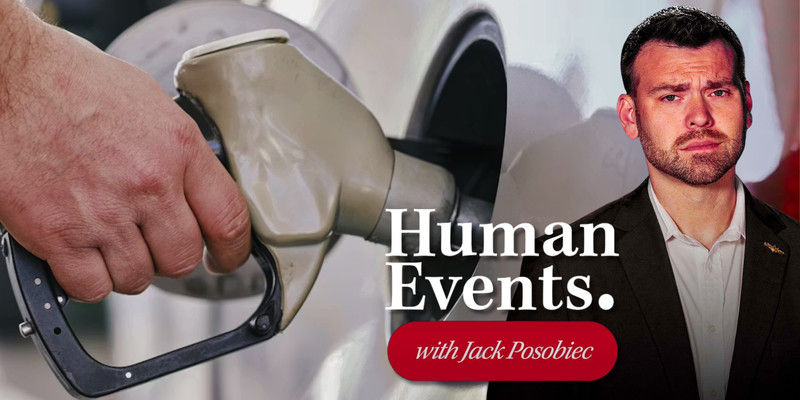

Human Events Daily host Jack Posobiec warned Thursday that the escalating conflict with Iran could become a major issue for Republicans heading into a tight election cycle, as questions grow over military strategy, energy prices and the potential impact on American voters.
Posobiec opened his show by discussing reports that the Trump administration is considering additional military options after strikes against Iran, including reports of a potential broader campaign targeting Iranian infrastructure and regime-linked sites.
"And folks, you saw the news from late last night, early this morning, the escalation of the war in Iran, in the middle of a tight election year. And we're seeing, of course, the news now that the president is weighing multiple options for further escalation."
"Wall Street Journal has a story out that there's a U.S. commander with a two-week plan to escalate strikes across all of Iran. I believe we saw the IRGC headquarters was struck last night. And of course, we had the caskets of four U.S. soldiers arrive home just last week as well."
"There's many questions as to how far this goes. Who is going to blink first? Is it going to be the president or is it going to be Iran and the mullahs? And it certainly doesn't seem like either of them are interested in this."
The Human Events Daily host warned that an extended conflict could have significant economic consequences, particularly if Iran targets global energy routes. He pointed to the Strait of Hormuz, a key shipping route for global oil supplies, as a potential pressure point.
"This was always the danger of getting involved in a prolonged and protracted fight with Iran because Iran has asymmetrical effect on the world's energy supply vis-a-vis that choke point, that artery of empire, as we've called it on this show, the Strait of Hormuz."
"That if they were to come in and block up the Strait of Hormuz, they knew that they could hurt the world economy even more than they could if they were going directly at the military. That's what asymmetric warfare is all about."
Posobiec argued that rising energy costs could become a major concern for voters, especially in swing states where Republicans are defending or seeking seats.
"The rise in gas prices, the rise in energy costs, oil costs sweeps over everything. That means your energy, that means your home energy is going to go up. That means the price of your goods is going to go up. The price of your groceries is going to go up. Your cost of living is going to go up at a time when we know the Democrats were already trying to make this election all about affordability."
He said voters in states including Pennsylvania, Michigan, Wisconsin and Ohio will be watching closely as the conflict develops.
"As a guy from Pennsylvania, I'll tell you right now that voters in Pennsylvania do not want to vote for higher gas prices. Voters in Pennsylvania do not want to vote for a higher cost of living and higher groceries. And that's going to be the same thing in Michigan. That's going to be the same thing in Wisconsin. That's going to be the same thing in Ohio."
Republican candidates will likely face increasing questions about the administration's approach to the conflict and whether there is a clear end goal. "What is the plan going forward? What is the exit strategy? What does the win condition look like? What does a deal look like with the Iranians? Is there a path back to the MOU? Is there a path back to the ceasefire?"
Posobiec opened his show by discussing reports that the Trump administration is considering additional military options after strikes against Iran, including reports of a potential broader campaign targeting Iranian infrastructure and regime-linked sites.
"And folks, you saw the news from late last night, early this morning, the escalation of the war in Iran, in the middle of a tight election year. And we're seeing, of course, the news now that the president is weighing multiple options for further escalation."
"Wall Street Journal has a story out that there's a U.S. commander with a two-week plan to escalate strikes across all of Iran. I believe we saw the IRGC headquarters was struck last night. And of course, we had the caskets of four U.S. soldiers arrive home just last week as well."
"There's many questions as to how far this goes. Who is going to blink first? Is it going to be the president or is it going to be Iran and the mullahs? And it certainly doesn't seem like either of them are interested in this."
The Human Events Daily host warned that an extended conflict could have significant economic consequences, particularly if Iran targets global energy routes. He pointed to the Strait of Hormuz, a key shipping route for global oil supplies, as a potential pressure point.
"This was always the danger of getting involved in a prolonged and protracted fight with Iran because Iran has asymmetrical effect on the world's energy supply vis-a-vis that choke point, that artery of empire, as we've called it on this show, the Strait of Hormuz."
"That if they were to come in and block up the Strait of Hormuz, they knew that they could hurt the world economy even more than they could if they were going directly at the military. That's what asymmetric warfare is all about."
Posobiec argued that rising energy costs could become a major concern for voters, especially in swing states where Republicans are defending or seeking seats.
"The rise in gas prices, the rise in energy costs, oil costs sweeps over everything. That means your energy, that means your home energy is going to go up. That means the price of your goods is going to go up. The price of your groceries is going to go up. Your cost of living is going to go up at a time when we know the Democrats were already trying to make this election all about affordability."
He said voters in states including Pennsylvania, Michigan, Wisconsin and Ohio will be watching closely as the conflict develops.
"As a guy from Pennsylvania, I'll tell you right now that voters in Pennsylvania do not want to vote for higher gas prices. Voters in Pennsylvania do not want to vote for a higher cost of living and higher groceries. And that's going to be the same thing in Michigan. That's going to be the same thing in Wisconsin. That's going to be the same thing in Ohio."
Republican candidates will likely face increasing questions about the administration's approach to the conflict and whether there is a clear end goal. "What is the plan going forward? What is the exit strategy? What does the win condition look like? What does a deal look like with the Iranians? Is there a path back to the MOU? Is there a path back to the ceasefire?"