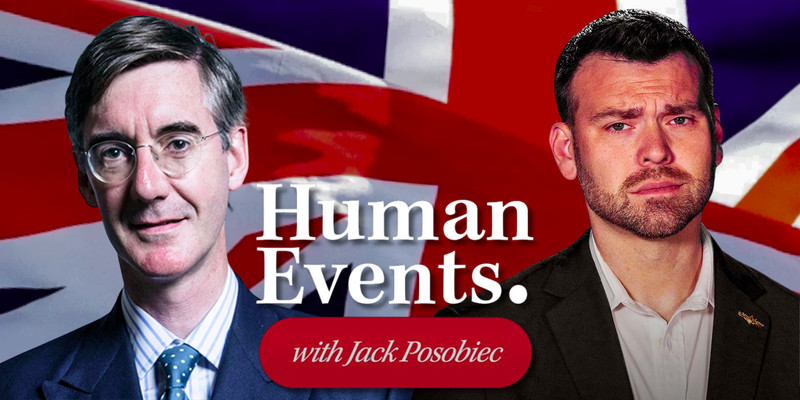
Former British cabinet minister Jacob Rees-Mogg and Human Events' Jack Posobiec discussed the challenges of finding political talent, the role of grassroots organizations in developing future leaders, and the importance of protecting free speech during a conversation about lessons British conservatives could learn from American political movements.
Rees-Mogg said political organizations face a difficult balance when selecting candidates, warning that relying too heavily on outsiders can bring reputational risks while choosing only establishment figures can prevent meaningful change.
“If you go too much for outsiders, you may get people who are damaging to your reputation,” Rees-Mogg said. “On the other hand, if you go for the establishment candidate, you don't change anything because they will remain the same.”
He argued that parties need to invest more effort into identifying individuals with the skills and experience needed to contribute effectively.
“You need to be doing a lot of detailed work on who you need and what they can do and what they can contribute, and to try and find people who are able to make that contribution,” Rees-Mogg said.
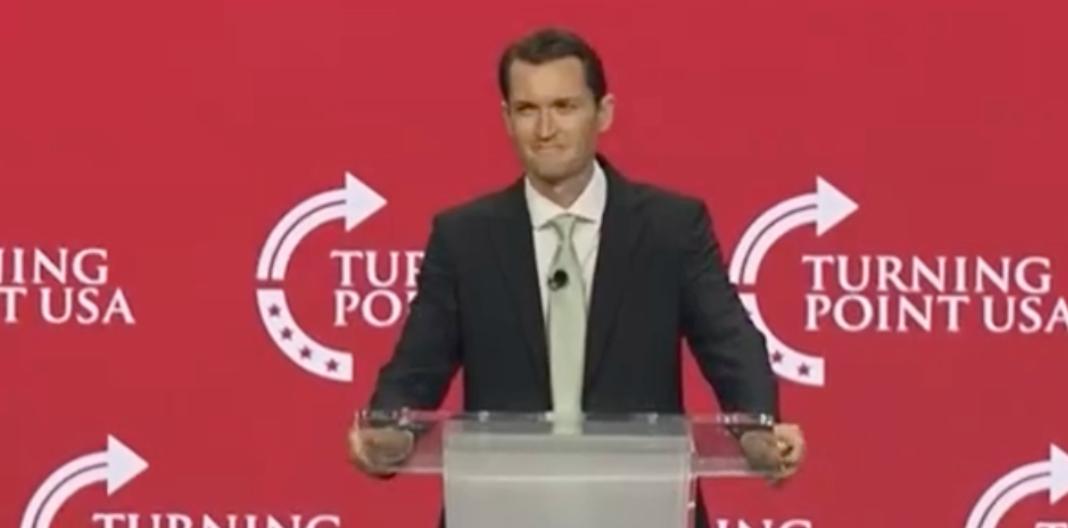
Posobiec pointed to Turning Point USA and the late conservative activist Charlie Kirk’s focus on building a pipeline of young political leaders as an example of successful talent development. He said Kirk’s campus appearances and debates were well known, but the organization’s chapter system was the “real work” behind its success. “Establishing the chapters, finding new student leaders, finding the people who would be successful, and then working with them” was central to the organization’s strategy, Posobiec said.
He explained that many students involved with Turning Point later moved into political careers, including one Florida congresswoman who began as a Turning Point contributor. Rees-Mogg said he had seen similar efforts taking place in Britain, recalling his visit to speak at Turning Point’s Oxford University chapter in memory of Kirk.
“I thought that he was so important in defending free speech and putting that argument across that when Oxford set up its Turning Point group, I wanted to go and really pay respect,” Rees-Mogg said.
Posobiec said Kirk had been eager to visit Oxford and had a deep appreciation for British political traditions, civil liberties, and Enlightenment thinkers.
“He thought it was just the trip of a lifetime,” Posobiec said, adding that Kirk respected “the English tradition” and “the system of civil liberties and civil thought that come out of England.”
The discussion also turned to free speech's sharp decline into Britain, with Rees-Mogg stating the obvious that the country had become complacent about protecting liberties for its civizens. “America is helping us protect our liberties, which we've been rather careless about,” Rees-Mogg said. He cited cases involving people being arrested for silently praying outside abortion clinics and others facing police action over social media posts, arguing that free expression was being weakened through a gradual erosion of protections.
“We are allowing freedom of speech to come under threat, not because anyone really wants to do it, but just out of carelessness, because we're so used to it,” Rees-Mogg said. “And America is, I think, helping us remember how important freedom of speech is.”
Rees-Mogg said political organizations face a difficult balance when selecting candidates, warning that relying too heavily on outsiders can bring reputational risks while choosing only establishment figures can prevent meaningful change.
“If you go too much for outsiders, you may get people who are damaging to your reputation,” Rees-Mogg said. “On the other hand, if you go for the establishment candidate, you don't change anything because they will remain the same.”
He argued that parties need to invest more effort into identifying individuals with the skills and experience needed to contribute effectively.
“You need to be doing a lot of detailed work on who you need and what they can do and what they can contribute, and to try and find people who are able to make that contribution,” Rees-Mogg said.
Posobiec pointed to Turning Point USA and the late conservative activist Charlie Kirk’s focus on building a pipeline of young political leaders as an example of successful talent development. He said Kirk’s campus appearances and debates were well known, but the organization’s chapter system was the “real work” behind its success. “Establishing the chapters, finding new student leaders, finding the people who would be successful, and then working with them” was central to the organization’s strategy, Posobiec said.
He explained that many students involved with Turning Point later moved into political careers, including one Florida congresswoman who began as a Turning Point contributor. Rees-Mogg said he had seen similar efforts taking place in Britain, recalling his visit to speak at Turning Point’s Oxford University chapter in memory of Kirk.
“I thought that he was so important in defending free speech and putting that argument across that when Oxford set up its Turning Point group, I wanted to go and really pay respect,” Rees-Mogg said.
Posobiec said Kirk had been eager to visit Oxford and had a deep appreciation for British political traditions, civil liberties, and Enlightenment thinkers.
“He thought it was just the trip of a lifetime,” Posobiec said, adding that Kirk respected “the English tradition” and “the system of civil liberties and civil thought that come out of England.”
The discussion also turned to free speech's sharp decline into Britain, with Rees-Mogg stating the obvious that the country had become complacent about protecting liberties for its civizens. “America is helping us protect our liberties, which we've been rather careless about,” Rees-Mogg said. He cited cases involving people being arrested for silently praying outside abortion clinics and others facing police action over social media posts, arguing that free expression was being weakened through a gradual erosion of protections.
“We are allowing freedom of speech to come under threat, not because anyone really wants to do it, but just out of carelessness, because we're so used to it,” Rees-Mogg said. “And America is, I think, helping us remember how important freedom of speech is.”