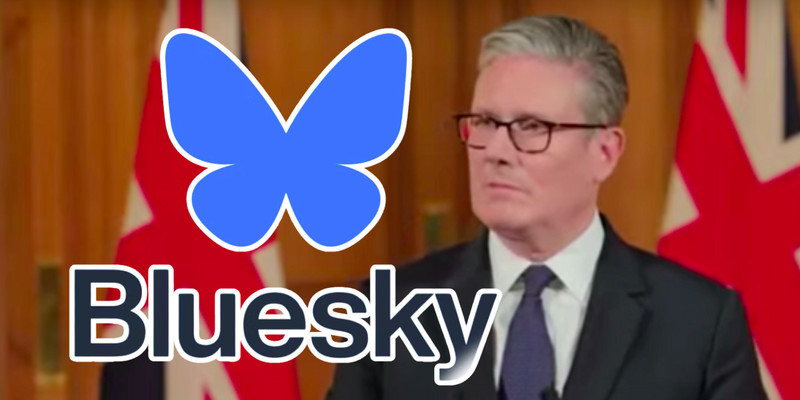

Britain will block children under 16 from accessing major social media platforms, with Prime Minister Keir Starmer saying the government will not back down if technology companies resist enforcement. The policy targets apps including Snapchat, TikTok, YouTube, Instagram, Facebook, and X. The ban is reportedly not expected to affect Bluesky, notable for being a hotbed of far-left and radical voices.
Starmer addressed the plan during a news conference on Monday, saying enforcement would focus on platforms rather than users, while acknowledging that some teenagers would likely attempt to circumvent restrictions: "Every parent can see it with their own eyes. Social media is making children unhappy," said Starmer, who himself is the father of two teenagers. "I've heard firsthand from families crying out for change and we will do right by them."
He added that he was "not prepared to compromise on the safety and happiness of our children."
The legislation, which the government hopes will take effect by next spring, is modelled in part on Australia’s recently introduced under-16 social media restrictions. Platforms that fail to take reasonable steps to block underage users could face significant fines.
Starmer said the UK approach would go further in some areas, including measures aimed at limiting contact between strangers and children on gaming and livestreaming platforms. Officials are also examining additional restrictions, such as overnight curfews and forced breaks from endless scrolling features for users under 18. Further details are expected next month.
The announcement follows a public consultation that drew 116,000 responses from parents, children, and industry stakeholders. The government said more than 90 per cent supported an under-16 ban. The policy aligns the UK with a broader international push, with countries including Australia, Canada, Brazil, and Indonesia all introducing or considering similar restrictions on children’s access to social media platforms.
Starmer said the objective would be a “massive drop off of children on social media” and a broader cultural shift in how young people engage online. He said success would also mean "a cultural change, a sense that, actually, you can grow up differently." Enforcement will target companies rather than minors, with the government stressing that platforms will be responsible for implementing age verification systems.
The NSPCC praised the plan but urged strict enforcement. Esther Ghey, whose trans daughter Brianna was killed in 2023, said the move could "potentially save so many children's lives," though she said it must be paired with further safeguards
Tech groups and digital rights advocates raised concerns about age verification systems and data privacy risks, warning that enforcement could create new vulnerabilities for users.
YouTube said in a statement that blanket restrictions could push young users toward less regulated services: "YouTube is a vital resource for young people, educators and parents. Blanket bans push kids out of such curated, supervised, beneficial experiences and towards anonymous, less safe services"
Kemi Badenoch said in a post on X that the government "has finally woken up to the dangers of social media for young people," describing it as a policy shift driven by Conservative pressure. Reform UK leader Nigel Farage said the measure was unlikely to succeed due to workarounds such as VPNs, arguing instead for simplified devices for children with restricted functions.
Starmer, who has faced political pressure at home amid electoral losses and resignations within his government, has said that the steps are vital: "I honestly think that across world leaders, there has always been a recognition that leaders have to take steps to protect children," he said. "I don't think that's controversial. There will always be arguments as to exactly what the limits of that are and what rules should be in place, but I don't see that as a problem."
Starmer addressed the plan during a news conference on Monday, saying enforcement would focus on platforms rather than users, while acknowledging that some teenagers would likely attempt to circumvent restrictions: "Every parent can see it with their own eyes. Social media is making children unhappy," said Starmer, who himself is the father of two teenagers. "I've heard firsthand from families crying out for change and we will do right by them."
He added that he was "not prepared to compromise on the safety and happiness of our children."
The legislation, which the government hopes will take effect by next spring, is modelled in part on Australia’s recently introduced under-16 social media restrictions. Platforms that fail to take reasonable steps to block underage users could face significant fines.
Starmer said the UK approach would go further in some areas, including measures aimed at limiting contact between strangers and children on gaming and livestreaming platforms. Officials are also examining additional restrictions, such as overnight curfews and forced breaks from endless scrolling features for users under 18. Further details are expected next month.
The announcement follows a public consultation that drew 116,000 responses from parents, children, and industry stakeholders. The government said more than 90 per cent supported an under-16 ban. The policy aligns the UK with a broader international push, with countries including Australia, Canada, Brazil, and Indonesia all introducing or considering similar restrictions on children’s access to social media platforms.
Starmer said the objective would be a “massive drop off of children on social media” and a broader cultural shift in how young people engage online. He said success would also mean "a cultural change, a sense that, actually, you can grow up differently." Enforcement will target companies rather than minors, with the government stressing that platforms will be responsible for implementing age verification systems.
The NSPCC praised the plan but urged strict enforcement. Esther Ghey, whose trans daughter Brianna was killed in 2023, said the move could "potentially save so many children's lives," though she said it must be paired with further safeguards
Tech groups and digital rights advocates raised concerns about age verification systems and data privacy risks, warning that enforcement could create new vulnerabilities for users.
YouTube said in a statement that blanket restrictions could push young users toward less regulated services: "YouTube is a vital resource for young people, educators and parents. Blanket bans push kids out of such curated, supervised, beneficial experiences and towards anonymous, less safe services"
Kemi Badenoch said in a post on X that the government "has finally woken up to the dangers of social media for young people," describing it as a policy shift driven by Conservative pressure. Reform UK leader Nigel Farage said the measure was unlikely to succeed due to workarounds such as VPNs, arguing instead for simplified devices for children with restricted functions.
Starmer, who has faced political pressure at home amid electoral losses and resignations within his government, has said that the steps are vital: "I honestly think that across world leaders, there has always been a recognition that leaders have to take steps to protect children," he said. "I don't think that's controversial. There will always be arguments as to exactly what the limits of that are and what rules should be in place, but I don't see that as a problem."