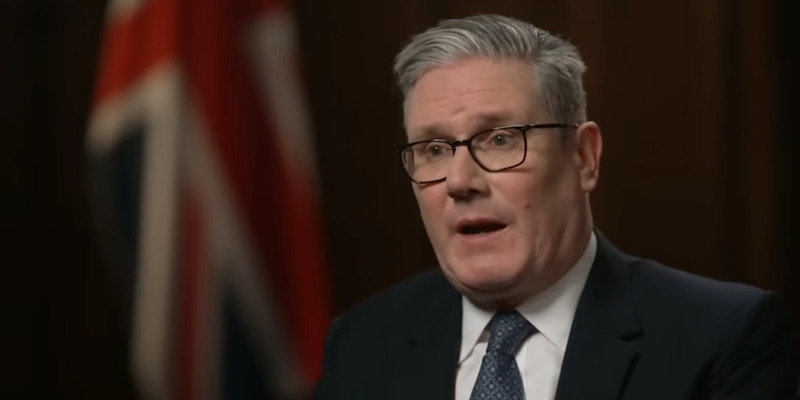

Prime Minister Keir Starmer called on major tech companies to implement device-level controls supposedly aimed at stopping children from creating, sharing, or viewing nude images online, with the call renewing criticism from civil liberties groups and even prompting a flag from X's community notes.
“This government will not stand by while children are put at risk online,” Starmer wrote on X. “Today I am calling on the tech companies to introduce device-level controls to prevent children from taking, sharing or viewing nude images. And if they don’t act, we will.”
The announcement immediately received a community note, bringing up the recent resignation of former safeguarding minister Jess Phillips, who stepped down in May. Phillips’ departure was largely believed to be over these very safety reforms.
Phillips resigned citing frustrations over delays and weak implementation of child protection measures within the Starmer government. In her resignation letter, she wrote that while she believed Starmer was “a good man fundamentally,” she felt the government had made “catastrophic mistakes.”
“The desire not to have an argument means we rarely make an argument, leaving opportunities for progress stalled and delayed,” Phillips wrote. She also pointed to long-running proposals aimed at preventing minors from taking explicit images of themselves, arguing that progress had been slow despite available technical solutions.
She added: “I know you care deeply, but deeds, not words are what matter.”
Phillips also referenced internal policy frustrations, adding that delays to safeguarding reforms were part of a broader pattern of incremental decision-making. “I’m not sure we are grasping this rare opportunity with the gusto that’s needed and I cannot keep waiting around for a crisis to push for faster progress,” she wrote.
Political pressure on the failing Labour government has been building following repeated setbacks and ministerial turnover, with Phillips’ exit adding to party stresses.
On top of criticism from within, digital rights organizations have voiced clear concerns about the direction of UK online safety policy more broadly. The Electronic Frontier Foundation (EFF) listed out its concerns in clear terms, saying that age-verification and device-level controls could have sweeping consequences for privacy and security.
“The U.K.'s Online Safety Bill (OSB) is a 250+ page behemoth that attempts to tackle illegal and otherwise harmful content online by placing a duty of care on online platforms to protect their users from such content,” the EFF stated. “Despite being in the works for several years, the OSB remains vague about what it requires of platforms and users alike, and has been derided as a deeply flawed censorship proposal by experts, civil society, and companies.”
The organization also warned that such frameworks could require “privacy-intrusive age verification before a user can access a variety of sites” and argued that proposals in this area risk undermining encrypted communications and broader online security.
Critics of the policy, including Lawrence Fox, say that this is all a guise for Starmer to control the feeds of youth in a plot he says would make Chairman Mao proud. In a post to X, the commentator wrote, "You’re going to ban them from any news source except state approved propaganda until they are sixteen. Then once you have brainwashed them for their entire young life, you are going to give them the vote."
Other concerns come from how this would even be implemented, saying that device-level controls could be difficult to implement in practice without affecting general users, particularly if systems rely on identity or age verification at scale.
“This government will not stand by while children are put at risk online,” Starmer wrote on X. “Today I am calling on the tech companies to introduce device-level controls to prevent children from taking, sharing or viewing nude images. And if they don’t act, we will.”
The announcement immediately received a community note, bringing up the recent resignation of former safeguarding minister Jess Phillips, who stepped down in May. Phillips’ departure was largely believed to be over these very safety reforms.
Phillips resigned citing frustrations over delays and weak implementation of child protection measures within the Starmer government. In her resignation letter, she wrote that while she believed Starmer was “a good man fundamentally,” she felt the government had made “catastrophic mistakes.”
“The desire not to have an argument means we rarely make an argument, leaving opportunities for progress stalled and delayed,” Phillips wrote. She also pointed to long-running proposals aimed at preventing minors from taking explicit images of themselves, arguing that progress had been slow despite available technical solutions.
She added: “I know you care deeply, but deeds, not words are what matter.”
Phillips also referenced internal policy frustrations, adding that delays to safeguarding reforms were part of a broader pattern of incremental decision-making. “I’m not sure we are grasping this rare opportunity with the gusto that’s needed and I cannot keep waiting around for a crisis to push for faster progress,” she wrote.
Political pressure on the failing Labour government has been building following repeated setbacks and ministerial turnover, with Phillips’ exit adding to party stresses.
On top of criticism from within, digital rights organizations have voiced clear concerns about the direction of UK online safety policy more broadly. The Electronic Frontier Foundation (EFF) listed out its concerns in clear terms, saying that age-verification and device-level controls could have sweeping consequences for privacy and security.
“The U.K.'s Online Safety Bill (OSB) is a 250+ page behemoth that attempts to tackle illegal and otherwise harmful content online by placing a duty of care on online platforms to protect their users from such content,” the EFF stated. “Despite being in the works for several years, the OSB remains vague about what it requires of platforms and users alike, and has been derided as a deeply flawed censorship proposal by experts, civil society, and companies.”
The organization also warned that such frameworks could require “privacy-intrusive age verification before a user can access a variety of sites” and argued that proposals in this area risk undermining encrypted communications and broader online security.
Critics of the policy, including Lawrence Fox, say that this is all a guise for Starmer to control the feeds of youth in a plot he says would make Chairman Mao proud. In a post to X, the commentator wrote, "You’re going to ban them from any news source except state approved propaganda until they are sixteen. Then once you have brainwashed them for their entire young life, you are going to give them the vote."
Other concerns come from how this would even be implemented, saying that device-level controls could be difficult to implement in practice without affecting general users, particularly if systems rely on identity or age verification at scale.