Optimistic Democrats and pessimistic Republicans agree on one thing: that the next Democratic president can undo Trump’s policies with the stroke of a pen.
They’re both wrong.
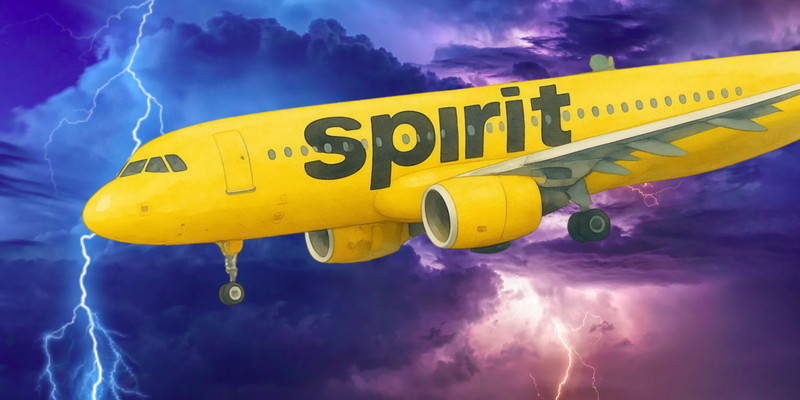
The official demise of Spirit Airlines on May 2 provides the perfect illustration.
In 2022, JetBlue threw its troubled competitor a $3.8 billion lifeline in the form of an acquisition offer. Spirit eagerly accepted, but two years later, Biden’s Justice Department convinced a court to block the deal.
Attorney General Merrick Garland said the merger would have left consumers with “fewer choices.” Well, they certainly have fewer choices now.
State officials, like Colorado Attorney General Phil Weiser, even had the gall to suggest that the JetBlue-Spirit merger hold-up should be emulated for the years to come.
The negative consequences to consumers have already begun to take hold, with airline prices rising by as much as 218% on its busiest routes within 48 hours of the company’s liquidation.
This ultimately destructive antitrust action was part of the Biden administration’s broader enforcement philosophy, the content of which was both simple and simplistic: big is bad, small is good, mergers are presumptively anticompetitive.
The Trump administration would never have brought this case, but by the time he returned to office, it was too late. Neither JetBlue nor Spirit was in any condition to merge. Trump can appoint new antitrust officials who can avoid making similar mistakes in the future, but he can’t go back in time and save Spirit.
Sometimes, you can’t un-ring the bell, put the genie back in the bottle, get the toothpaste back in the tube — whichever cliche you prefer.
Other examples abound. Tea Party-era Republicans decried President Obama’s Deferred Action for Childhood Arrivals (DACA) policy as a textbook example of governing by executive fiat and promised to abolish it on Day 1 of the next GOP administration. Turns out, it wasn’t that easy. Trump tried to end DACA in 2017, but the resulting court fight stretched on for nearly three years and ended in a loss for his administration. By that point, there was no time for a second bite at the apple.
Electoral considerations also limit how much a president can do (or rather, undo). Biden kept most of Trump’s first-term China tariffs in place for the same reason Trump has declined to undo Biden’s policy allowing mail-order abortion pills: they can’t afford to alienate key voting blocs that support those policies (manufacturing workers and women, respectively).
And of course, there’s the issue of personnel.
Federal judges, including Supreme Court justices, hold lifetime appointments. Biden was stuck with Gorsuch, Kavanaugh, and Barrett, just like Trump was stuck with Kagan, Sotomayor, and (in his second term) Jackson. Trump has chipped away at job protections for non-judicial officials — like inspectors general — but hasn’t made much progress toward firing Biden-appointed Federal Reserve governor Lisa Cook.
Even under ideal conditions, it can take years to roll back a previous administration’s policies. Several misguided antitrust lawsuits filed under Biden’s Department of Justice and Federal Trade Commission are still making their way through the courts.
But antitrust litigation is different from many other forms of entrenched federal policy. These cases are still active, discretionary, and largely within the executive branch’s control.
However, the Spirit Airlines news has given the Trump administration something it previously lacked: the political cover needed to begin unwinding some of these lingering cases.
Critics can no longer credibly claim that every Biden-era antitrust lawsuit was protecting consumers when one of the highest-profile victories of the Biden era ended with a major airline collapsing, 17,000 jobs disappearing, and consumers left with fewer choices and potentially higher fares.
Trump’s appointed antitrust team has made some progress toward undoing his predecessor’s mistakes, dropping one case that it described as a taxpayer-funded “dubious partisan stunt” and another that it said, “presents consumers very little upside.”
But the administration cannot stop there.
The remaining Biden-era antitrust cases that are wasting taxpayer dollars — such as one that even the FTC itself has admitted to not having a shred of evidence of harms caused to consumers — should not simply be left to drift forward on autopilot because they were inherited from a prior administration. They can still be withdrawn, narrowed, or settled, and Spirit’s collapse provides the clearest possible rationale yet for doing so.
If the administration fails to act, it risks cementing a legacy not as the team that restored sanity to antitrust enforcement, but one of being Lina Khan Lites, preserving the architecture of the very Neo-Brandeisian project that led to this Spirit Airlines embarrassment. Of course, it’s obvious that’s not the administration’s intent as it has already gotten rid of quite a few of the Biden administration’s pending cases. The DOJ and FTC just need to finish the job. This Spirit news has provided the perfect door opener.
John Pierce is the founder of the National Constitutional Law Union (NCLU). He has represented many high-profile clients, including Tulsi Gabbard, Rudy Giuliani, and his writing has been shared on Truth Social by President Donald J. Trump.