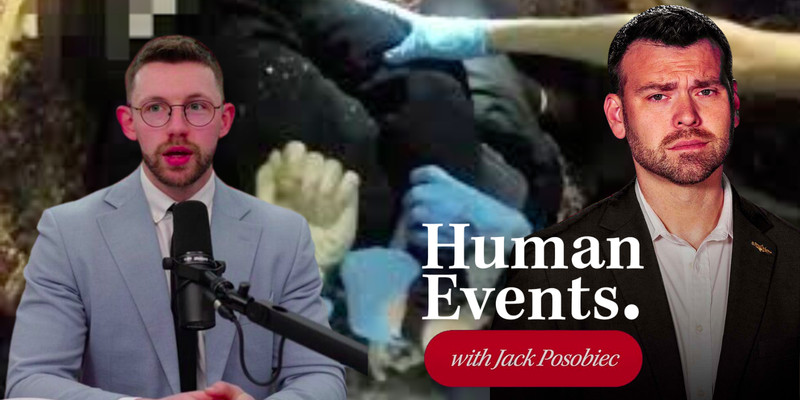

Human Events Daily host Jack Posobiec spoke with commentator Connor Tomlinson about the public response to the murder of Henry Nowak, arguing that anger over the case extends beyond the killing itself and encompasses the conduct of police officers who responded to the scene and the broader society as a whole.
Before bringing on Tomlinson, Posobiec broke down the institutional problems that led to Nowak's murder. Posobiec noted that it's not just the police, or that this was the son of migrants who committed this crime. There were several issues all at play that all led to Henry Nowak's death, and that it largely all has to do with anti-whiteness and the rule of law in the UK.
Posobiec noted the controversy centers not only on Nowak's death but also on "the police indifference, the police and law enforcement response that was not to be, and in fact was antagonistic to him in his dying moments."
Asked what political fallout could follow, Tomlinson said, "Absolutely not. I mean, the public are incandescent with rage over this." Tomlinson claimed the case has become one of the most closely followed stories in Britain, saying, "About 70% of the public are following this story closely and the overwhelming majority are furious and they blame the police for this."
He argued that the case has become intertwined with broader concerns about immigration, saying, "This issue is indistinguishable from immigration because of the perpetrator and his family who engaged in corrupt clannish behavior."
"If those people were never in our country, Henry Nowak would still be alive," Tomlinson added.
Tomlinson also pointed to police training materials and the UK's Police Race Action Plan, citing language that states authorities seek to achieve "equality of policing outcomes" by "responding to individuals and communities according to their specific needs." Reading from the document, he quoted: "It does not mean treating everyone the same or being colorblind, racial equality."
According to Tomlinson, many members of the public have concluded that police apply different standards to different groups. "People realized that the police actively discriminate against whites," he said.
He further argued that minorities have been afforded privileges unavailable to others and claimed some individuals believe they can "invoke the magic word of racism to escape any and all accountability for their violent action."
Describing the response to the case, Tomlinson said "anti-racism as a governing philosophy has lost all credibility" and accused government officials of attempting to discourage broader political debate about the incident.
"They have gone into overdrive in the aftermath of this, with politicians repeating over and over again that the family don't want this issue politicized, and it's not about Sikhism, it's not about racism, it's about the crime of one evil person," he said. "The public isn't buying that."
Posobiec compared the public reaction to other high-profile crimes, arguing that racial identity has become an unavoidable factor in public discourse. "It's been imposed by outside, by number one, these anti-white behaviors, but then also the fact that we see so many policies discussing race and discussing white identity," Posobiec said.
He added that public patience with such policies appears to be running out. "The level of violence that's been perpetuated in the wake of it has, I think, broken through the last gaps of anyone's tolerance or equity or charity towards any of these situations," Posobiec said. "People are done. They're just done."
Tomlinson also criticized media and institutional responses to the case, saying efforts to redirect public outrage had failed. "The media circus that has followed this, trying to contain public outrage and reroute it back to the multicultural agenda that the state is more comfortable with, has just been embarrassed for being intellectually impoverished," he said.
As an example, Tomlinson pointed to statements from the Black Police Federation disputing claims of two-tier policing. "Well, I know that there's proof of two-tier policing because there's a Black Police Federation, and there certainly isn't a white one," he said.
Tomlinson also referenced statements issued on behalf of Vickrum Digwa's family and criticized their conduct during sentencing proceedings. "So even after they fabricated claims of racism, which, by the way, we shouldn't care about, because even if Henry Nowak had said every slur under the sun to this man, he shouldn't have been stabbed to death," Tomlinson said. "But clearly the police care more about that to acquit their own consciences of the accusation of racism than they do about a dying man."
Before bringing on Tomlinson, Posobiec broke down the institutional problems that led to Nowak's murder. Posobiec noted that it's not just the police, or that this was the son of migrants who committed this crime. There were several issues all at play that all led to Henry Nowak's death, and that it largely all has to do with anti-whiteness and the rule of law in the UK.
Posobiec noted the controversy centers not only on Nowak's death but also on "the police indifference, the police and law enforcement response that was not to be, and in fact was antagonistic to him in his dying moments."
Asked what political fallout could follow, Tomlinson said, "Absolutely not. I mean, the public are incandescent with rage over this." Tomlinson claimed the case has become one of the most closely followed stories in Britain, saying, "About 70% of the public are following this story closely and the overwhelming majority are furious and they blame the police for this."
He argued that the case has become intertwined with broader concerns about immigration, saying, "This issue is indistinguishable from immigration because of the perpetrator and his family who engaged in corrupt clannish behavior."
"If those people were never in our country, Henry Nowak would still be alive," Tomlinson added.
Tomlinson also pointed to police training materials and the UK's Police Race Action Plan, citing language that states authorities seek to achieve "equality of policing outcomes" by "responding to individuals and communities according to their specific needs." Reading from the document, he quoted: "It does not mean treating everyone the same or being colorblind, racial equality."
According to Tomlinson, many members of the public have concluded that police apply different standards to different groups. "People realized that the police actively discriminate against whites," he said.
He further argued that minorities have been afforded privileges unavailable to others and claimed some individuals believe they can "invoke the magic word of racism to escape any and all accountability for their violent action."
Describing the response to the case, Tomlinson said "anti-racism as a governing philosophy has lost all credibility" and accused government officials of attempting to discourage broader political debate about the incident.
"They have gone into overdrive in the aftermath of this, with politicians repeating over and over again that the family don't want this issue politicized, and it's not about Sikhism, it's not about racism, it's about the crime of one evil person," he said. "The public isn't buying that."
Posobiec compared the public reaction to other high-profile crimes, arguing that racial identity has become an unavoidable factor in public discourse. "It's been imposed by outside, by number one, these anti-white behaviors, but then also the fact that we see so many policies discussing race and discussing white identity," Posobiec said.
He added that public patience with such policies appears to be running out. "The level of violence that's been perpetuated in the wake of it has, I think, broken through the last gaps of anyone's tolerance or equity or charity towards any of these situations," Posobiec said. "People are done. They're just done."
Tomlinson also criticized media and institutional responses to the case, saying efforts to redirect public outrage had failed. "The media circus that has followed this, trying to contain public outrage and reroute it back to the multicultural agenda that the state is more comfortable with, has just been embarrassed for being intellectually impoverished," he said.
As an example, Tomlinson pointed to statements from the Black Police Federation disputing claims of two-tier policing. "Well, I know that there's proof of two-tier policing because there's a Black Police Federation, and there certainly isn't a white one," he said.
Tomlinson also referenced statements issued on behalf of Vickrum Digwa's family and criticized their conduct during sentencing proceedings. "So even after they fabricated claims of racism, which, by the way, we shouldn't care about, because even if Henry Nowak had said every slur under the sun to this man, he shouldn't have been stabbed to death," Tomlinson said. "But clearly the police care more about that to acquit their own consciences of the accusation of racism than they do about a dying man."