National Security
White House declares 'replacement migration will never be the standard' under Trump, rejects UN immigration pact
The Global Compact for Safe, Orderly and Regular Migration is a non-binding United Nations framework adopted in 2018, supposedly intended to guide international cooperation on migration policy.
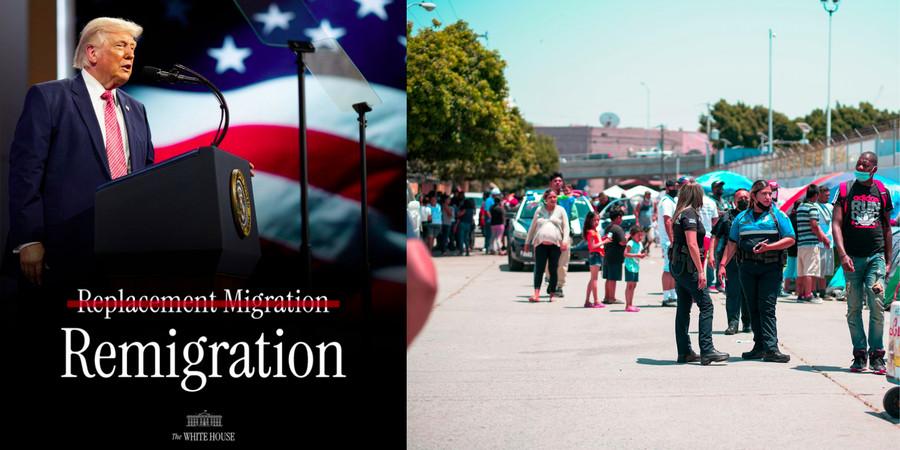
The US Department of State and the White House both used the term “replacement migration” in social media posts this week while addressing the United States’ position on the United Nations Global Compact for Migration.
In a post on X, the US Department of State wrote: “Last week, the United States refused to participate in the UN’s review of the Global Compact on Migration.” The department added: “The United States objects to the Global Compact on Migration and UN efforts to facilitate replacement migration to the United States and our Western allies.”
The White House, replying, wrote: “Under President Trump, replacement migration will never be the standard. The United States objects to the Global Compact on Migration and UN efforts to facilitate replacement migration.” The Global Compact for Safe, Orderly and Regular Migration is a non-binding United Nations framework adopted in 2018, supposedly intended to guide international cooperation on migration policy.
In a statement, the State Department wrote that "the United States has persistently objected to the United Nations’ efforts to advocate and facilitate replacement immigration in the United States and across the broader West. In 2017, President Trump rejected the Global Compact on Migration. The intervening years have confirmed the wisdom of that opposition." “Replacement migration” is a demographic concept referring to migration levels needed for a region to meet a specific demographic, economic, or social objective.
"As Secretary Rubio said, opening our doors to mass migration was a grave mistake that threatens the cohesion of our societies and the future of our peoples," the Department of State wrote. "In recent years, Americans witnessed first-hand how mass immigration laid waste to our communities: crime and chaos at the border, states of emergency in major cities, and billions of taxpayer dollars funneled towards hotels, plane tickets, cell phones and cash cards for migrants. "Much of this was driven by UN agencies and their partners, which did not just facilitate the invasion of our country, but proceeded to redistribute our own people’s wealth and resources to millions of foreigners from the worst corners of the world. There was nothing 'safe,' 'orderly,' or 'regular' about any of this. And the costs were borne primarily by working Americans forced to compete for scarce jobs, housing, and social services. The UN has little to say about them."
The concept is often discussed in relation to population decline, labor shortages, and aging populations in countries with fertility rates below replacement level, generally defined as 2.1 children per woman. The idea is somehow considered separate from “The Great Replacement,” as described by the SPLC, which states that it is a "false" theory that there is "an active, ongoing and covert effort to replace white populations in current white-majority countries." The SPLC differentiates replacement migration from the “white replacement conspiracy theory,” described as a conspiracy theory alleging a deliberate effort to eliminate white populations through immigration.
Roberto Wakerell-Cruz
Roberto Wakerell-Cruz reports for Human Events.