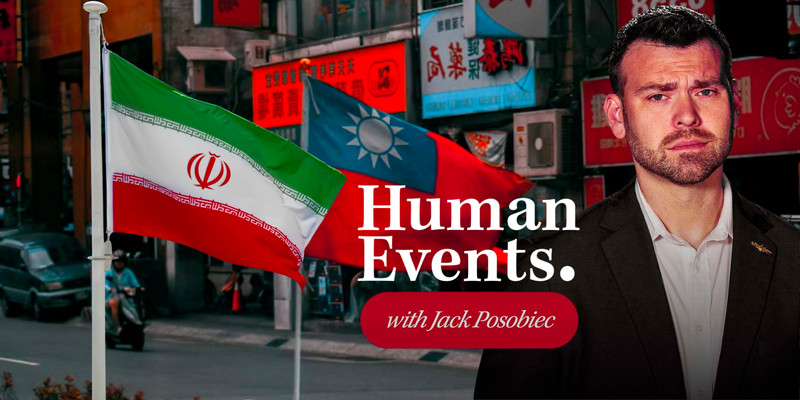

During an appearance on Human Events Daily, Ambassador Alexander Yui Tah-Ray discussed the impact of Iranian disruptions in the Strait of Hormuz, which he said are affecting economies well beyond the Middle East. Taiwan’s representative to the United States said the ongoing crisis involving Iran and the Strait of Hormuz is creating ripple effects across global trade and energy markets, while also serving as a strategic signal to Communist China as tensions remain elevated in the Indo-Pacific.
“Look, the Iran crisis right now, the Strait of Hormuz closed because of what's happening there by the Iranians closing the strait,” Yui said. “It's causing a lot of disruptions in world trade and world economies.”
He added that Taiwan, like other nations, is already feeling the consequences. “So not only the United States, Taiwan, we're all facing some issues with energy, with rising prices in commodities, etc.”
Yui noted that China is also vulnerable due to its energy dependence on the region. “But we're not the only ones. The PRC, China is also suffering the same thing,” he said. “Again, they're the ones who consume a lot of energy from that region, especially, I think they're the number one users of Iranian oil, etc. So they have a lot at stake also.”
Asked by Jack Posobiec whether Beijing could use leverage on Iran or seek concessions related to Taiwan in any broader negotiations, Yui said he believes China has its own reasons for wanting the crisis resolved. “I think the Chinese themselves want the Iran crisis to end as quickly as possible.”
Yui also rejected the idea that recent US actions abroad could encourage Chinese aggression toward Taiwan. “At the same time, there's been saying about the actions that the United States engaged on Iran and Venezuela. Will it give Xi Jinping a green light to act against Taiwan similarly?” he said, before offering a different view. “Actually, I see the other way around. I think Xi Jinping has looked at what the United States is doing in Venezuela and Iran and other parts of the world, and they've realized the United States is willing to use all instruments, all resources available to accomplish your goals.”
Yui said US military readiness and demonstrated force projection should be viewed in Beijing as deterrence. “It's a warning to Xi Jinping, actually.”
He added that Taiwan maintains strategic reserves to manage potential supply disruptions, saying, “Taiwan, we have a strategic reserve to counter a crisis with China if it happens.”
“Look, the Iran crisis right now, the Strait of Hormuz closed because of what's happening there by the Iranians closing the strait,” Yui said. “It's causing a lot of disruptions in world trade and world economies.”
He added that Taiwan, like other nations, is already feeling the consequences. “So not only the United States, Taiwan, we're all facing some issues with energy, with rising prices in commodities, etc.”
Yui noted that China is also vulnerable due to its energy dependence on the region. “But we're not the only ones. The PRC, China is also suffering the same thing,” he said. “Again, they're the ones who consume a lot of energy from that region, especially, I think they're the number one users of Iranian oil, etc. So they have a lot at stake also.”
Asked by Jack Posobiec whether Beijing could use leverage on Iran or seek concessions related to Taiwan in any broader negotiations, Yui said he believes China has its own reasons for wanting the crisis resolved. “I think the Chinese themselves want the Iran crisis to end as quickly as possible.”
Yui also rejected the idea that recent US actions abroad could encourage Chinese aggression toward Taiwan. “At the same time, there's been saying about the actions that the United States engaged on Iran and Venezuela. Will it give Xi Jinping a green light to act against Taiwan similarly?” he said, before offering a different view. “Actually, I see the other way around. I think Xi Jinping has looked at what the United States is doing in Venezuela and Iran and other parts of the world, and they've realized the United States is willing to use all instruments, all resources available to accomplish your goals.”
Yui said US military readiness and demonstrated force projection should be viewed in Beijing as deterrence. “It's a warning to Xi Jinping, actually.”
He added that Taiwan maintains strategic reserves to manage potential supply disruptions, saying, “Taiwan, we have a strategic reserve to counter a crisis with China if it happens.”