

The Supreme Court just gave Republicans the keys to the House for a generation. The only question now is whether the party has the spine to use them.
On Tuesday, the Court ruled 6-3 in Louisiana v. Callais that the state’s second majority-Black congressional district was an unconstitutional racial gerrymander. In doing so, the justices dramatically changed what has been perceived and enforced under Section 2 of the Voting Rights Act, raising the bar plaintiffs must clear to challenge redistricting maps on racial grounds. The ruling is already sending shockwaves through every state legislature in the country.
Within minutes of the decision, Governor Jeff Landry announced the suspension of Louisiana’s May 16 congressional primaries so that state lawmakers can redraw the map. Secretary of State Nancy Landry confirmed that all other races, including the state’s Senate primary, will proceed on schedule. Republicans across the South need to take note. This is what leadership looks like. When the highest court in the land tells you the map is unconstitutional, and you can wield your influence, you fix the map.
And Louisiana is not alone. Hours after the ruling, Florida’s legislature approved a new congressional map projected to flip four seats from Democrat to Republican. The Sunshine State currently sends 20 Republicans and eight Democrats to Washington. Under the new map, that number moves to 24 Republicans and four Democrats. Governor DeSantis and the Florida legislature understood the assignment. Texas had already moved months earlier, picking up an advantage in five additional seats through its own mid-cycle redistricting, which SCOTUS just upheld. These are states that recognize the political battlefield for what it is and refuse to cede ground.
The implications nationally are staggering. But again, only if we take advantage of them. Estimates from conservative and liberal sources are converging on the same number: up to 12 House seats across the South could shift from Democrat to Republican as a result of this ruling. All of this is right, by the way, since the old VRA standard was literally mandating racially prejudiced districts to favor Democrats.
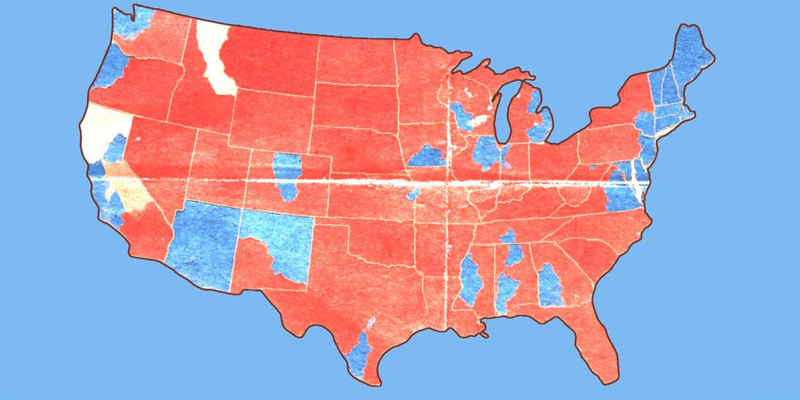
Vice President JD Vance put the double standard in sharp relief recently when he rightly observed that New England’s six states vote approximately 40 percent Republican and yet have literally zero Republican representatives in Congress. Zero. Not one. Forty percent of those voters have no voice in the House of Representatives. Democrats have drawn maps in Massachusetts, Connecticut, Vermont, and across the region that make Republican representation mathematically impossible. The media does not call this gerrymandering. There are no breathless editorials about the death of democracy. There are no lawsuits from well-funded nonprofits demanding fair maps. The silence tells you everything you need to know about who the rules are actually designed to protect.
Democrats play to win. They always have. California responded to Republican redistricting efforts by redrawing its own maps to gain five additional seats. New York, Illinois, and Maryland have all drawn maps that maximize Democratic advantage with ruthless efficiency. These are just facts. And they should explain how Republicans are approaching the opportunity now in front of them.
Tyler Bowyer, the Chief Operating Officer of Turning Point USA Action and an RNC committeeman, has been one of the clearest voices calling on Republicans to stop playing defense. When 21 Republican state senators in Indiana voted to kill a redistricting bill that would have given the party 2 additional House seats, Bowyer told the Daily Caller that Turning Point Action had already begun recruiting primary challengers during the vote. “I think a lot of people think we are bluffing about that,” Bowyer said, “but yesterday, during the vote, as the voting process was unfolding, we posted job openings to chase the vote against five senators.” He added, “We will be bringing in thousands of people and activating thousands of people to participate in the process of removing them from office.”
That is the correct posture. Indiana’s Republican supermajority had the votes to gain two seats and chose instead to hand them to Democrats in the name of procedural high-mindedness. That, and some state senators suffer from an insane case of TDS. State Senator Spencer Deery actually stood on the Senate floor and said his opposition to redistricting was “driven by” his conservative principles. President Trump responded by endorsing primary challengers to seven of the senators who voted against the bill. The Indiana primary on May 5 will be a referendum on whether the Republican base tolerates leaders who refuse to fight when the fight comes to them.
The contrast could not be sharper. Texas fights. Florida fights. Louisiana, as of this week, fights. Indiana folded. The states that are willing to use the tools available to them will shape the House majority for the next decade. The states that are not will watch from the sidelines while Democrats in blue states continue to draw maps that erase Republican voters from the congressional landscape entirely.
The Republican majority in the House is razor-thin—every seat matters. The Supreme Court has clarified the legal landscape, removing one of the biggest obstacles red states faced when drawing competitive maps. The question is no longer whether Republicans can redistrict. The question is whether they will.
History does not reward timidity. The voters who sent these legislators to their statehouses did not elect them to preserve a broken status quo. They elected them to govern. Governing means using every lawful tool at your disposal to advance the interests of the people who put you in office. The only Republicans who do not seem to understand it are the ones who will soon be looking for new jobs.