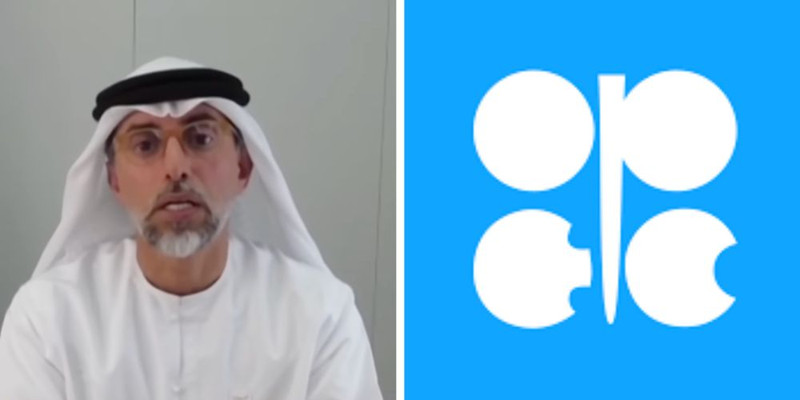

The United Arab Emirates announced Tuesday that it will withdraw from OPEC and OPEC+ beginning May 1, citing the need for greater flexibility in managing its energy strategy.
According to Reuters, UAE Energy Minister Suhail al-Mazrouei said the decision followed a “careful look” at the nation’s energy strategy, saying it was a “sovereign national decision” tied to their economic goals.
"Being a country with no obligation under the group will give us flexibility," al-Mazrouei said, noting the change comes amid consumers seeking stable supply and as strategic reserves are decreasing.
The UAE has been dissatisfied with its production quota under OPEC, despite being one of the group’s largest oil producers. The country also holds significant spare production capacity, meaning it has the ability to increase oil output beyond current levels. The decision to leave OPEC removes production constraints that had limited the UAE’s ability to fully utilize that capability, allowing the potential for expanded exports and more revenue when the current Iranian conflict dies down.
OPEC includes several major state-owned oil producers, including Saudi Arabia, Kuwait, and Iran. The UAE joined the organization nearly 60 years ago. OPEC+, the broader alliance that coordinates production levels with non-OPEC nations, also includes countries such as Russia and Mexico.
The withdrawal comes amid growing frustration within the UAE over regional security cooperation. Anwar Gargash, the diplomatic adviser to the UAE president, said recently that Gulf Cooperation Council countries have provided logistical support but have fallen short when it comes to political and military responses.
"The Gulf Cooperation Council countries supported each other logistically, but politically and militarily, I think their position has been the weakest historically," Gargash said on Monday. "I expect this weak stance from the Arab League and I am not surprised by it, but I haven't expected it from the (Gulf) Cooperation Council and I am surprised by it."