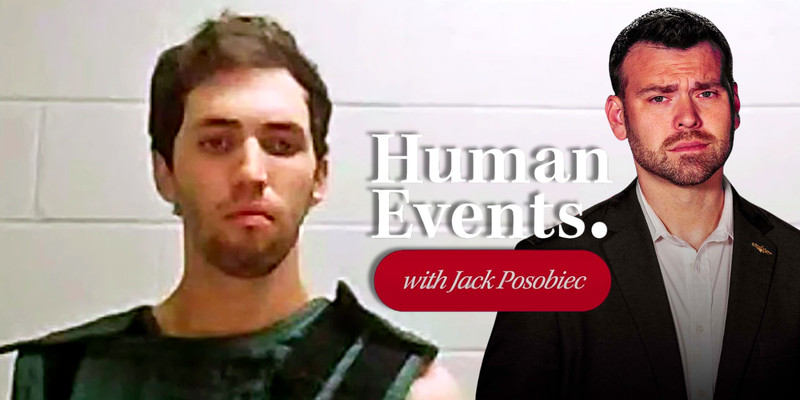

Questions about what video evidence exists in the Tyler Robinson case grow, with legal commentator Andrea Burkhart addressing the issue during an appearance on Human Events Daily with host Jack Posobiec. Burkhart pushed back on claims online that little or no video evidence exists in the case as it moves through the courts.
Posobiec said, “Because I keep hearing people say, oh, well, there's, there's no video of this. There's no video of that. Where's this video? Where's that video? And yet we do see references through these documents, and I believe it came up in the previous hearing, the most recent hearing, that there were other videos of Tyler Robinson.”
Posobiec said the fact that the material has not been released publicly does not mean it is not in the possession of investigators. “And so the presumption isn't necessarily at this point that all of the video has been released. In fact, it's that it will be released at the hearing.”
According to Burkhart, discovery materials indicate a substantial volume of surveillance footage has already been collected. “We know from the conversations about discovery that they have somewhere in the ballpark of 24 terabytes of video evidence, just from UVU's surveillance cameras alone. They have footage from neighboring ring cameras.” She also described standard investigative techniques used in cases involving large amounts of digital footage.
“It’s very common in cases like this as well to do what they call a video canvas. And so they would identify, like, routes that Tyler Robinson would have taken, either because it's a logical route or because they have obtained his location information from his cell phone or from his vehicle and navigation system or something like that. And then go and obtain video evidence from those sources as well.”
Burkhart said much of the material has not been released because the case has not yet reached the stage where evidence is presented in open court. “We can anticipate there is a huge volume of video evidence that's in the possession of law enforcement, but simply hasn't been made public because we haven't gotten to that point in this court process yet.”
Responding to criticism about delays in disclosure, she emphasized the structure of criminal proceedings. “We hold trials in the courtroom, not in the public square. The process needs to be fair to the defendant. And part of that includes having a jury that hasn't already made up their minds because they've already had everything that the parties have vetted in, in the media.”
She added that not all evidence gathered in a case necessarily becomes admissible at trial.
“Some things may ultimately not be admissible for one reason or another. So it wouldn't be appropriate for the jury to be making a decision based on that type of information. But if it's all out in the public, you can't unring a bell. You can't take that out of your mind once you've been exposed to it.”
Burkhart also pointed to court-imposed restrictions on public commentary during active proceedings, noting a gag order is in place covering attorneys and investigators to limit extrajudicial disclosures while the case proceeds.
Posobiec said, “Because I keep hearing people say, oh, well, there's, there's no video of this. There's no video of that. Where's this video? Where's that video? And yet we do see references through these documents, and I believe it came up in the previous hearing, the most recent hearing, that there were other videos of Tyler Robinson.”
Posobiec said the fact that the material has not been released publicly does not mean it is not in the possession of investigators. “And so the presumption isn't necessarily at this point that all of the video has been released. In fact, it's that it will be released at the hearing.”
According to Burkhart, discovery materials indicate a substantial volume of surveillance footage has already been collected. “We know from the conversations about discovery that they have somewhere in the ballpark of 24 terabytes of video evidence, just from UVU's surveillance cameras alone. They have footage from neighboring ring cameras.” She also described standard investigative techniques used in cases involving large amounts of digital footage.
“It’s very common in cases like this as well to do what they call a video canvas. And so they would identify, like, routes that Tyler Robinson would have taken, either because it's a logical route or because they have obtained his location information from his cell phone or from his vehicle and navigation system or something like that. And then go and obtain video evidence from those sources as well.”
Burkhart said much of the material has not been released because the case has not yet reached the stage where evidence is presented in open court. “We can anticipate there is a huge volume of video evidence that's in the possession of law enforcement, but simply hasn't been made public because we haven't gotten to that point in this court process yet.”
Responding to criticism about delays in disclosure, she emphasized the structure of criminal proceedings. “We hold trials in the courtroom, not in the public square. The process needs to be fair to the defendant. And part of that includes having a jury that hasn't already made up their minds because they've already had everything that the parties have vetted in, in the media.”
She added that not all evidence gathered in a case necessarily becomes admissible at trial.
“Some things may ultimately not be admissible for one reason or another. So it wouldn't be appropriate for the jury to be making a decision based on that type of information. But if it's all out in the public, you can't unring a bell. You can't take that out of your mind once you've been exposed to it.”
Burkhart also pointed to court-imposed restrictions on public commentary during active proceedings, noting a gag order is in place covering attorneys and investigators to limit extrajudicial disclosures while the case proceeds.