

Spain’s government says it will begin monitoring hate speech across digital platforms using a new measurement system, part of a wider effort to increase oversight of social media companies.
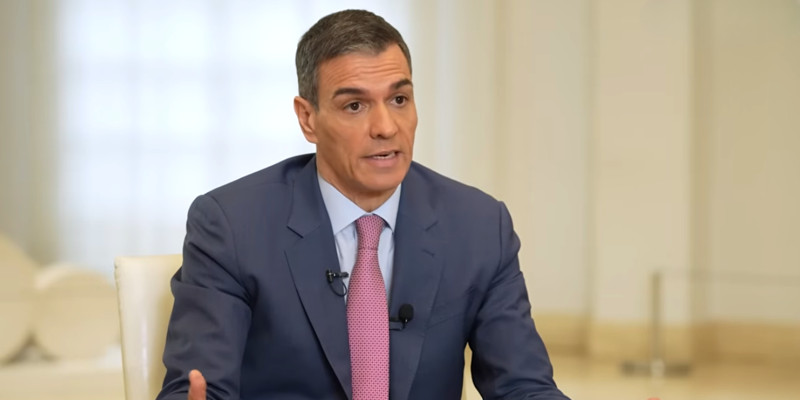
Prime Minister Pedro Sanchez announced Wednesday that the country will introduce a tool known as HODIO, a Spanish acronym for “Footprint of Hatred and Polarisation.” Officials say the system is meant to measure how hate speech spreads online and what impact it has. The idea is to track it more closely, something the government says hasn’t really been done before.
The new tool will allow authorities to systematically analyze the presence and amplification of hateful content on digital platforms. According to Sanchez, the results gathered through the system will be made public, per Reuters.
"We want to start talking about the impact of hate. When something is measured, it ceases to be invisible," he said. Sanchez also said the data will show which companies take action against such content and which do not. The results, he said, will allow citizens to see "who is blocking this content, who is looking the other way, and who is profiting from it."
Spain previously outlined a broader plan to regulate social media platforms. The proposal includes restrictions aimed at younger teenagers and measures that could hold platform executives responsible for illegal or hateful content hosted on their services. Per Politico, the new government tool will utilize AI to rank websites based on how much hate speech content is hosted.
Officials argue that online hate speech has contributed to growing divisions in Spanish society. Sanchez said the issue should be discussed in a similar way to environmental concerns.
Last year, JD Vance criticized European leaders over free speech concerns during an interview with Sean Hannity on Hannity.
"We have to ask ourselves, the questions as leaders, are we willing to defend people, even if we disagree with what they say? If you're not willing to do that, I don't think you're fit to lead Europe or the United States."
Separately, the United States Department of State has reportedly been exploring its own response to online censorship abroad. Officials have reportedly discussed creating a website called “freedom.gov” that could help users access online content restricted by governments under hate speech laws or other regulations.
The proposed site could include a virtual private network function designed to make users’ internet traffic appear as if it originates in the United States.
Prime Minister Pedro Sanchez announced Wednesday that the country will introduce a tool known as HODIO, a Spanish acronym for “Footprint of Hatred and Polarisation.” Officials say the system is meant to measure how hate speech spreads online and what impact it has. The idea is to track it more closely, something the government says hasn’t really been done before.
The new tool will allow authorities to systematically analyze the presence and amplification of hateful content on digital platforms. According to Sanchez, the results gathered through the system will be made public, per Reuters.
"We want to start talking about the impact of hate. When something is measured, it ceases to be invisible," he said. Sanchez also said the data will show which companies take action against such content and which do not. The results, he said, will allow citizens to see "who is blocking this content, who is looking the other way, and who is profiting from it."
Spain previously outlined a broader plan to regulate social media platforms. The proposal includes restrictions aimed at younger teenagers and measures that could hold platform executives responsible for illegal or hateful content hosted on their services. Per Politico, the new government tool will utilize AI to rank websites based on how much hate speech content is hosted.
Officials argue that online hate speech has contributed to growing divisions in Spanish society. Sanchez said the issue should be discussed in a similar way to environmental concerns.
Last year, JD Vance criticized European leaders over free speech concerns during an interview with Sean Hannity on Hannity.
"We have to ask ourselves, the questions as leaders, are we willing to defend people, even if we disagree with what they say? If you're not willing to do that, I don't think you're fit to lead Europe or the United States."
Separately, the United States Department of State has reportedly been exploring its own response to online censorship abroad. Officials have reportedly discussed creating a website called “freedom.gov” that could help users access online content restricted by governments under hate speech laws or other regulations.
The proposed site could include a virtual private network function designed to make users’ internet traffic appear as if it originates in the United States.