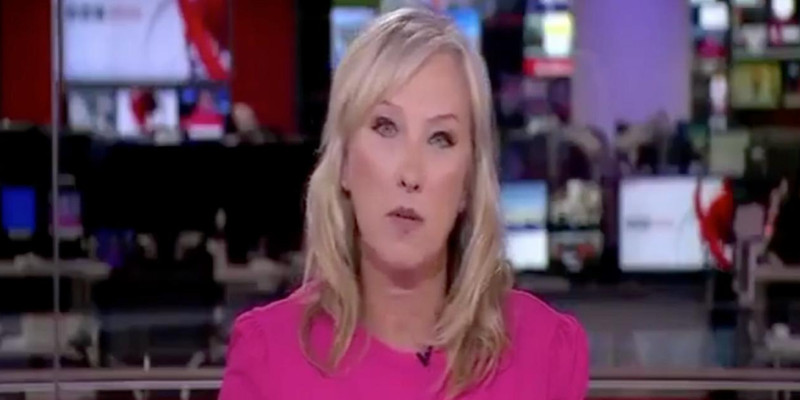

A BBC newsreader has been rebuked by the Executive Complaints Unit (ECU) after she changed the script while delivering news and allegedly made a "facial expression" that revealed her "controversial view about transpeople." In reading the news in June, Martine Croxall adjusted the language she was given about women.
As she read, she said "Malcolm Mistry, who was involved in the research, says that the aged, pregnant people—women—and those with pre-existing health conditions need to take precautions." Dr. Mistry of the London School of Hygiene and Tropical Medicine went on to use the term "pregnant women" when he was interviewed, which makes sense since only women can become pregnant.
Croxall was accused of "expressing a personal view," namely that "pregnant people" are "women" which is, of course, a biological fact and not an opinion. The complaint from the ECU, per The Telegraph, stated that "congratulatory messages Ms Croxall later received on social media, together with the critical views expressed in the complaints to the BBC and elsewhere, tended to confirm that the impression of her having expressed a personal view was widely shared across the spectrum of opinion on the issue."
The ECU went on to say that "Ms Croxall was reacting to scripting, which somewhat clumsily incorporated phrases from the press release accompanying the research, including ‘the aged,’ which is not the BBC style, and ‘pregnant people,’ which did not match what Dr Mistry said in the clip which followed."
The ECU further complained about Croxall, saying that she was in violation of BBC standards because "giving the strong impression of expressing a personal view on a controversial matter, even if inadvertently, falls short of the BBC’s expectations of its presenters and journalists in relation to impartiality."
Croxall was praised by women's rights activists online after her language change, as for years women have been complaining about the bastardization of language that erases women from motherhood, all in service to upholding the lie of gender ideology. Many health agencies in progressive countries have removed the words women or woman from guidance on pregnancy, menstruation, and even cervical cancer.
Absurd terminology has sprung up in its place, including pregnant person, cervix-havers, and other oddities. These confusing terms are meant to appease both those women who think they are men and those men who think they are women.
Maya Forstater said that complaints like this are why more people are afraid to simply tell the truth. "They're scared for their jobs. What the BBC has done is give those stories, any stories that touch on trans, to the LGBT correspondence, instead of to the health or education or social affairs."
Forstater said that the BBC is only giving those stories "to the people whose job it is to sell gender ideology, rather than the journalist, whose job it is to get to the bottom of the story and tell the truth."
As she read, she said "Malcolm Mistry, who was involved in the research, says that the aged, pregnant people—women—and those with pre-existing health conditions need to take precautions." Dr. Mistry of the London School of Hygiene and Tropical Medicine went on to use the term "pregnant women" when he was interviewed, which makes sense since only women can become pregnant.
Croxall was accused of "expressing a personal view," namely that "pregnant people" are "women" which is, of course, a biological fact and not an opinion. The complaint from the ECU, per The Telegraph, stated that "congratulatory messages Ms Croxall later received on social media, together with the critical views expressed in the complaints to the BBC and elsewhere, tended to confirm that the impression of her having expressed a personal view was widely shared across the spectrum of opinion on the issue."
The ECU went on to say that "Ms Croxall was reacting to scripting, which somewhat clumsily incorporated phrases from the press release accompanying the research, including ‘the aged,’ which is not the BBC style, and ‘pregnant people,’ which did not match what Dr Mistry said in the clip which followed."
The ECU further complained about Croxall, saying that she was in violation of BBC standards because "giving the strong impression of expressing a personal view on a controversial matter, even if inadvertently, falls short of the BBC’s expectations of its presenters and journalists in relation to impartiality."
Croxall was praised by women's rights activists online after her language change, as for years women have been complaining about the bastardization of language that erases women from motherhood, all in service to upholding the lie of gender ideology. Many health agencies in progressive countries have removed the words women or woman from guidance on pregnancy, menstruation, and even cervical cancer.
Absurd terminology has sprung up in its place, including pregnant person, cervix-havers, and other oddities. These confusing terms are meant to appease both those women who think they are men and those men who think they are women.
Maya Forstater said that complaints like this are why more people are afraid to simply tell the truth. "They're scared for their jobs. What the BBC has done is give those stories, any stories that touch on trans, to the LGBT correspondence, instead of to the health or education or social affairs."
Forstater said that the BBC is only giving those stories "to the people whose job it is to sell gender ideology, rather than the journalist, whose job it is to get to the bottom of the story and tell the truth."