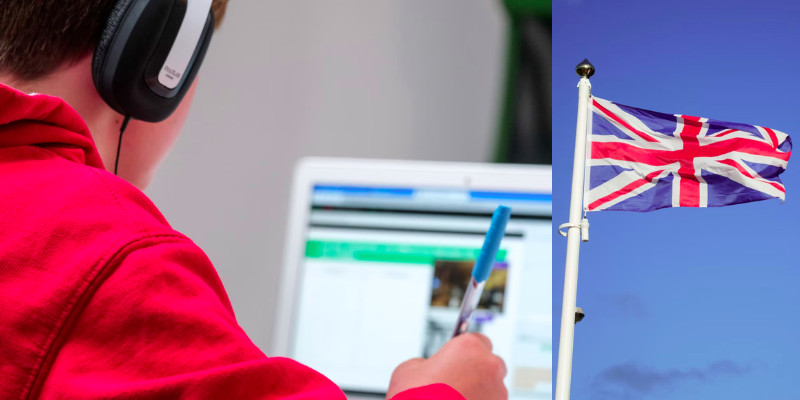

Teachers in parts of the United Kingdom are being told not to call on students to answer questions in class, under new local council guidelines meant to support pupils struggling with anxiety and school avoidance. The recommendations are part of efforts to tackle “emotionally based school avoidance” (EBSA), a growing issue, apparently, since the pandemic that has seen rising absenteeism across the country, the Daily Mail reports.
Several councils have issued guidance urging schools to make special accommodations for students who experience emotional distress about attending lessons. These include longer deadlines for homework, verbal feedback instead of grades, and even allowing children to choose their own seats or leave the classroom early to avoid “sensory overload.”
Gateshead Council told teachers they should not ask certain pupils to answer questions aloud if it causes them stress. The guidance also encourages staff to let anxious students sit where they feel most comfortable, take breaks during lessons, and use felt pads on chair legs to minimize noise in classrooms.
Essex County Council has also proposed that students who find particular subjects triggering should be allowed to skip those classes entirely. Instead of punishment for “challenging behaviour,” teachers are told to offer “positive praise for getting through a lesson” and provide “time-out” cards for when pupils feel overwhelmed.
Schools in Sutton, south London, have also been told to take a flexible approach by allowing students to drop stressful subjects, avoid reading aloud, and reduce homework demands. Suffolk County Council’s guidance cites a school policy as an example of “good practice” where teachers no longer “randomly pick on pupils” to answer questions.
Education experts say the approach could backfire. Former headteacher Dennis Hayes, now Emeritus Professor of Education at the University of Derby, said: “Teachers need to reassert what their profession is about: education not therapy.”
Chris McGovern, chairman of the Campaign for Real Educatio called the policies “a recipe for disaster.” He said, “They will unwind both pupil behaviour and academic endeavour. The best antidote to pupil anxiety is challenge rather than appeasement.”
The rise in EBSA has coincided with concerning school attendance trends. Before the pandemic, in the 2018/19 academic year, the overall absence rate stood at 4.7 percent, with persistent absences at 10.9 percent. By fall 2024, those numbers had risen to 6.38 and 17.8 percent, respectively. Severe absence rates—when a student misses half or more school sessions—have also slightly increased.
Dr. Sami Timimi, a child psychiatrist and author of Searching for Normal, warned that labeling ordinary stress as a mental disorder can have lasting effects: “Once you enter into the framework of imagining these stresses as markers for potential mental disorders, you could inadvertently end up in a lifelong relationship with feeling broken or dysregulated,” he said.
A Department for Education spokesperson told the Mail that while schools need to also “apply common sense and maintain standards," keeping" children in school and reversing the worrying trend in school absence rates is a vital priority for the sake of children’s futures and mental health has an important role to play in this."
Several councils have issued guidance urging schools to make special accommodations for students who experience emotional distress about attending lessons. These include longer deadlines for homework, verbal feedback instead of grades, and even allowing children to choose their own seats or leave the classroom early to avoid “sensory overload.”
Gateshead Council told teachers they should not ask certain pupils to answer questions aloud if it causes them stress. The guidance also encourages staff to let anxious students sit where they feel most comfortable, take breaks during lessons, and use felt pads on chair legs to minimize noise in classrooms.
Essex County Council has also proposed that students who find particular subjects triggering should be allowed to skip those classes entirely. Instead of punishment for “challenging behaviour,” teachers are told to offer “positive praise for getting through a lesson” and provide “time-out” cards for when pupils feel overwhelmed.
Schools in Sutton, south London, have also been told to take a flexible approach by allowing students to drop stressful subjects, avoid reading aloud, and reduce homework demands. Suffolk County Council’s guidance cites a school policy as an example of “good practice” where teachers no longer “randomly pick on pupils” to answer questions.
Education experts say the approach could backfire. Former headteacher Dennis Hayes, now Emeritus Professor of Education at the University of Derby, said: “Teachers need to reassert what their profession is about: education not therapy.”
Chris McGovern, chairman of the Campaign for Real Educatio called the policies “a recipe for disaster.” He said, “They will unwind both pupil behaviour and academic endeavour. The best antidote to pupil anxiety is challenge rather than appeasement.”
The rise in EBSA has coincided with concerning school attendance trends. Before the pandemic, in the 2018/19 academic year, the overall absence rate stood at 4.7 percent, with persistent absences at 10.9 percent. By fall 2024, those numbers had risen to 6.38 and 17.8 percent, respectively. Severe absence rates—when a student misses half or more school sessions—have also slightly increased.
Dr. Sami Timimi, a child psychiatrist and author of Searching for Normal, warned that labeling ordinary stress as a mental disorder can have lasting effects: “Once you enter into the framework of imagining these stresses as markers for potential mental disorders, you could inadvertently end up in a lifelong relationship with feeling broken or dysregulated,” he said.
A Department for Education spokesperson told the Mail that while schools need to also “apply common sense and maintain standards," keeping" children in school and reversing the worrying trend in school absence rates is a vital priority for the sake of children’s futures and mental health has an important role to play in this."