
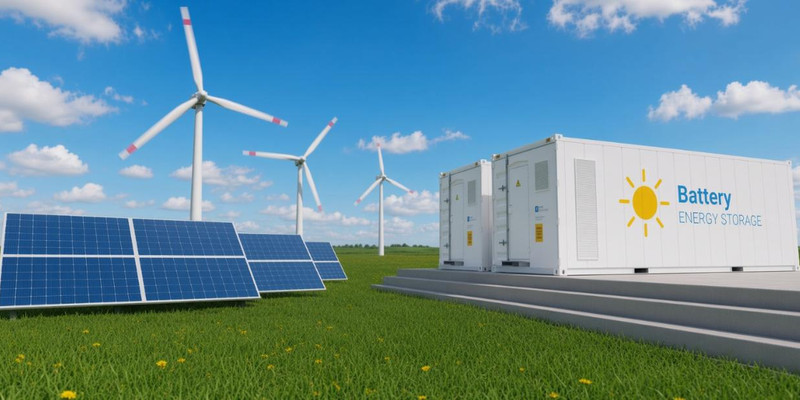

Congress did something right last summer. The One Big Beautiful Bill ended the open-ended tax credits for wind and solar. A project must break ground by July 4, 2026, or be operating by the end of 2027, or it gets nothing.
Yet Congress left a gaping loophole. It preserved the same rich subsidy for grid batteries: full value for projects that start construction any time through 2033. The phase-down does not even begin until 2034.
That was a mistake. It needs fixing now.
Batteries have quietly become one of the largest remaining energy subsidies. Standalone batteries and solar-plus-battery hybrids already claimed about 26 percent of all clean-energy tax credits sold in the first half of 2025. The Energy Information Administration expects more than 18 gigawatts of new battery capacity this year, roughly 80 percent more than last year. The credit Congress kept is a firehose of taxpayer money.
Here is what that money buys. A grid battery generates zero kilowatt-hours. It buys power when it is cheap and sells when it is expensive. That is pure arbitrage, and it is now the dominant profit model for grid-scale batteries in America.
Paired with solar, a combination that is exploding, the trade is straightforward. Charge at midday when subsidized solar has driven wholesale prices down. Hold the energy. Discharge into the evening peak when demand spikes and prices soar.
Washington hands these projects a tax credit worth 30 percent of the cost to build the machine that runs this trade.
Wholesale markets make it even sweeter. They use pay-as-cleared pricing: every resource that clears is paid the single highest price needed to meet demand that hour. A battery that waits for scarcity and dumps power, then collects that top price on every megawatt it sells. Stack on capacity payments for simply being available and ancillary-service payments for grid balancing. The industry calls it revenue stacking, money from three different pockets, all belonging to electricity consumers.
We subsidize the construction of a trading desk, then pay premium prices to trade against us.
Defenders claim batteries make the grid more reliable. They can shave a few hours off the evening peak. That has limited value. A typical four-hour battery cannot keep the lights on through a week of cloudy, windless winter weather.
Behind every battery sits a full-time gas or nuclear plant, standing ready for when the stored energy runs out. Ratepayers fund the solar, the battery, and the backup, yet still receive only one grid's worth of dependable power. We pay for two systems and get one.
This is the same lesson we refuse to learn. The corn ethanol mandate was sold as clean fuel; it raised food prices and plowed up grassland. Good intentions, subsidized at scale, produce expensive unintended consequences. Grid batteries are the newest example and gets put on every family’s electric bill.
There is a simple test for any subsidy. If a project only makes financial sense because of the tax credit, the market is telling you it is not ready. Let batteries compete on their own merits, against gas, against nuclear, against demand response, with no government thumb on the scale.
If batteries are as valuable as their backers claim, they will get built without our money. If they are not, we should not borrow from our grandchildren by adding to our $38 trillion national debt to force them into existence.
Congress finished half the job in July. It ended the subsidy for wind and solar power. It should finish the other half and end subsidies for batteries that merely trade it.
When a business only pencils out because Washington is writing the check, the problem is not the price of power. It is the policy.
Frank Lasee is the President of Truth in Energy and Climate.