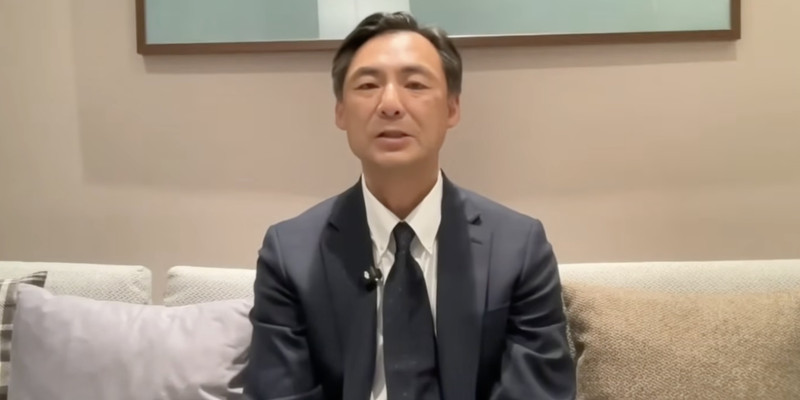

An American citizen and former US ambassador under Trump has been blocked from leaving South Korea and is facing a trial and possible jail time in the country over comments made on US soil allegedly defaming South Korea’s president.
Morse Tan served as the Ambassador-at-Large for Global Criminal Justice from December 2019 to January 2021, under the first Trump administration. Tan first arrived in South Korea in May, and has been subjected to ongoing exit bans since then. He had come to South Korea to monitor local elections.
Tan was charged in July after a criminal investigation was reopened into remarks Tan made during a June 2025 event at the National Press Club in Washington, DC, per the Christian Post. Tan had said at the event that there were reports South Korean President Lee Jae Myung had been involved in “gang-raping and murdering a young lady” when Lee was a teen, and that he was unable to attend junior high and high school following juvenile detention.
Per the Korea Times, police had initially launched an investigation after receiving a criminal complaint from a civic group, however, the case was later closed without being referred to prosecutors. Police ruled that jurisdiction did not apply because Tan was a foreign national and the statements had been made outside Korea.
Police were ordered to reopen the investigation on May 13 by prosecutors, who argued that the location of the crime could extend to where its effects were felt, and that the victim was in Korea.
Exit bans have been extended as Tan awaits trial. On October 8, the Seoul Administrative Court rejected Tan's request to suspend the exit ban so he could travel back to the US for his grandmother’s funeral. The court had acknowledged the urgent personal need, however, it cited risks to public interest while the trial proceeds. Tan is set to appear in court on Friday.
Lawmakers and officials have urged South Korea to lift the exit ban and drop the charges. TPUSA Faith head Lucas Miles wrote, “If a former US ambassador can be imprisoned for what he said in an American city, then no American who speaks about a foreign government is secure, whether a pastor, a scholar, or a private citizen.”
He later added, “Nations that reach across borders to punish speech do not stop with one case; this is the precedent at stake, and it is why this alliance, sealed by some 50,000 American casualties in the Korean War and built on freedom of speech and conscience, must not tolerate it.
“We therefore call upon the Department of State and the Congress of the United States to treat the defense of an American citizen’s liberty as a matter of national honor, and to make clear, through every diplomatic channel, that it will be defended. We call upon the Government of the Republic of Korea to lift the travel restrictions on Ambassador Tan without delay and withdraw the speech-related prosecutions.”
In August, members of the US Congress sent a letter to South Korea’s ambassador in Washington DC urging for his release. Reps. Young Kim, Michael Cloud, Christopher Smith, and Brian Mast wrote, “Members of a Congressional delegation last month met with Ambassador Tan, who thankfully remains in good health and positive spirits. We respectfully urge the ROK government to lift the exit ban on Ambassador Tan to let him return home.”