
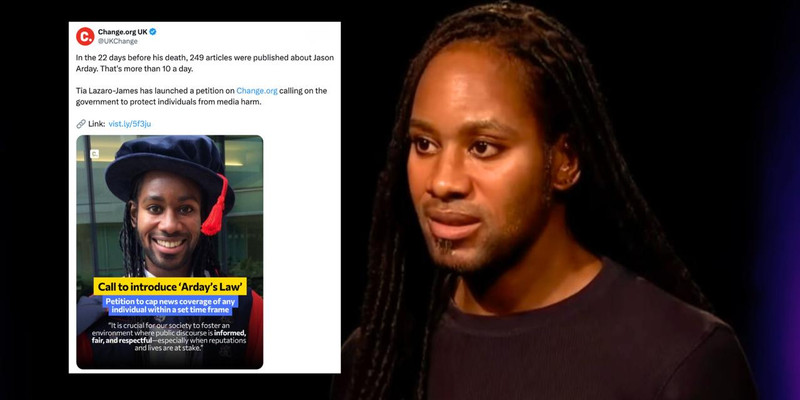

Left-wing activists in the UK have started a petition to create a law that would ban heavy media coverage of any individual person following the untimely death of former Cambridge Professor Jason Arday. Arday resigned from his position amid plagiarism accusations and allegations that he had fabricated portions of his resume. He was later found dead in his home, though the cause of death was not released.
The Change.org petition, started by Tia Lazaro-James, states that there should be "legislative action to impose limitations on the number of news articles published about a single individual within a defined time frame." Over 3,500 people have signed the petition thus far, which states that "249 articles were published across 15 major British news outlets" from July 24 to August 14. 188 of those articles "were written in the 9-day period between his resignation and his death."
In the years prior to Arday's death, there were "years of uncritical interviews" and "repeated nonsense claims" about the professor from the BBC. Before July 2026, reports The Spectator, the BBC "produced at least 11 radio programmes (totaling nearly six hours of Arday content), four news articles, and two TV interviews championing the academic and repeating his false claims." The BBC rushed to defend Arday following the public allegations.
The petition claims that the professor suffered a "relentless flood of media articles casting unverified allegations" against him, and his death is a "stark reminder of the urgent need for responsible journalism that respects privacy and prioritizes fact-based reporting."
The petitioners claim that by taking up this kind of legislation, it will "ensure that individuals are not subjected to undue public pressure and potential mental anguish caused by excessive media coverage."
"The government must hold media outlets accountable for their role in amplifying potentially damaging narratives," the petition adds, placing blame on the media outlets for the outcome of Arday's case.
The Guardian is among those outlets that have been accused of furthering Arday's mental distress. The Canary UK said that the outlet's "Katharine Viner was warned Arday was at risk - yet published anyway," insinuating that it was her and the outlet's responsibility to protect Arday from reporting on his own plagiarism and falsehoods.
"Leftists and DEI supporters are urging the British government to pass a law that would ban heavy media coverage of a person," said The Post Millennial's Andy Ngo. "They say this is needed after dozens of stories were published about Jason Arday’s numerous and extensive lies. There were so many stories because there were so many lies."
Arday claimed that he was mute until age 11 and illiterate until the age of 18. Despite this, he claimed those obstacles did not deter him from getting a PhD by age 30. He also claimed that he suffered from various medical conditions, including autism, epilepsy, testicular cancer, locked-in syndrome, and other medical challenges. Arday also claimed that he was subjected to racism, including a pig's head being sent to his family's home. When pressed for evidence, he said that he expected to simply be believed.
He also claimed that he had become a world-class endurance athlete, running multiple marathons including the claim that he ran 600 miles in 6 days. He also claimed to have run 30 marathons in 35 days. These marathons were not able to be verified. He claimed that during the 21st marathon, he fractured his leg in an episode of epilepsy, but went on to complete it and finish nine other marathons.
Much of his backstory, as well as his reputation came under question after evidence of plagiarism was found in his writings. When those allegations were first made, Cambridge University determined not to investigate them.
It wasn't until a former Cambridge professor, Nathan Cofnas, brought the allegations public that the university and the press began to take notice. Prior allegations that had come up from other academics resulted in Arday reporting that professor to police. This was only one instance where he called police to report colleagues looking into claims of plagiarism and fabrication.
Arday resigned and was later found deceased in his London home. Though a cause of death has not been released, it is widely believed that he took his own life. Activists and mourners gathered in London to protest the racism they say plagued his career and caused his death. Others say that it was the racism of the DEI advocates and white administrators who sought to have a black professor that were to blame for coddling Arday and allowing his lies to persist without question.
The Change.org petition, started by Tia Lazaro-James, states that there should be "legislative action to impose limitations on the number of news articles published about a single individual within a defined time frame." Over 3,500 people have signed the petition thus far, which states that "249 articles were published across 15 major British news outlets" from July 24 to August 14. 188 of those articles "were written in the 9-day period between his resignation and his death."
In the years prior to Arday's death, there were "years of uncritical interviews" and "repeated nonsense claims" about the professor from the BBC. Before July 2026, reports The Spectator, the BBC "produced at least 11 radio programmes (totaling nearly six hours of Arday content), four news articles, and two TV interviews championing the academic and repeating his false claims." The BBC rushed to defend Arday following the public allegations.
The petition claims that the professor suffered a "relentless flood of media articles casting unverified allegations" against him, and his death is a "stark reminder of the urgent need for responsible journalism that respects privacy and prioritizes fact-based reporting."
The petitioners claim that by taking up this kind of legislation, it will "ensure that individuals are not subjected to undue public pressure and potential mental anguish caused by excessive media coverage."
"The government must hold media outlets accountable for their role in amplifying potentially damaging narratives," the petition adds, placing blame on the media outlets for the outcome of Arday's case.
The Guardian is among those outlets that have been accused of furthering Arday's mental distress. The Canary UK said that the outlet's "Katharine Viner was warned Arday was at risk - yet published anyway," insinuating that it was her and the outlet's responsibility to protect Arday from reporting on his own plagiarism and falsehoods.
"Leftists and DEI supporters are urging the British government to pass a law that would ban heavy media coverage of a person," said The Post Millennial's Andy Ngo. "They say this is needed after dozens of stories were published about Jason Arday’s numerous and extensive lies. There were so many stories because there were so many lies."
Arday claimed that he was mute until age 11 and illiterate until the age of 18. Despite this, he claimed those obstacles did not deter him from getting a PhD by age 30. He also claimed that he suffered from various medical conditions, including autism, epilepsy, testicular cancer, locked-in syndrome, and other medical challenges. Arday also claimed that he was subjected to racism, including a pig's head being sent to his family's home. When pressed for evidence, he said that he expected to simply be believed.
He also claimed that he had become a world-class endurance athlete, running multiple marathons including the claim that he ran 600 miles in 6 days. He also claimed to have run 30 marathons in 35 days. These marathons were not able to be verified. He claimed that during the 21st marathon, he fractured his leg in an episode of epilepsy, but went on to complete it and finish nine other marathons.
Much of his backstory, as well as his reputation came under question after evidence of plagiarism was found in his writings. When those allegations were first made, Cambridge University determined not to investigate them.
It wasn't until a former Cambridge professor, Nathan Cofnas, brought the allegations public that the university and the press began to take notice. Prior allegations that had come up from other academics resulted in Arday reporting that professor to police. This was only one instance where he called police to report colleagues looking into claims of plagiarism and fabrication.
Arday resigned and was later found deceased in his London home. Though a cause of death has not been released, it is widely believed that he took his own life. Activists and mourners gathered in London to protest the racism they say plagued his career and caused his death. Others say that it was the racism of the DEI advocates and white administrators who sought to have a black professor that were to blame for coddling Arday and allowing his lies to persist without question.