
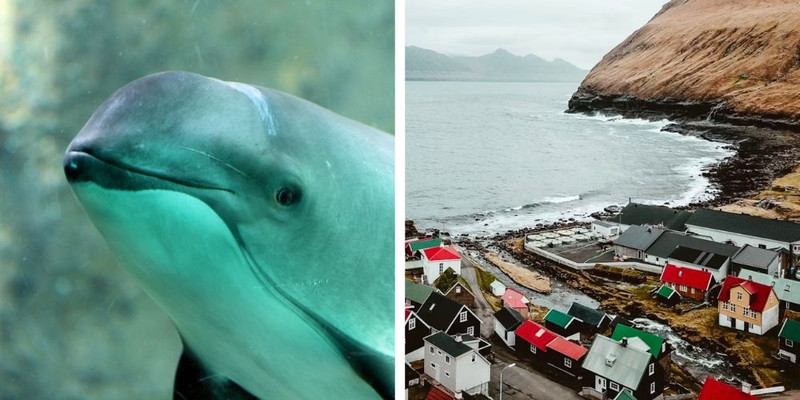

Over 700 porpoises were killed in a day in the Faroe Islands as part of the territory's traditional hunt, figures released by marine conservation group Sea Shepherd said.
The massive hunt took place across the North Atlantic archipelago, an autonomous territory within the Kingdom of Denmark, reports the New York Post. Sea Shepherd said 406 of the animals were killed in the capital, Torshavn, alone. The total number of porpoises and other marine mammals killed during the event exceeded two-thirds of the roughly 1,000 animals reportedly taken in the Faroe Islands through 2025.
The Grindadrap, often referred to simply as the "Grind," is a centuries-old Faroese practice in which whales and dolphins are driven into shallow coastal bays before being harvested for food. The tradition is believed to date back to the Nordic settlement of the islands during the ninth and tenth centuries.
Sea Shepherd said this year's hunt was marked by a shortage of spinal lances, equipment that is required for dispatching dolphins under Danish regulations. According to the organization, participants instead relied in part on whaling knives and other tools during the hunt.
“Multiple marine mammals were instead killed using knives only leaving the animals stressed for an extended period before bleeding to death,” Sea Shepherd said in a statement.
The group also alleged that a lack of equipment and manpower contributed to additional injuries among the animals.
“In scenes of prolonged animal cruelty, reports also suggest the lack of equipment and shortage of participants led to dolphins being crushed against rocks, driven over and cut by boat propellers,” they continued.
Spinal lances are designed to sever the spinal cord and major blood vessels, causing rapid unconsciousness and death. Sea Shepherd said the alternative tools used during parts of the hunt were less effective for that purpose.
The annual hunts have long drawn criticism from animal welfare and environmental organizations, while many Faroese residents view pilot whales and dolphins as a renewable food source and a longstanding part of local culture.
Sea Shepherd said its marine conservation crews operating in the Faroe Islands could face deportation for documenting the hunts.
The organization described the scale of the 2026 hunt as unprecedented in modern times.
The massive hunt took place across the North Atlantic archipelago, an autonomous territory within the Kingdom of Denmark, reports the New York Post. Sea Shepherd said 406 of the animals were killed in the capital, Torshavn, alone. The total number of porpoises and other marine mammals killed during the event exceeded two-thirds of the roughly 1,000 animals reportedly taken in the Faroe Islands through 2025.
The Grindadrap, often referred to simply as the "Grind," is a centuries-old Faroese practice in which whales and dolphins are driven into shallow coastal bays before being harvested for food. The tradition is believed to date back to the Nordic settlement of the islands during the ninth and tenth centuries.
Sea Shepherd said this year's hunt was marked by a shortage of spinal lances, equipment that is required for dispatching dolphins under Danish regulations. According to the organization, participants instead relied in part on whaling knives and other tools during the hunt.
“Multiple marine mammals were instead killed using knives only leaving the animals stressed for an extended period before bleeding to death,” Sea Shepherd said in a statement.
The group also alleged that a lack of equipment and manpower contributed to additional injuries among the animals.
“In scenes of prolonged animal cruelty, reports also suggest the lack of equipment and shortage of participants led to dolphins being crushed against rocks, driven over and cut by boat propellers,” they continued.
Spinal lances are designed to sever the spinal cord and major blood vessels, causing rapid unconsciousness and death. Sea Shepherd said the alternative tools used during parts of the hunt were less effective for that purpose.
The annual hunts have long drawn criticism from animal welfare and environmental organizations, while many Faroese residents view pilot whales and dolphins as a renewable food source and a longstanding part of local culture.
Sea Shepherd said its marine conservation crews operating in the Faroe Islands could face deportation for documenting the hunts.
The organization described the scale of the 2026 hunt as unprecedented in modern times.