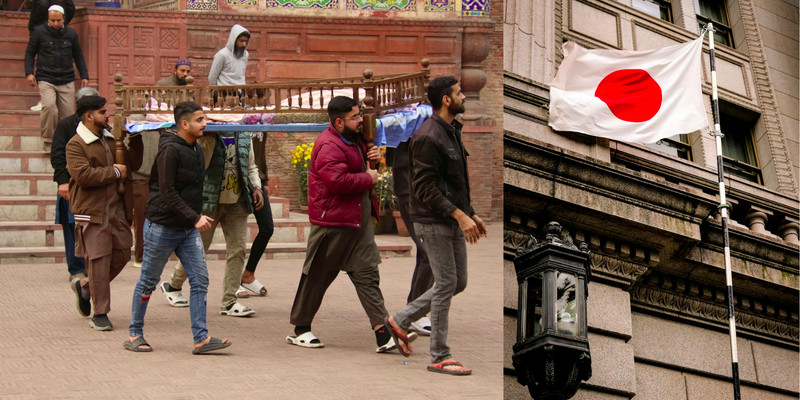

Burial access for Muslim residents in Japan's foreign workforce is becoming the latest tension between foreigners and local governments. Burial is permitted under Japanese law, but in practice only a small number of sites accept Muslim burials. The nations native residents traditionally are cremated.
Reporting by Unseen Japan indicates fewer than a dozen facilities nationwide currently accommodate Islamic burial practices, with no known sites west of the Chūgoku region. That leaves major population areas such as Kansai and Kyushu without nearby access.
Muslim burial requires specific procedures, including washing the body, wrapping it in a white shroud, and interment as quickly as possible, typically within 24 hours. Those requirements don't line up for the Japanese, where cremation is by far the dominant method of dealing with the dead.
Since January 2026, the central government has surveyed 129 prefectures and major cities on cemetery regulations and burial capacity as part of a broader review linked to foreign resident population trends.
Families report two main alternatives: transporting remains long distances within Japan to reach the limited number of burial sites, or repatriating bodies abroad, often at significant cost.
Local proposals to establish Muslim burial grounds have repeatedly faced big resisteance. In Hiji Town, Oita Prefecture, a plan involving municipal land acquisition for a Muslim burial site was advanced by a local Islamic association. The proposal included a capped number of plots, eligibility restrictions, groundwater testing, and environmental safeguards.
Opposition quickly emerged from residents in surrounding areas, including concerns about groundwater contamination. Complaints submitted during the process included language described by Muslim Network potentially constituting hate speech. These kinds of burial traditions are not at all part of Japanese culture.
In Sakuragawa City, Ibaraki Prefecture, a Buddhist-affiliated organization working with Muslim groups withdrew an application for a burial site after local opposition and claims that residents had not been adequately consulted.
In another case in Oita Prefecture, a mayoral election resulted in a reversal of a planned cemetery project after a candidate opposed to the development defeated the incumbent and later halted the land sale after taking office. Japan’s foreign workforce reached approximately 2.3 million workers by the end of 2024, nearly three times the level recorded a decade earlier.
Reporting by Unseen Japan indicates fewer than a dozen facilities nationwide currently accommodate Islamic burial practices, with no known sites west of the Chūgoku region. That leaves major population areas such as Kansai and Kyushu without nearby access.
Muslim burial requires specific procedures, including washing the body, wrapping it in a white shroud, and interment as quickly as possible, typically within 24 hours. Those requirements don't line up for the Japanese, where cremation is by far the dominant method of dealing with the dead.
Since January 2026, the central government has surveyed 129 prefectures and major cities on cemetery regulations and burial capacity as part of a broader review linked to foreign resident population trends.
Families report two main alternatives: transporting remains long distances within Japan to reach the limited number of burial sites, or repatriating bodies abroad, often at significant cost.
Local proposals to establish Muslim burial grounds have repeatedly faced big resisteance. In Hiji Town, Oita Prefecture, a plan involving municipal land acquisition for a Muslim burial site was advanced by a local Islamic association. The proposal included a capped number of plots, eligibility restrictions, groundwater testing, and environmental safeguards.
Opposition quickly emerged from residents in surrounding areas, including concerns about groundwater contamination. Complaints submitted during the process included language described by Muslim Network potentially constituting hate speech. These kinds of burial traditions are not at all part of Japanese culture.
In Sakuragawa City, Ibaraki Prefecture, a Buddhist-affiliated organization working with Muslim groups withdrew an application for a burial site after local opposition and claims that residents had not been adequately consulted.
In another case in Oita Prefecture, a mayoral election resulted in a reversal of a planned cemetery project after a candidate opposed to the development defeated the incumbent and later halted the land sale after taking office. Japan’s foreign workforce reached approximately 2.3 million workers by the end of 2024, nearly three times the level recorded a decade earlier.