
Hungary's new prime minister even more hawkish on border security than Orban

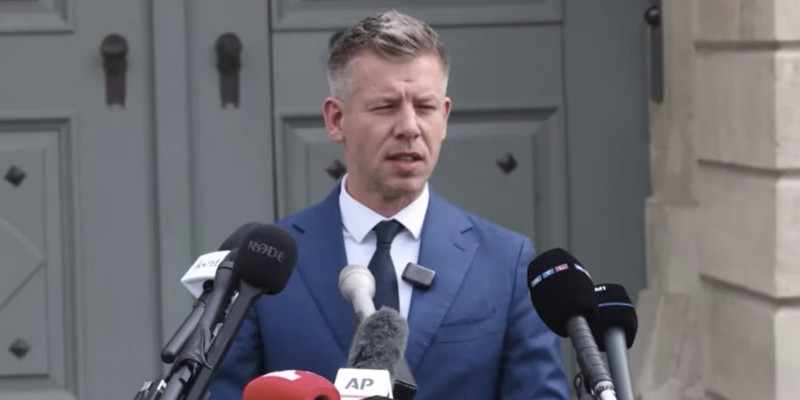
Magyar announced that Hungary will not participate in the EU’s Migration Pact and plans to further strengthen the country’s border controls.

Magyar announced that Hungary will not participate in the EU’s Migration Pact and plans to further strengthen the country’s border controls.

ad-image
Hungary’s incoming prime minister is already signaling he won’t fall in line with Brussels on some of its biggest policy priorities after the nation's electoral defeat of longtime leader Viktor Orban. Peter Magyar, who is expected to take office following his election win, has indicated he will move to resolve disputes with the EU in order to unlock roughly €35 billion in funding currently tied up in ongoing disagreements. At the same time, though, he has drawn clear lines on issues like migration and EU expansion.

He said he would not block a proposed €90 billion EU loan to Ukraine, a measure previously vetoed by Orban. But Magyar also stated Hungary would not contribute financially to that effort and would oppose any move to bring Ukraine into the European Union.

Magyar announced that Hungary will not participate in the EU’s Migration Pact and plans to further strengthen the country’s border controls. The government also intends to continue rejecting the bloc’s asylum framework.


Those positions echo policies that were a huge sore spot between Hungary and EU leadership under Orban—and may continue to be under Magyar. Orban’s use of actual physical border barriers and immigration enforcement drew the ire of Brussels repeatedly. European Commission President
Ursula von der Leyen had previously said Hungary’s border measures, including the use of walls and barbed wire, violated EU standards on migration policy.

Despite expectations from some international observers that Orban’s departure would clear the way for closer alignment with EU priorities, Magyar’s early statements suggest a more complicated dynamic. He has indicated a willingness to engage with EU institutions on financial matters, but not at the expense of key national policies.


Orban’s tenure
full of clashes with the EU over immigration, foreign policy, and governance issues. His use of Hungary’s veto power in EU decision-making often stalled initiatives, particularly those related to Ukraine and migration.

With that veto now out of the picture, attention has shifted to how the new government will navigate its relationship with Brussels. For now, it looks like cooperation in some areas such as funding to Ukraine, but resistance in others, and that balance may define Hungary’s next phase.



Image: Title: Peter Magyar,

Opinion

View All

Mexico’s Sheinbaum backs Pope Leo after clash between pontiff and Trump

“The Pope has been constantly calling for peace, which is something that we praise,” she said....

Trans male appointed to head women's health charity steps down after backlash

"It was not a decision taken lightly, but one I believe is in the best interests of myself, the chari...

SOAD TABRIZI: Case of the Omaha toddler slasher reveals failure of leftist criminal justice policies

Violent criminals are given "fair" punishment determined by a subjective test of their competency, al...