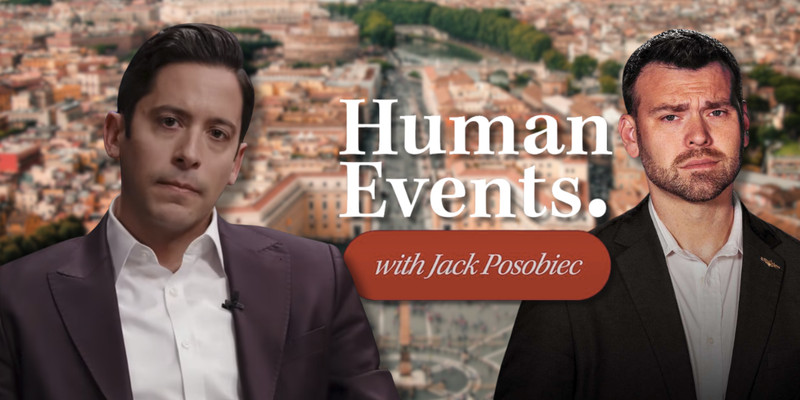

Human Events Daily host Jack Posobiec and commentator Michael Knowles pushed back on media claims suggesting tension between the United States and the Vatican, calling the narrative misleading and detached from historical reality.
Knowles dismissed the premise outright, saying, “The idea here that this Free Press story promoted by liberals is going to suggest that the US is going to go to war with the Holy See, it's just totally laughable, it's historically illiterate, and it seems to be dishonest, judging by what the Department of War just put out.”
Posobiec said the coverage appeared designed to create division between US leadership, the Pentagon, and the Pope. “Well, I think the story was dishonest, and, you know, I also saw people trying to… use this as a wedge of, you know, putting it between the Pentagon and the Trump officials and the Pope,” he said.
He added that the reaction ignored longstanding precedent. “Guys, newsflash, Popes generally in the modern era are not pro-war, regardless of what the war is,” Posobiec said, pointing to past examples. “Pope John Paul II, one of the last things that he did on the world stage was speak out against the start of the Iraq war, so this isn't something new.”
Posobiec said the framing of the issue as a major development was misplaced. “Shocker, right, you know, church leader calls for peace, it's not exactly something new,” he said, adding that “the Popes are generally always like that, that's pretty much what they go for.”
Knowles also rejected claims that the Trump administration is anti-Catholic. “Some people are using this to attack the Trump administration as being anti-Catholic, which I think is pretty laughable,” he said, noting the presence of Catholic officials in senior government roles.
He also addressed criticism of the Pope from some commentators, saying it reflects a misunderstanding of the Church. “Some are claiming that Pope Leo XIV is a liberal or something like that, and I think this speaks to an understandable ignorance of what the Pope is and what the Catholic Church is,” Knowles said.
“The Pope… is much more conservative than basically any American politician in either party,” he said, citing positions on “life,” “marriage,” and “sexual ethics.”
“You cannot map the left-wing political paradigm onto an institution such as the Catholic Church,” Knowles added.
Knowles dismissed the premise outright, saying, “The idea here that this Free Press story promoted by liberals is going to suggest that the US is going to go to war with the Holy See, it's just totally laughable, it's historically illiterate, and it seems to be dishonest, judging by what the Department of War just put out.”
Posobiec said the coverage appeared designed to create division between US leadership, the Pentagon, and the Pope. “Well, I think the story was dishonest, and, you know, I also saw people trying to… use this as a wedge of, you know, putting it between the Pentagon and the Trump officials and the Pope,” he said.
He added that the reaction ignored longstanding precedent. “Guys, newsflash, Popes generally in the modern era are not pro-war, regardless of what the war is,” Posobiec said, pointing to past examples. “Pope John Paul II, one of the last things that he did on the world stage was speak out against the start of the Iraq war, so this isn't something new.”
Posobiec said the framing of the issue as a major development was misplaced. “Shocker, right, you know, church leader calls for peace, it's not exactly something new,” he said, adding that “the Popes are generally always like that, that's pretty much what they go for.”
Knowles also rejected claims that the Trump administration is anti-Catholic. “Some people are using this to attack the Trump administration as being anti-Catholic, which I think is pretty laughable,” he said, noting the presence of Catholic officials in senior government roles.
He also addressed criticism of the Pope from some commentators, saying it reflects a misunderstanding of the Church. “Some are claiming that Pope Leo XIV is a liberal or something like that, and I think this speaks to an understandable ignorance of what the Pope is and what the Catholic Church is,” Knowles said.
“The Pope… is much more conservative than basically any American politician in either party,” he said, citing positions on “life,” “marriage,” and “sexual ethics.”
“You cannot map the left-wing political paradigm onto an institution such as the Catholic Church,” Knowles added.