
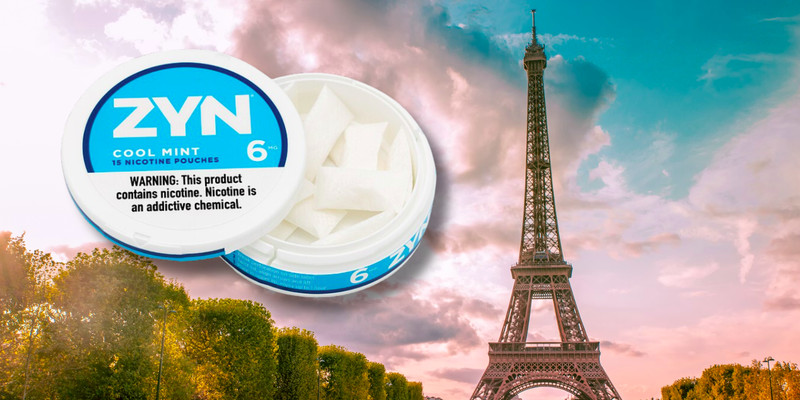

France has rolled out a ban on nicotine pouches such as Zyn and other oral nicotine products, turning possession, use, and sale into a criminal offense that can carry prison time and significant financial penalties.
The policy took effect April 1 and covers a wide range of products including nicotine pouches, lozenges, and similar smokeless nicotine formats. Under the law, those found in breach could face up to five years in prison and fines reaching about $436,600.
Authorities have now formally classified nicotine as a “toxic substance,” citing health risks linked to addiction and adverse reactions. The move places France among a small number of European countries taking aggressive steps against newer nicotine products.
Zyn, the Swedish-origin brand that has become widely used across Europe and the United States as a smokeless alternative to cigarettes.
Nicotine pouches are small white sachets filled with nicotine and flavoring agents. Users place them between the lip and gum, where nicotine is absorbed through the mouth lining without combustion or tobacco leaves.
French health authorities pointed to risks associated with nicotine exposure, including what they described as “acute nicotinic syndromes.” In more severe cases, these reactions can involve symptoms such as vomiting, dehydration, and in rare cases seizures.
The ban is strictly on those products, and it does not apply to cigarettes, vaping products, or medically approved nicotine replacement therapies such as gums and inhalers used for quitting smoking.
Officials have also raised concerns about how nicotine pouches are marketed, particularly online. A November 2023 report from France’s food and environmental safety agency said advertising for these products is widespread on social media, with younger users increasingly exposed.
While several European countries including Austria, Belgium, Germany, Luxembourg and the Netherlands have introduced limits or restrictions on nicotine pouches, France stands out for going further by criminalizing possession and personal use.
In the United States, the products have also drawn attention from health surveys. The National Youth Tobacco Survey found that in 2024, nicotine pouches were the second most commonly used tobacco-related product among minors, behind e-cigarettes.
The decision has sparked criticism from Sweden. Swedish Trade Minister Benjamin Dousa compared the move to banning national food and drink exports, saying it was “as if we would prohibit French baguettes or French wine in Sweden,” and adding: “It is absurd.”
The policy took effect April 1 and covers a wide range of products including nicotine pouches, lozenges, and similar smokeless nicotine formats. Under the law, those found in breach could face up to five years in prison and fines reaching about $436,600.
Authorities have now formally classified nicotine as a “toxic substance,” citing health risks linked to addiction and adverse reactions. The move places France among a small number of European countries taking aggressive steps against newer nicotine products.
Zyn, the Swedish-origin brand that has become widely used across Europe and the United States as a smokeless alternative to cigarettes.
Nicotine pouches are small white sachets filled with nicotine and flavoring agents. Users place them between the lip and gum, where nicotine is absorbed through the mouth lining without combustion or tobacco leaves.
French health authorities pointed to risks associated with nicotine exposure, including what they described as “acute nicotinic syndromes.” In more severe cases, these reactions can involve symptoms such as vomiting, dehydration, and in rare cases seizures.
The ban is strictly on those products, and it does not apply to cigarettes, vaping products, or medically approved nicotine replacement therapies such as gums and inhalers used for quitting smoking.
Officials have also raised concerns about how nicotine pouches are marketed, particularly online. A November 2023 report from France’s food and environmental safety agency said advertising for these products is widespread on social media, with younger users increasingly exposed.
While several European countries including Austria, Belgium, Germany, Luxembourg and the Netherlands have introduced limits or restrictions on nicotine pouches, France stands out for going further by criminalizing possession and personal use.
In the United States, the products have also drawn attention from health surveys. The National Youth Tobacco Survey found that in 2024, nicotine pouches were the second most commonly used tobacco-related product among minors, behind e-cigarettes.
The decision has sparked criticism from Sweden. Swedish Trade Minister Benjamin Dousa compared the move to banning national food and drink exports, saying it was “as if we would prohibit French baguettes or French wine in Sweden,” and adding: “It is absurd.”