
The head of Taiwan’s main opposition party has arrived in China for a multi-city visit that is expected to include a meeting with Chinese President Xi Jinping. The trip is already drawing criticism back home, and officials say they’re watching it closely.
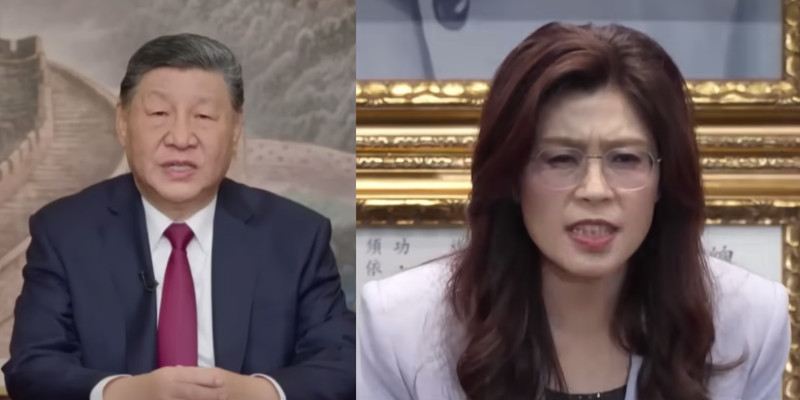
Cheng Li-wun, chairperson of the Kuomintang (KMT), said she "gladly accepted" President Xi Jinping's invitation to visit and hopes to be a "bridge for peace," per the BBC. Her six-day itinerary includes stops in Shanghai, Nanjing, and Beijing. It marks the first time in a decade that a sitting KMT leader has traveled to China.
Taiwan’s government responded cautiously, with Premier Cho Jung-tai saying authorities would monitor the visit, while the ruling Democratic Progressive Party (DPP) accused Cheng of being "subservient" to Beijing and warned the trip would be "completely controlled" by the Communist Party.
The DPP also described China as the "main culprit in disrupting regional peace," citing continued military activity around Taiwan, including the deployment of warplanes and naval vessels.
Beijing has scaled back official communications with Taiwan since 2016, after then-President Tsai Ing-wen declined to endorse the “One China” framework. China considers Taiwan a breakaway province and has not ruled out using force to bring it under its control. The Taiwanese view the island as sovereign, though most support maintaining the current status quo under One China.
Cheng’s visit comes ahead of a planned meeting between Xi and US President Donald Trump, scheduled for mid-May in Beijing. Analysts say the timing may be strategic. "Beijing wants a cordial meeting with Taiwan's opposition to undermine the argument for US-Taiwan defence cooperation," says Wen-ti Sung, a political scientist with the Australian National University's Taiwan Centre.
At the same time, a bipartisan US delegation recently visited Taipei to push for passage of a $40 billion defense spending package, which remains stuck in Taiwan’s legislature.
"Cheng sees this as an opportunity for her to present herself as the political leader capable of maintaining cross-strait exchange and potentially reducing cross-strait tension," said William Yang of the International Crisis Group. Despite her outreach, Cheng faces skepticism at home.
"Many do read Cheng as a fair-weather politician, an opportunist with little principle, and a politician that cares about her own position more than anything else," said Chong Ja-Ian of the National University of Singapore.
"That also means that she is willing to wheel and deal," Chong adds. "Who this benefits, and how much, are the bigger questions."
Cheng Li-wun, chairperson of the Kuomintang (KMT), said she "gladly accepted" President Xi Jinping's invitation to visit and hopes to be a "bridge for peace," per the BBC. Her six-day itinerary includes stops in Shanghai, Nanjing, and Beijing. It marks the first time in a decade that a sitting KMT leader has traveled to China.
Taiwan’s government responded cautiously, with Premier Cho Jung-tai saying authorities would monitor the visit, while the ruling Democratic Progressive Party (DPP) accused Cheng of being "subservient" to Beijing and warned the trip would be "completely controlled" by the Communist Party.
The DPP also described China as the "main culprit in disrupting regional peace," citing continued military activity around Taiwan, including the deployment of warplanes and naval vessels.
Beijing has scaled back official communications with Taiwan since 2016, after then-President Tsai Ing-wen declined to endorse the “One China” framework. China considers Taiwan a breakaway province and has not ruled out using force to bring it under its control. The Taiwanese view the island as sovereign, though most support maintaining the current status quo under One China.
Cheng’s visit comes ahead of a planned meeting between Xi and US President Donald Trump, scheduled for mid-May in Beijing. Analysts say the timing may be strategic. "Beijing wants a cordial meeting with Taiwan's opposition to undermine the argument for US-Taiwan defence cooperation," says Wen-ti Sung, a political scientist with the Australian National University's Taiwan Centre.
At the same time, a bipartisan US delegation recently visited Taipei to push for passage of a $40 billion defense spending package, which remains stuck in Taiwan’s legislature.
"Cheng sees this as an opportunity for her to present herself as the political leader capable of maintaining cross-strait exchange and potentially reducing cross-strait tension," said William Yang of the International Crisis Group. Despite her outreach, Cheng faces skepticism at home.
"Many do read Cheng as a fair-weather politician, an opportunist with little principle, and a politician that cares about her own position more than anything else," said Chong Ja-Ian of the National University of Singapore.
"That also means that she is willing to wheel and deal," Chong adds. "Who this benefits, and how much, are the bigger questions."