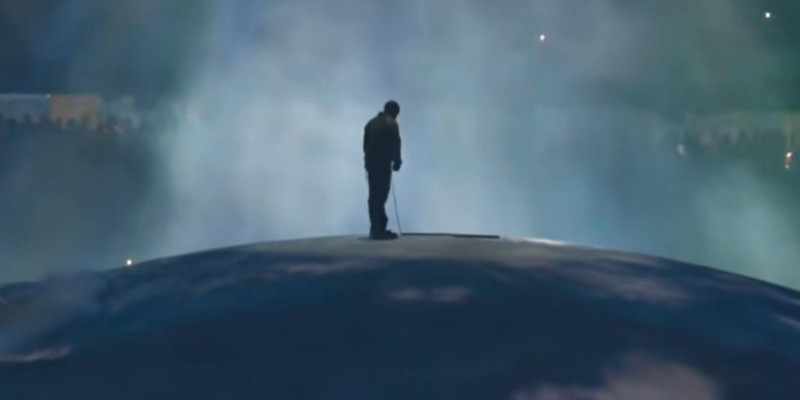

After Pepsi and Diageo pulled out of the Wireless music festival in the UK over headliner Kanye West, the Home Office told the BBC that the American artist has been banned from travel to Britain. West had applied to travel to the UK using an Electronic Travel Authorization and was denied. After West's visa was denied, the Wireless Festival was canceled by organizers.
The Home Office told the BBC that they denied the application because they believe that "his presence would not be conducive to the public good," the BBC reports. Prime Minister Keir Starmer had weighed in on West's booking to the festival, saying that he was too antisemitic.
“It is deeply concerning Kanye West has been booked to perform at Wireless despite his previous antisemitic remarks and celebration of Nazism,” Starmer said. “Antisemitism in any form is abhorrent and must be confronted firmly wherever it appears. Everyone has a responsibility to ensure Britain is a place where Jewish people feel safe.”
London Mayor Sadiq Khan also weighed in with a statement from his office, saying, “We are clear that the past comments and actions of this artist are offensive and wrong, and are simply not reflective of London’s values.”
West had offered to meet with members of the Jewish community in the US, saying he "would be grateful" to do so as he had been "following the conversation around Wireless."
"I know words aren't enough," West said, who recently launched a tour for his album Bully, released this year. "I'll have to show change through my actions. If you're open, I'm here." West had previously released a song with the lyrics "Heil Hitler" and made other remarks against Jews.
The Board of Deputies of British Jews, however, said they would be "willing" to meet with him. That will be hard to do with West having been banned from England.
"The Jewish community will want to see a genuine remorse and change before believing that the appropriate place to test this sincerity is on the main stage at the Wireless Festival," said the Board.
Following the cancelation of West's visa, festival organizers pulled the plug altogether. "The Home Office has withdrawn Ye's ETA, denying him entry into the United Kingdom. As a result, Wireless Festival is cancelled and refunds will be issued to all ticket holders," the festival said in a statement.
"As with every Wireless Festival, multiple stakeholders were consulted in advance of booking Ye and no concerns were highlighted at the time. Antisemitism in all its forms is abhorrent, and we recognise the real and personal impact these issues have had. As Ye said today, he acknowledges that words alone are not enough, and in spite of this still hopes to be given the opportunity to begin a conversation with the Jewish community in the UK."
Wireless promoter Melvin Benn indicated ahead of the ban that he suspected it was coming and said that while West's past commentary was both "abhorrent" and "disgusting," it may have been a mental health issue and not profoundly held beliefs. "People suffer psychotic behaviour, suffer bipolar behaviour, for many, many years... And I think people are forgetting that," he said.
The Home Office told the BBC that they denied the application because they believe that "his presence would not be conducive to the public good," the BBC reports. Prime Minister Keir Starmer had weighed in on West's booking to the festival, saying that he was too antisemitic.
“It is deeply concerning Kanye West has been booked to perform at Wireless despite his previous antisemitic remarks and celebration of Nazism,” Starmer said. “Antisemitism in any form is abhorrent and must be confronted firmly wherever it appears. Everyone has a responsibility to ensure Britain is a place where Jewish people feel safe.”
London Mayor Sadiq Khan also weighed in with a statement from his office, saying, “We are clear that the past comments and actions of this artist are offensive and wrong, and are simply not reflective of London’s values.”
West had offered to meet with members of the Jewish community in the US, saying he "would be grateful" to do so as he had been "following the conversation around Wireless."
"I know words aren't enough," West said, who recently launched a tour for his album Bully, released this year. "I'll have to show change through my actions. If you're open, I'm here." West had previously released a song with the lyrics "Heil Hitler" and made other remarks against Jews.
The Board of Deputies of British Jews, however, said they would be "willing" to meet with him. That will be hard to do with West having been banned from England.
"The Jewish community will want to see a genuine remorse and change before believing that the appropriate place to test this sincerity is on the main stage at the Wireless Festival," said the Board.
Following the cancelation of West's visa, festival organizers pulled the plug altogether. "The Home Office has withdrawn Ye's ETA, denying him entry into the United Kingdom. As a result, Wireless Festival is cancelled and refunds will be issued to all ticket holders," the festival said in a statement.
"As with every Wireless Festival, multiple stakeholders were consulted in advance of booking Ye and no concerns were highlighted at the time. Antisemitism in all its forms is abhorrent, and we recognise the real and personal impact these issues have had. As Ye said today, he acknowledges that words alone are not enough, and in spite of this still hopes to be given the opportunity to begin a conversation with the Jewish community in the UK."
Wireless promoter Melvin Benn indicated ahead of the ban that he suspected it was coming and said that while West's past commentary was both "abhorrent" and "disgusting," it may have been a mental health issue and not profoundly held beliefs. "People suffer psychotic behaviour, suffer bipolar behaviour, for many, many years... And I think people are forgetting that," he said.