British MP Max Wilkinson says social media has become “a massive problem” for public discourse, giving critics of mass immigration a platform that simply didn’t exist before.
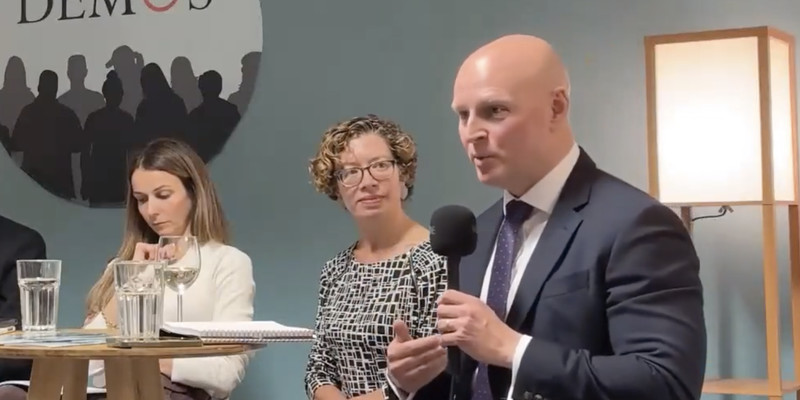
“We obviously have social media, which is a massive problem at the moment for engagement. I'm tempted to say, you know, how you make your voice heard as a citizen in 2025 in the UK, set up an X account and start writing some sort of nativist content, and it will go around the world really, really quickly. Your voice will be heard as quickly as you want it to be, not in a way that I would be comfortable with, and I would suggest probably not in a way that most people on the panel this evening would be comfortable with either,” Wilkinson said.
He added that posting content critical of immigration or framing it as “the big thing that’s tearing the country apart” is now easy and can reach a global audience almost instantly. “Social media run by the world's richest man, X, is now making sure that you can have your voice heard in a really easy way that you couldn't in the past,” he said.
The remarks come amid a sharp rise in arrests linked to online posts. In 2023, over 12,000 people in England and Wales were arrested for content on social media, averaging roughly 30 per day. This figure has more than doubled since 2017, according to Freedom House and reporting by The Times.
Many arrests target material considered “grossly offensive,” threatening, or inciting racial hatred, under laws including the Malicious Communications Act 1988, Section 127 of the Communications Act 2003, and the Online Safety Act 2023. Police actions have ranged from warnings to prison sentences, such as a 38-month sentence for inciting racial hatred.
Authorities also track speech that doesn’t break the law. Since 2014, over 133,000 “non-crime hate incidents” have been recorded, where posts were noted but not prosecuted.
“We obviously have social media, which is a massive problem at the moment for engagement. I'm tempted to say, you know, how you make your voice heard as a citizen in 2025 in the UK, set up an X account and start writing some sort of nativist content, and it will go around the world really, really quickly. Your voice will be heard as quickly as you want it to be, not in a way that I would be comfortable with, and I would suggest probably not in a way that most people on the panel this evening would be comfortable with either,” Wilkinson said.
He added that posting content critical of immigration or framing it as “the big thing that’s tearing the country apart” is now easy and can reach a global audience almost instantly. “Social media run by the world's richest man, X, is now making sure that you can have your voice heard in a really easy way that you couldn't in the past,” he said.
The remarks come amid a sharp rise in arrests linked to online posts. In 2023, over 12,000 people in England and Wales were arrested for content on social media, averaging roughly 30 per day. This figure has more than doubled since 2017, according to Freedom House and reporting by The Times.
Many arrests target material considered “grossly offensive,” threatening, or inciting racial hatred, under laws including the Malicious Communications Act 1988, Section 127 of the Communications Act 2003, and the Online Safety Act 2023. Police actions have ranged from warnings to prison sentences, such as a 38-month sentence for inciting racial hatred.
Authorities also track speech that doesn’t break the law. Since 2014, over 133,000 “non-crime hate incidents” have been recorded, where posts were noted but not prosecuted.