
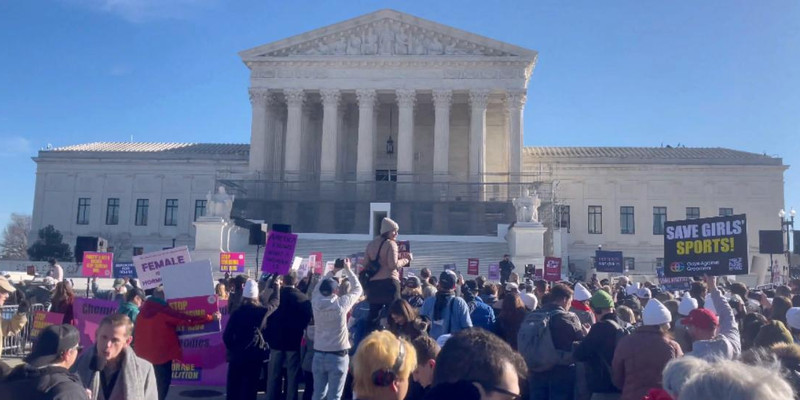

For years, the government has had a seat in the therapy room. The Supreme Court just kicked it out. The Supreme Court ruled 8–1 in favor of Kaley Chiles, holding that Colorado's ban on so-called "conversion therapy" violates the First Amendment.
Conversion therapy, in the simplest terms, refers to any counseling, coaching, or therapeutic approach that aims to help a person reduce, redirect, or change unwanted same-sex attraction or gender-related distress. It can include talk therapy, cognitive-behavioral work, religious counseling, or value-based identity work – any therapeutic process where the goal is to align a person's sexual behavior or self-perception with their moral, spiritual, or personal convictions.
At its core, it is goal-directed therapy chosen by a client who does not want to identify as gay or pursue a transgender identity, and who wants help living in accordance with their values, faith, or preferred way of life.
That's it. And it was banned.
The Court found that talk therapy is protected speech and that the state cannot restrict what therapists say based on the viewpoint being expressed. In other words, Colorado cannot allow counseling that affirms one outcome while banning counseling that supports another. The law was struck down as unconstitutional because it discriminates on the basis of content and viewpoint – something the government is not permitted to do.
The decision makes clear that states do not have the authority to control the direction of private conversations between therapists and clients. By recognizing therapy as speech, the Court has effectively undermined similar bans across the country. Therapists are now free to help clients pursue their own goals – whether that means affirming an identity or moving away from one – without fear of government punishment.
For as long as I have been a therapist, I was warned time and time again to be careful about helping anyone who came into my office who did not want to be gay. Why? Because I could lose my license. And for what? For helping someone walk in alignment with their belief system – especially one rooted in faith and obedience to God. This is no longer the case. This ruling gives my colleagues and me the biggest sigh of relief we have had in years.
The lone dissenting vote came from Ketanji Brown Jackson – Biden's DEI pick, chosen not because she was the most qualified jurist in the country, but because Biden publicly pledged during a 2020 presidential debate to put a black woman on the Court. Jackson's dissent argues that states should be able to regulate "professional medical speech" as a standard-of-care issue – essentially that the government gets to decide what a licensed therapist is allowed to say inside a session. She would have handed Colorado that power without hesitation. Fortunately, eight other justices disagreed.
This ruling is a reminder that client-centered therapy, rooted in reality, is not a threat to anyone. It is the foundation of ethical practice. Hope is restored. Free speech wins. And God can be placed at the center of our decisions without the government's interference.
Soad Tabrizi is a licensed marriage and family therapist with a private practice based in Orange County, CA (www.soadtabrizi.com). Soad is also the founder of www.ConservativeCounselors.com.