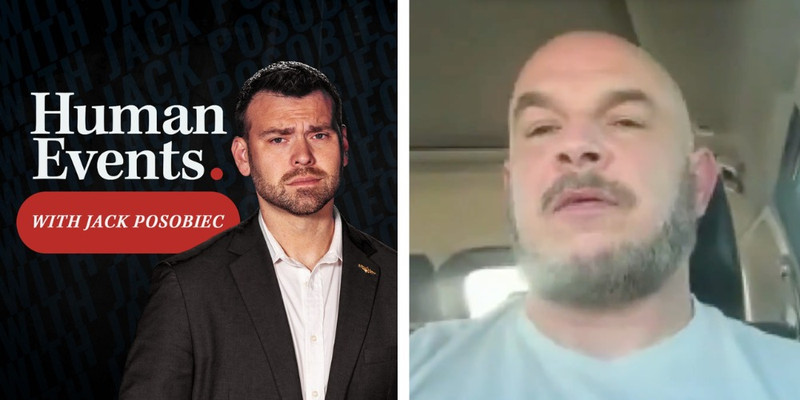

Jack Posobiec spoke with retired Philadelphia police sergeant Mark Fusetti on Tuesday about the fatal shooting of a Pennsylvania state trooper during what began as a routine traffic stop.
Fusetti, who previously served in the Philadelphia Police Department’s warrant unit, described the incident as a sudden attack that unfolded within seconds after the officer approached the vehicle. According to Fusetti, sources close to the investigation said the stop began after a driver was seen speeding and driving erratically.
“So my sources that are close to the investigation, basically what it was, a speeding erratic driver,” Fusetti said, later adding, “state trooper caught up to him, went up to the driver's side of the vehicle to interact with him, and the guy just point-blank shot him.”
“From what I'm told, I believe he killed himself. And that was it. No, no interaction, nothing like that,” Fusetti said. “Just, you know, a stone cold, you know, assassination of, from what I hear, a great young man.”
He added that investigators are continuing to examine the suspect’s background and social media activity. “The investigation, I'm told, as it goes, unfolds, more information will come out about the person,” Fusetti said. “But we've seen his Facebook posts and all—free Palestine, you know, I hate the world. Everyone's against me, blah, blah, blah type person.”
Posobiec said it is possible the suspect had prior encounters with law enforcement, though investigators may never be able to confirm the motive. “It could be that he had had perhaps some run-ins with law enforcement in the past or the state troopers,” Posobiec said, later adding, “But it's something we're not going to be able to know.”
During the discussion, Posobiec noted that reports indicate the suspect had shared anti-police messages online. “We're seeing this reporting that the individual had all sorts of posts about, you know, ACAB, all cops are Bs, and all this stuff,” Posobiec said. He asked whether such rhetoric contributes to hostility toward law enforcement. “Doesn't that just put a target right on the back of state troopers and cops like this?” Posobiec asked.
Fusetti responded that officers often face unpredictable dangers during routine stops. “Everything that the scenario that played out here is, you know, one where it's almost you can't defend against it, even no matter how you approach,” Fusetti said.
He explained that officers approaching vehicles or homes frequently face a tactical disadvantage. “The sad part of pulling a car over going into a home, the sad part is that the person inside wants to kill you,” Fusetti said. “They have the upper hand, and they can be, they'll be successful more than they won't.”
According to Fusetti, the trooper involved had likely conducted thousands of similar stops before the incident. “Another routine traffic stop for this trooper who probably done thousands of these,” he said. “And unfortunately, he had a person ready to kill himself and take the trooper with them.”
Fusetti said defending against someone determined to carry out such an attack can be extremely difficult. “It's almost impossible to defend against a person like that, if they're ready to go out and take you with them,” he said.
He added that anti-police rhetoric can contribute to an environment where officers are targeted. "It puts on a target of every law enforcement officer in this country,” Fusetti said.
Fusetti, who previously served in the Philadelphia Police Department’s warrant unit, described the incident as a sudden attack that unfolded within seconds after the officer approached the vehicle. According to Fusetti, sources close to the investigation said the stop began after a driver was seen speeding and driving erratically.
“So my sources that are close to the investigation, basically what it was, a speeding erratic driver,” Fusetti said, later adding, “state trooper caught up to him, went up to the driver's side of the vehicle to interact with him, and the guy just point-blank shot him.”
“From what I'm told, I believe he killed himself. And that was it. No, no interaction, nothing like that,” Fusetti said. “Just, you know, a stone cold, you know, assassination of, from what I hear, a great young man.”
He added that investigators are continuing to examine the suspect’s background and social media activity. “The investigation, I'm told, as it goes, unfolds, more information will come out about the person,” Fusetti said. “But we've seen his Facebook posts and all—free Palestine, you know, I hate the world. Everyone's against me, blah, blah, blah type person.”
Posobiec said it is possible the suspect had prior encounters with law enforcement, though investigators may never be able to confirm the motive. “It could be that he had had perhaps some run-ins with law enforcement in the past or the state troopers,” Posobiec said, later adding, “But it's something we're not going to be able to know.”
During the discussion, Posobiec noted that reports indicate the suspect had shared anti-police messages online. “We're seeing this reporting that the individual had all sorts of posts about, you know, ACAB, all cops are Bs, and all this stuff,” Posobiec said. He asked whether such rhetoric contributes to hostility toward law enforcement. “Doesn't that just put a target right on the back of state troopers and cops like this?” Posobiec asked.
Fusetti responded that officers often face unpredictable dangers during routine stops. “Everything that the scenario that played out here is, you know, one where it's almost you can't defend against it, even no matter how you approach,” Fusetti said.
He explained that officers approaching vehicles or homes frequently face a tactical disadvantage. “The sad part of pulling a car over going into a home, the sad part is that the person inside wants to kill you,” Fusetti said. “They have the upper hand, and they can be, they'll be successful more than they won't.”
According to Fusetti, the trooper involved had likely conducted thousands of similar stops before the incident. “Another routine traffic stop for this trooper who probably done thousands of these,” he said. “And unfortunately, he had a person ready to kill himself and take the trooper with them.”
Fusetti said defending against someone determined to carry out such an attack can be extremely difficult. “It's almost impossible to defend against a person like that, if they're ready to go out and take you with them,” he said.
He added that anti-police rhetoric can contribute to an environment where officers are targeted. "It puts on a target of every law enforcement officer in this country,” Fusetti said.