
By the dawn of the 20th-century, the war on Islam was far from the minds of most people in the West. In fact, many in the West believed the ancient conflict had ended.
Empires had fallen. Borders were redrawn. Modernity had arrived. America had come into a greater global standing with no border held by Islam. The Enlightenment had taken its full effect. The assumption was simple. We had come into a new age defined by science and industry.
The war between Christianity and Islam was a thing of the past, reserved for the catalog of history, right? Islam would modernize. Jihad would fade. The world would converge. Or, would it?
In this part of our series, we will examine how Islamic violence did not disappear in the modern era but adapted to it. The weapons changed. The nations had different boundary lines, but the same religion remained.
The rhetoric shifted, in line with Islamic doctrine on how to behave when living as a subordinate power. But the underlying logic remained intact.
At the beginning of the 20th-century, Christians comprised a significant portion of the population in the Middle East. In some regions, they were the majority. In others, thriving minorities with ancient roots reaching back to the apostles.
That world collapsed with astonishing speed. To a world that thought jihad was a thing of the past, the Armenian Genocide was a shock to the system.
The Armenian Genocide took place during World War I between 1915 and 1917, and Ottoman authorities systematically exterminated an estimated one and a half million Armenian Christians. Churches were destroyed. Clergy were executed. Women and children were marched into the desert to die.
It was a slaughter. But the Ottomans had long been enemies of the Cross. It was not they, nor the doctrine of jihad, that had changed. It was only the assumptions of the West through our self-induced amnesia.
The genocide was explicitly framed in religious terms. Ottoman leaders issued fatwas calling for jihad against Christian populations deemed disloyal.
Christians suffered the same fates in what is easily recognized as coordinated campaigns of ethnic and religious cleansing under Islam. This was not a breakdown of Islam under stress. It was an Islamic authority weaponized in a modern state.
Defenders often argue that twentieth-century violence in Muslim lands was secular or nationalist rather than religious. However, history strongly disagrees.
While nationalist language was used, religious justification remained central. Conversion spared lives. Apostasy invited death. Clergy were targeted first. Islamic law determined who could live and who could not.
Western observers consistently misread these events because they assumed modern violence must be secular. They ignored what the Islamic sources themselves said.
The victims did not misunderstand what was happening to them. They knew. It was the same war that had been raging for over a thousand years. Fast forward to after World War II, and Islamic violence entered a new phase.
Colonial powers withdrew. New nation-states emerged. Islamist movements rose to fill the vacuum. The Muslim Brotherhood, founded in 1928, openly rejected Western secularism and called for the restoration of Islamic governance through jihad.
Later groups, such as Al Qaeda and Islamic Jihad, explicitly cited medieval jurists and Quranic mandates. Their leaders were not ignorant extremists. They were educated theologians applying doctrine to modern conditions.
The language shifted. Jihad was framed as resistance. Suicide attacks were rebranded as martyrdom. Civilians were declared legitimate targets. The theology did not change, which led to the same ideology that had been fighting against the cross for its entire history to return to the shores of America.
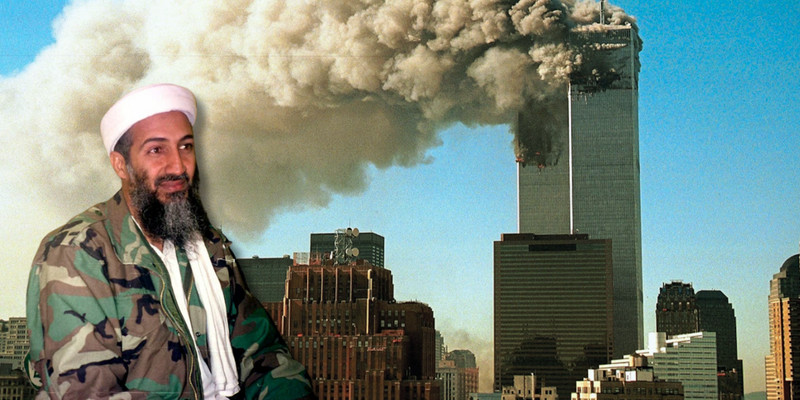
Notably, it was there on September 11, 2001. 9/11 was not a rupture with Islamic history. It was its reappearance—a continuation of the same worldview. The attackers did not act in isolation. They issued theological justifications.
Osama bin Laden cited Quranic verses and historical grievances rooted in Islamic supremacy. He framed the attack as defensive jihad against unbelievers occupying Muslim lands.
The targets were not random. They were symbolic. Economic power. Military authority. Cultural influence. The objective was submission through terror. This was a holy war. It was jihad.
The West responded by insisting the attackers did not represent Islam. Islamic sources responded differently.
Across the Muslim world, clerics praised the attacks. Streets celebrated. Polls showed widespread approval. Not universal, but significant.
These reactions shocked Western observers, who had assumed a shared moral instinct. They should not have. The defining mistake of Western analysis is treating Islamic violence as a series of disconnected episodes. But patterns persist because ideas persist.
Islamic law never renounced jihad. No authoritative council abolished it. No theological reformation removed violence from doctrine.
Modern jihadists quote the same texts as medieval conquerors. They see themselves not as innovators but as restorers. The Islamic State proved this unmistakably.
In the twenty-first century, ISIS revived slavery, executed Christians publicly, destroyed churches, and enforced dhimmitude exactly as described in classical law. They cited the Quran and hadith openly.
The world called it barbaric. ISIS called it Islamic. After all, they were not deviating from Islam, the Quran, the Hadith, or their history. In fact, they were being faithful to it.
The West insists on separating Islam from its violence because of our own ideological embrace of a false view of history.
The West assumes all religions evolve toward peace because Christianity did. As we discussed in an earlier part of this series, that assumption is a form of projection.
Islam does not contain internal mechanisms that condemn religious violence as inherently immoral. It regulates violence. And parts of that regulation are the encouragement and calling for it against the infidels.
The denial of the West also carries consequences. Christian populations in Iraq, Syria, Egypt, and Nigeria continue to shrink under pressure, violence, and discrimination. Western governments issue statements. Islamists carry out beheadings.
The pattern continues. If September 11 was not an aberration, then neither is what followed. Understanding modern jihad requires an honest assessment of the past.
Islam did not become violent because of Western foreign policy. It did not radicalize because of poverty. It did not drift from a peaceful core. It acted consistently with its historical logic when power and opportunity aligned.
If jihad did not end with September 11, where is it now? How does it operate inside Western nations? Through law, culture, intimidation, and demographic concentration rather than armies.
In the next installment, we examine Islamification in the modern West. From European no-go zones to American cities like Dearborn, Michigan, we ask what resistance looks like now and whether Christendom remembers how to defend itself. Our survival depends upon the answer.