
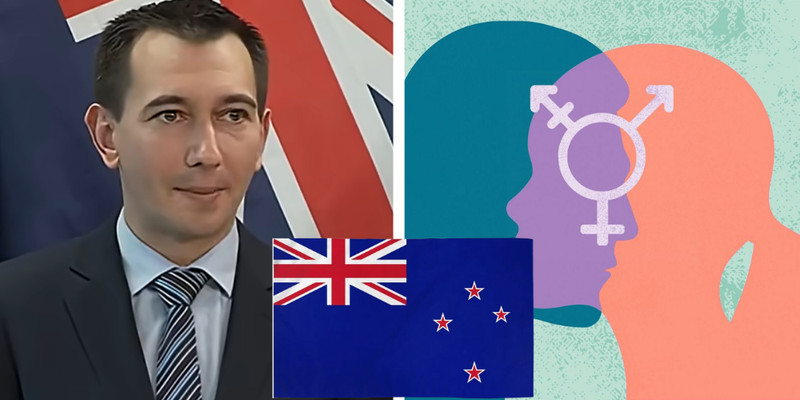

New Zealand will stop giving new prescriptions of puberty blockers to young people seeking treatment for gender dysphoria, Health Minister Simeon Brown announced on Wednesday. He cited a lack of evidence supporting their use.
The policy change comes after the Cabinet's decision to introduce new safeguards under the Medicines Act. Brown said the move aligns New Zealand with the United Kingdom, where similar restrictions were adopted in the wake of the Cass Review and where a formal clinical trial on puberty blockers is underway.
According to the New Zealand Ministry of Health’s 2024 review, there is “a lack of high-quality evidence that demonstrates the benefits or risks” of using what are called "gonadotropin-releasing hormone (GnRH) analogues" for treating gender dysphoria and gender incongruence in youth.
Brown said that while this uncertainty remains, the government is adopting a precautionary approach. In 2024, a study found that New Zealand had the highest rates of prescribing puberty blockers in the world.
The new regulation makes it so that “new patients seeking treatment for gender dysphoria or incongruence can no longer be prescribed” puberty blockers until the UK trial is completed. The restriction applies only to new cases. Young people already receiving puberty blockers will continue to have access to treatment.
Brown emphasized that GnRH analogues will remain available for medical conditions in which their effectiveness is well-established, including early-onset puberty, endometriosis, and prostate cancer. “We are ensuring they remain available for patients who need them… where there is strong clinical evidence of benefit,” he said.
The cabinet has also directed that existing youth gender services remain in operation and be consolidated into a single, accessible online resource. Brown said the changes are intended to create a “more consistent and carefully monitored approach,” mirroring steps taken in the United Kingdom, Sweden, Finland, and Norway, all of which have tightened guidelines on youth gender-related medical interventions since 2020.
“The Government expects existing youth gender services to continue supporting young people and their families, connecting them with healthcare professionals who have specialised expertise and can provide evidence-based guidance,” Brown said.
The announcement prompted a response from the New Zealand First party, a governing coalition partner that has publicly pressed for restrictions on puberty blockers. In a statement, the party said it had long raised concerns about the treatment and characterized the new rules as a significant policy shift.
New Zealand First leader Winston Peters has argued that the government should keep pushing for a more cautious framework similar to recent European precedents.
Brown said the government’s overall aim is to ensure “treatments are safe and carefully managed, while maintaining access to care for those who need it.”
The policy change comes after the Cabinet's decision to introduce new safeguards under the Medicines Act. Brown said the move aligns New Zealand with the United Kingdom, where similar restrictions were adopted in the wake of the Cass Review and where a formal clinical trial on puberty blockers is underway.
According to the New Zealand Ministry of Health’s 2024 review, there is “a lack of high-quality evidence that demonstrates the benefits or risks” of using what are called "gonadotropin-releasing hormone (GnRH) analogues" for treating gender dysphoria and gender incongruence in youth.
Brown said that while this uncertainty remains, the government is adopting a precautionary approach. In 2024, a study found that New Zealand had the highest rates of prescribing puberty blockers in the world.
The new regulation makes it so that “new patients seeking treatment for gender dysphoria or incongruence can no longer be prescribed” puberty blockers until the UK trial is completed. The restriction applies only to new cases. Young people already receiving puberty blockers will continue to have access to treatment.
Brown emphasized that GnRH analogues will remain available for medical conditions in which their effectiveness is well-established, including early-onset puberty, endometriosis, and prostate cancer. “We are ensuring they remain available for patients who need them… where there is strong clinical evidence of benefit,” he said.
The cabinet has also directed that existing youth gender services remain in operation and be consolidated into a single, accessible online resource. Brown said the changes are intended to create a “more consistent and carefully monitored approach,” mirroring steps taken in the United Kingdom, Sweden, Finland, and Norway, all of which have tightened guidelines on youth gender-related medical interventions since 2020.
“The Government expects existing youth gender services to continue supporting young people and their families, connecting them with healthcare professionals who have specialised expertise and can provide evidence-based guidance,” Brown said.
The announcement prompted a response from the New Zealand First party, a governing coalition partner that has publicly pressed for restrictions on puberty blockers. In a statement, the party said it had long raised concerns about the treatment and characterized the new rules as a significant policy shift.
New Zealand First leader Winston Peters has argued that the government should keep pushing for a more cautious framework similar to recent European precedents.
Brown said the government’s overall aim is to ensure “treatments are safe and carefully managed, while maintaining access to care for those who need it.”