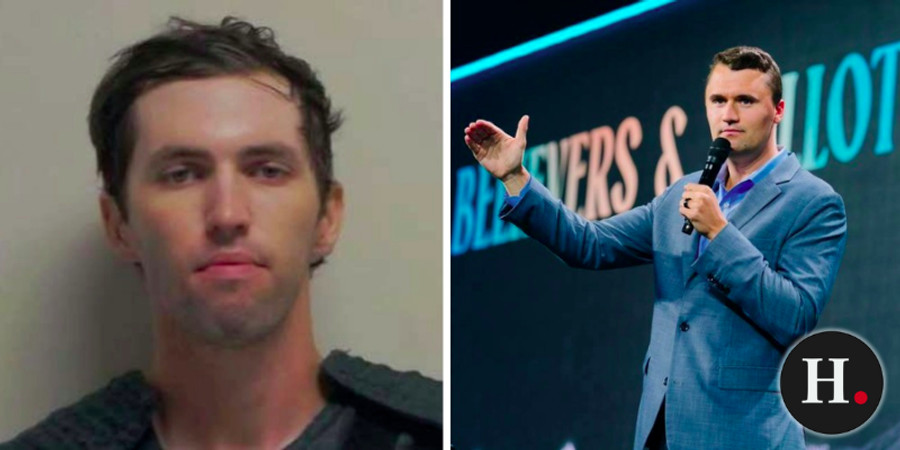
Judge Tony Graf has a decision to make. It is up to him to determine if he will grant the request from Tyler Robinson's defense team to prevent cameras in the courtroom.
Human Events Media Group respectfully asks that he permit cameras in the courtroom. The case of Charlie Kirk's murder is of national interest and transparency of the court proceedings is of the utmost public importance.
The defense filed a motion asking that Robinson, the suspect in the murder of Charlie Kirk, be permitted to wear civilian clothes while in court, not appear in shackles, and that cameras not be allowed in the courtroom at all.
In response, Graf determined that Robinson could wear civilian clothes while in the courtroom facing trial, would remain shackled, and that cameras would not be permitted to film him in his restraints. This prevents visual records of his entering or leaving the courtroom, as he would be shackled during those times.
The defense has claimed that allowing the court proceedings to be filmed or live streamed would violate Robinson's right to a fair trial. They have cited precedential examples of cases that dealt with this issue.
However, a closer look at cases involving the question of whether it is in the public interest to witness court proceedings, and whether or not that ability to bear witness via recording is a violation of the right to a fair trial, shows that the Supreme Court has ruled in favor of cameras in courtrooms in many, many cases.
The state of Utah permits judges to ban cameras from the courtroom only in cases where "there is a reasonable likelihood that electronic media coverage will prejudice the right of the parties to a fair proceeding." However, that rule further states that a restriction on electronic media coverage must be accompanied by "particularized findings orally or in writing on the record. Any written order denying a request for electronic media coverage shall be made part of the case record."
The defense claims that Robinson was already harmed by appearing via video link while wearing a suicide or bullet-proof vest, that it was already prejudicial for potential jurors to see him in "prison garb," and for those potential jurors to hear that he was being held without bail due to the nature of the charges filed against him.
The defense further complains that the circulation of Robinson's "booking photograph" could be prejudicial. Do they believe that booking photos in general should not be released to the public, despite those obviously being in the public interest?
They disparage officers and law enforcement agents for having been open with the public about the investigation in the hours and days after Kirk was murdered, citing federal agents comments after Robinson was apprehended as prejudicial. It was only through the public release of surveillance video that Robinson was apprehended.
The defense questions the public discussion of evidence, as well, as though they believe that the public at large should not be permitted to know what substantiates the case against Robinson. Were the defense able, they likely would have suppressed all of that evidence from public knowledge, only allowing its release in a closed court.
The killing of Charlie Kirk has captured public interest. He was a man known and beloved by millions of people worldwide.
Kirk did not get to decide whether or not his murder would be live streamed, only his assassin had a say in that. Kirk's life was public, his execution was public, and the trial of the suspect in his murder should be open to the public as well.
Human Events Open Letter to Utah Court by The Post Millennial