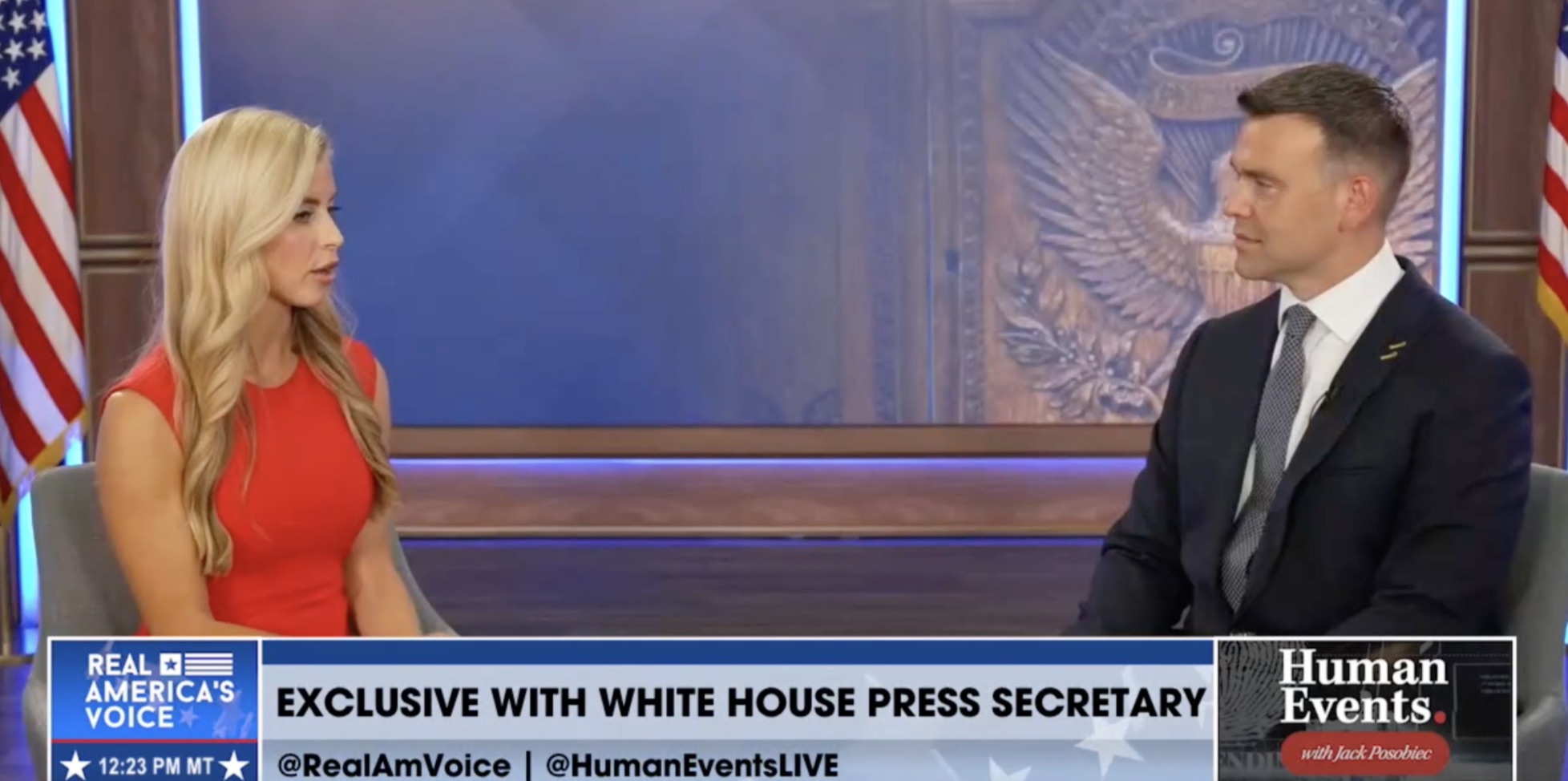


Human Events Daily host Jack Posobiec spoke with Rep. Anna Paulina Luna (R-FL) about her ongoing work investigating foreign funding networks allegedly tied to left-wing violence and efforts to undermine US border security and national interests.
Posobiec noted that Luna has been collaborating with independent researchers, including Data Republican, to trace the flow of money behind anti-ICE protests and left-wing organizing. “You were describing some of the work that you've done,” he said, “as well as working with outside researchers tied directly to a lot of the funding networks that go towards this violence that we're seeing — not just against ICE agents and officers, but in many cases funding violent left-wing groups active across the country.”
Luna said that her findings point to a complex web of foreign financial influence reaching into American political movements. “It’s been pretty wild,” she said. “These foreign funding ties are responsible for a lot of the pressure points that you're seeing, not just on the Democrat side where they’re fracturing on certain issues, but also on the Republican side as well.”
“They know that the targeted demographic for re-election would be the Hispanic voting bloc, specifically Mexican-Americans,” she said. “When you saw these counter-ICE protests, what's interesting is they don't mention the fact that there’s a lot of Chinese nationals, Middle Eastern nationals, [and] African individuals — military-age males — coming to the United States illegally.”
Luna claimed that the protests and propaganda campaigns are coordinated to support open-border policies that align with Beijing’s interests. “These are not organic to American voters,” she said. “They’re actually tied directly to the CCP.”
She also pointed to connections between China-linked donors and U.S.-based activist groups, including Code Pink and “Jews for Mamdani,” saying their funding was designed to divide voters on the Israel-Palestine conflict.
Luna added that the Chinese Communist Party views President Trump’s ongoing peace negotiations, particularly involving Russia and Ukraine, as a threat to its geopolitical strategy. “The one country that does not want to see that succeed is China,” she said, “because China right now is in a trade war with the United States and has positioned themselves with the impression that the United States would never change their perspective on treating Russia as a potential trade partner if those sanctions were lifted.”
Posobiec noted that Luna has been collaborating with independent researchers, including Data Republican, to trace the flow of money behind anti-ICE protests and left-wing organizing. “You were describing some of the work that you've done,” he said, “as well as working with outside researchers tied directly to a lot of the funding networks that go towards this violence that we're seeing — not just against ICE agents and officers, but in many cases funding violent left-wing groups active across the country.”
Luna said that her findings point to a complex web of foreign financial influence reaching into American political movements. “It’s been pretty wild,” she said. “These foreign funding ties are responsible for a lot of the pressure points that you're seeing, not just on the Democrat side where they’re fracturing on certain issues, but also on the Republican side as well.”
“They know that the targeted demographic for re-election would be the Hispanic voting bloc, specifically Mexican-Americans,” she said. “When you saw these counter-ICE protests, what's interesting is they don't mention the fact that there’s a lot of Chinese nationals, Middle Eastern nationals, [and] African individuals — military-age males — coming to the United States illegally.”
Luna claimed that the protests and propaganda campaigns are coordinated to support open-border policies that align with Beijing’s interests. “These are not organic to American voters,” she said. “They’re actually tied directly to the CCP.”
She also pointed to connections between China-linked donors and U.S.-based activist groups, including Code Pink and “Jews for Mamdani,” saying their funding was designed to divide voters on the Israel-Palestine conflict.
Luna added that the Chinese Communist Party views President Trump’s ongoing peace negotiations, particularly involving Russia and Ukraine, as a threat to its geopolitical strategy. “The one country that does not want to see that succeed is China,” she said, “because China right now is in a trade war with the United States and has positioned themselves with the impression that the United States would never change their perspective on treating Russia as a potential trade partner if those sanctions were lifted.”