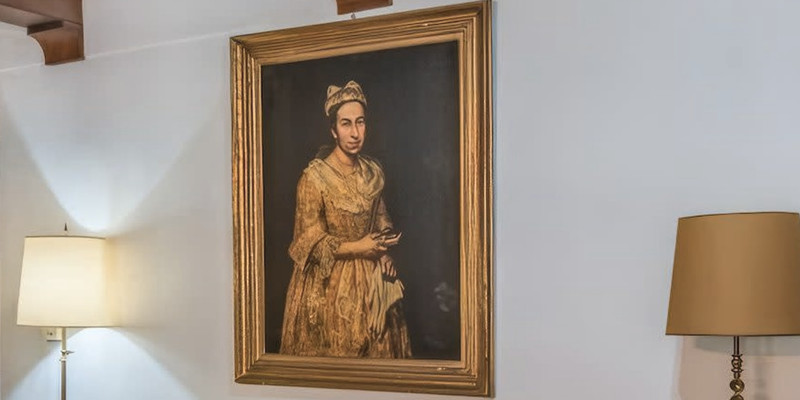

Argentine prosecutors say a painting stolen during World War II has been recovered decades after it vanished from Europe, following its discovery in a home linked to the daughter of a former Nazi official. The artwork, Portrait of a Lady by Italian painter Giuseppe Ghislandi, disappeared during the Nazi occupation and was part of the collection of Amsterdam dealer Jacques Goudstikker, whose gallery was plundered after his death in 1940, BBC reports.
The piece resurfaced when it was spotted in an online real estate listing for a property in Mar del Plata believed to be owned by Patricia Kadgien, daughter of Nazi fugitive Friedrich Kadgien, once an adviser to Hermann Göring.
Officials confirmed the painting has since been turned over by Kadgien’s lawyer. Ariel Bassano, an art expert assisting prosecutors, said the portrait dated to 1710 and remained “in good condition for its age.”
He valued it at approximately $50,000, according to Argentina’s Buenos AiresTimes.
Kadgien and her husband were placed under house arrest earlier this week after police raided their property but initially failed to find the portrait. The pair are under investigation for “concealment of theft in the context of genocide,” officials said, and were expected to appear at a hearing by Thursday.
Their attorney, Carlos Murias, told local media they intend to cooperate with investigators while maintaining the painting was inherited lawfully.
Authorities carried out four additional raids at properties tied to the family. During those searches, two paintings and a collection of 19th-century drawings and engravings were recovered at the home of Kadgien’s sister. Experts are now working to determine whether those works also originated from wartime theft.
The Algemeen Dagblad, a Dutch newspaper that first identified the missing Ghislandi portrait in the real estate listing, reported that soon after the story broke, the painting appeared to have been removed and replaced with a rug in the home.
Some of Goudstikker’s stolen collection was reclaimed in Germany after the war and placed in Amsterdam’s national holdings.
The piece resurfaced when it was spotted in an online real estate listing for a property in Mar del Plata believed to be owned by Patricia Kadgien, daughter of Nazi fugitive Friedrich Kadgien, once an adviser to Hermann Göring.
Officials confirmed the painting has since been turned over by Kadgien’s lawyer. Ariel Bassano, an art expert assisting prosecutors, said the portrait dated to 1710 and remained “in good condition for its age.”
He valued it at approximately $50,000, according to Argentina’s Buenos AiresTimes.
Kadgien and her husband were placed under house arrest earlier this week after police raided their property but initially failed to find the portrait. The pair are under investigation for “concealment of theft in the context of genocide,” officials said, and were expected to appear at a hearing by Thursday.
Their attorney, Carlos Murias, told local media they intend to cooperate with investigators while maintaining the painting was inherited lawfully.
Authorities carried out four additional raids at properties tied to the family. During those searches, two paintings and a collection of 19th-century drawings and engravings were recovered at the home of Kadgien’s sister. Experts are now working to determine whether those works also originated from wartime theft.
The Algemeen Dagblad, a Dutch newspaper that first identified the missing Ghislandi portrait in the real estate listing, reported that soon after the story broke, the painting appeared to have been removed and replaced with a rug in the home.
Some of Goudstikker’s stolen collection was reclaimed in Germany after the war and placed in Amsterdam’s national holdings.