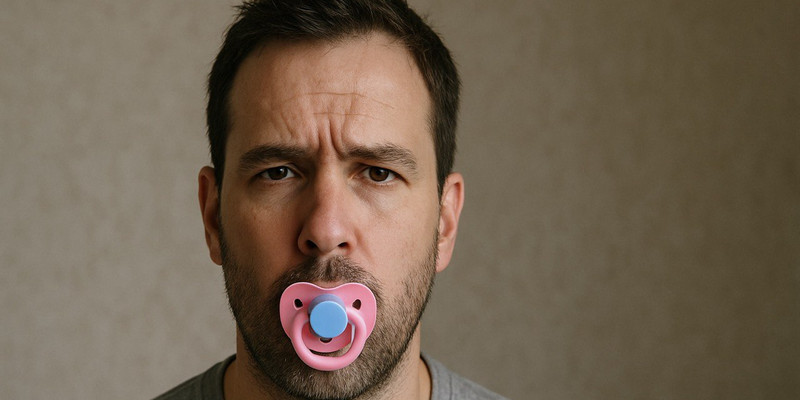

Retailers in China report growing demand for adult pacifiers, with some selling as many as 2,000 per month, according to the South China Morning Post. Prices for the oversized pacifiers, which feature larger nipples and shields than infant versions, can reach upwards of $70 each.
Users say the pacifiers provide relief from stress and anxiety and are even used to help quit smoking. One retailer claims they can also assist with sleep apnea. “It’s really soothing and helps me feel little,” said one reviewer. Another user wrote, “I have a mild case of sleep Apnea, these pacifiers work wonders. I sleep through the night without waking shortness of breath.”
Psychologists describe the behavior as a form of regression, a defense mechanism in which adults cope with difficult emotions by reverting to behaviors from an earlier stage of development when they felt safer. In this case, using a pacifier mimics a source of comfort once experienced as a child. “It’s really soothing and helps me feel little,” one reviewer said.
The trend is spreading beyond China. American adults on TikTok are posting videos of themselves using pacifiers while performing routine activities such as writing reports or commuting.
However, experts warn the practice carries potential risks beyond looking like a baby. Tang Caomin, a dentist in China’s Sichuan Province, said prolonged use can limit jaw movement, cause pain when chewing, and shift the position of teeth if used more than three hours a day over a year. One Chinese psychologist told the Post that adult pacifiers do not address underlying emotional issues, which need to be confronted directly.
While the pacifiers are inexpensive compared with therapy, health professionals caution that they are not a replacement for treatment of stress or sleep disorders.
Users say the pacifiers provide relief from stress and anxiety and are even used to help quit smoking. One retailer claims they can also assist with sleep apnea. “It’s really soothing and helps me feel little,” said one reviewer. Another user wrote, “I have a mild case of sleep Apnea, these pacifiers work wonders. I sleep through the night without waking shortness of breath.”
Psychologists describe the behavior as a form of regression, a defense mechanism in which adults cope with difficult emotions by reverting to behaviors from an earlier stage of development when they felt safer. In this case, using a pacifier mimics a source of comfort once experienced as a child. “It’s really soothing and helps me feel little,” one reviewer said.
The trend is spreading beyond China. American adults on TikTok are posting videos of themselves using pacifiers while performing routine activities such as writing reports or commuting.
However, experts warn the practice carries potential risks beyond looking like a baby. Tang Caomin, a dentist in China’s Sichuan Province, said prolonged use can limit jaw movement, cause pain when chewing, and shift the position of teeth if used more than three hours a day over a year. One Chinese psychologist told the Post that adult pacifiers do not address underlying emotional issues, which need to be confronted directly.
While the pacifiers are inexpensive compared with therapy, health professionals caution that they are not a replacement for treatment of stress or sleep disorders.