
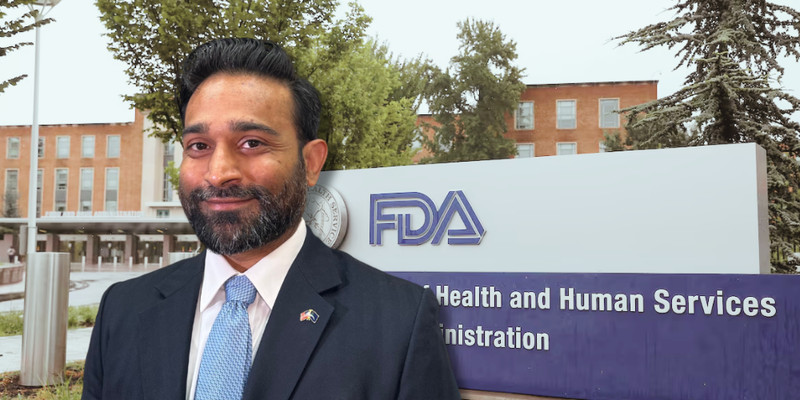

As a patient advocate who has spent years supporting patients and families navigating life-threatening conditions, I've witnessed the profound hope that innovative treatments can bring. For patients with rare cancers, genetic disorders, or advanced diseases, every day counts. The FDA's role in approving new therapies isn't just bureaucratic—it's a lifeline.
Yet, under Dr. Vinay Prasad's brief leadership as Director of the Center for Biologics Evaluation and Research (CBER) and Chief Medical and Scientific Officer, a well-intentioned emphasis on "rigorous evidence" turned that lifeline into an unpredictable ordeal, creating unnecessary volatility for patients and families relying in real time on treatments approved via surrogate endpoints. Prasad's disruptive policies on clinical trials—particularly his longstanding skepticism toward surrogate endpoints—threatened to slow drug development, deny timely access to promising therapies, and undermine public health progress, all while prioritizing theoretical purity over patient realities. His abrupt ouster, on July 30, 2025, was influenced at the highest levels—including by President Trump himself—amid escalating backlash. However, the damage lingers, with an internal FDA audit now reviewing all of his decisions to assess the full extent of the chaos he unleashed.
Prasad, a hematologist-oncologist with a history of critiquing the pharmaceutical industry, has long argued for stricter clinical trial standards. Central to his framework is a push for randomized controlled trials (RCTs) focused on "hard" endpoints like overall survival or quality of life, rather than surrogate endpoints such as tumor shrinkage or biomarker changes. This perspective, echoed in his books and prior publications, influenced FDA decisions on biologics, gene therapies, and cellular treatments during his short tenure.
On the surface, who could argue against better evidence? But the downstream impacts reveal a more troubling picture, especially for patients. Clinical trials designed around survival endpoints can take years longer to complete than those using surrogates, which allow earlier approvals based on indicators reasonably likely to predict clinical benefit. For someone with metastatic cancer, waiting an extra two to three years for confirmatory data isn't an academic exercise—it's a death sentence.
Prasad's framework could reverse this, insisting on complete survival data upfront, potentially delaying or derailing approvals for therapies that surrogates have historically vetted successfully.
Take gene therapies for rare diseases, a domain under CBER's purview. Prasad has publicly questioned approvals like Sarepta's Elevidys for Duchenne muscular dystrophy (DMD), a devastating condition affecting young boys, calling the benefits "uncertain" based on surrogate measures like protein expression. While he vowed to make rare disease drugs available at the "first sign of promise," his track record suggested otherwise—prioritizing RCTs over accelerated pathways that rely on surrogates.
Recent events underscore the volatility this introduced, culminating in the bungled handling of Elevidys that likely contributed to his downfall. On July 18, 2025, the FDA issued a voluntary withdrawal letter requesting Sarepta suspend distribution of Elevidys amid safety concerns following reports of three patient deaths from acute liver failure, which regulators initially suspected were linked to liver toxicity from the therapy's adenovirus vector. This drastic step threw families into panic, fearing the permanent loss of a therapy that, despite debates on surrogates, offers hope where none existed. Yet, just 10 days later, on July 28, the FDA reversed course, lifting the hold for ambulatory patients after determining the deaths were unrelated to the treatment—though the hold remains for non-ambulatory patients, with ongoing investigations.
This rapid flip-flop exemplifies how Prasad's cautious stance created chaos, eroding trust and highlighting regulatory whiplash that disrupts treatment planning and exacerbates emotional tolls on vulnerable children and parents. The bungling—suspecting therapy-related liver toxicity without sufficient evidence, only to backtrack swiftly—appears to have been decided at high levels. Still, it caused real-time harm to patients relying on surrogate-approved access. Families we've supported were left scrambling, with some children deteriorating irreversibly amid the uncertainty. One parent I know lost her son to DMD complications just months before a surrogate-based therapy became available; under Prasad's stricter lens, such delays—and now unpredictable pauses—could become the norm, not the exception.
These policies ripple into broader public health challenges. By demanding more robust data earlier, Prasad's approach increases trial costs and complexity, deterring smaller biotech firms from pursuing innovative treatments. Larger pharma companies might pivot to safer, incremental drugs rather than bold biologics, stifling the pipeline for conditions like sickle cell disease or advanced solid tumors.
Yet, Prasad's signaled shift toward validating surrogates more stringently could reduce this flow, leaving gaps in care for underserved populations—even if his tenure is over, the momentum he set may persist until the audit concludes.
Patients bear the brunt. In oncology, where Prasad's expertise lies, surrogate endpoints have been used in later-line therapies to expedite options for those who've exhausted standard treatments. Dismissing them risks stranding terminal patients without alternatives. ClinConnect has worked with countless breast cancer survivors who credit surrogate-based approvals for checkpoint inhibitors with adding years to their lives—years spent with families, not in limbo. Prasad's policies could erode this, fostering a regulatory environment where innovation lags, health disparities widen, and preventable suffering mounts.
Public health thrives on balance: Evidence must guide us, but not paralyze us. As advocates, we need an FDA that accelerates hope without recklessness, not one that builds barriers in the name of perfection. Even with Prasad gone, policymakers must vigilantly address the lingering fallout from his short-lived tenure, ensuring the internal audit leads to swift corrections before more lives are lost to delays or disruptions. True rigor serves people, not abstracts.
Yet, under Dr. Vinay Prasad's brief leadership as Director of the Center for Biologics Evaluation and Research (CBER) and Chief Medical and Scientific Officer, a well-intentioned emphasis on "rigorous evidence" turned that lifeline into an unpredictable ordeal, creating unnecessary volatility for patients and families relying in real time on treatments approved via surrogate endpoints. Prasad's disruptive policies on clinical trials—particularly his longstanding skepticism toward surrogate endpoints—threatened to slow drug development, deny timely access to promising therapies, and undermine public health progress, all while prioritizing theoretical purity over patient realities. His abrupt ouster, on July 30, 2025, was influenced at the highest levels—including by President Trump himself—amid escalating backlash. However, the damage lingers, with an internal FDA audit now reviewing all of his decisions to assess the full extent of the chaos he unleashed.
Prasad, a hematologist-oncologist with a history of critiquing the pharmaceutical industry, has long argued for stricter clinical trial standards. Central to his framework is a push for randomized controlled trials (RCTs) focused on "hard" endpoints like overall survival or quality of life, rather than surrogate endpoints such as tumor shrinkage or biomarker changes. This perspective, echoed in his books and prior publications, influenced FDA decisions on biologics, gene therapies, and cellular treatments during his short tenure.
On the surface, who could argue against better evidence? But the downstream impacts reveal a more troubling picture, especially for patients. Clinical trials designed around survival endpoints can take years longer to complete than those using surrogates, which allow earlier approvals based on indicators reasonably likely to predict clinical benefit. For someone with metastatic cancer, waiting an extra two to three years for confirmatory data isn't an academic exercise—it's a death sentence.
Prasad's framework could reverse this, insisting on complete survival data upfront, potentially delaying or derailing approvals for therapies that surrogates have historically vetted successfully.
Take gene therapies for rare diseases, a domain under CBER's purview. Prasad has publicly questioned approvals like Sarepta's Elevidys for Duchenne muscular dystrophy (DMD), a devastating condition affecting young boys, calling the benefits "uncertain" based on surrogate measures like protein expression. While he vowed to make rare disease drugs available at the "first sign of promise," his track record suggested otherwise—prioritizing RCTs over accelerated pathways that rely on surrogates.
Recent events underscore the volatility this introduced, culminating in the bungled handling of Elevidys that likely contributed to his downfall. On July 18, 2025, the FDA issued a voluntary withdrawal letter requesting Sarepta suspend distribution of Elevidys amid safety concerns following reports of three patient deaths from acute liver failure, which regulators initially suspected were linked to liver toxicity from the therapy's adenovirus vector. This drastic step threw families into panic, fearing the permanent loss of a therapy that, despite debates on surrogates, offers hope where none existed. Yet, just 10 days later, on July 28, the FDA reversed course, lifting the hold for ambulatory patients after determining the deaths were unrelated to the treatment—though the hold remains for non-ambulatory patients, with ongoing investigations.
This rapid flip-flop exemplifies how Prasad's cautious stance created chaos, eroding trust and highlighting regulatory whiplash that disrupts treatment planning and exacerbates emotional tolls on vulnerable children and parents. The bungling—suspecting therapy-related liver toxicity without sufficient evidence, only to backtrack swiftly—appears to have been decided at high levels. Still, it caused real-time harm to patients relying on surrogate-approved access. Families we've supported were left scrambling, with some children deteriorating irreversibly amid the uncertainty. One parent I know lost her son to DMD complications just months before a surrogate-based therapy became available; under Prasad's stricter lens, such delays—and now unpredictable pauses—could become the norm, not the exception.
These policies ripple into broader public health challenges. By demanding more robust data earlier, Prasad's approach increases trial costs and complexity, deterring smaller biotech firms from pursuing innovative treatments. Larger pharma companies might pivot to safer, incremental drugs rather than bold biologics, stifling the pipeline for conditions like sickle cell disease or advanced solid tumors.
Yet, Prasad's signaled shift toward validating surrogates more stringently could reduce this flow, leaving gaps in care for underserved populations—even if his tenure is over, the momentum he set may persist until the audit concludes.
Patients bear the brunt. In oncology, where Prasad's expertise lies, surrogate endpoints have been used in later-line therapies to expedite options for those who've exhausted standard treatments. Dismissing them risks stranding terminal patients without alternatives. ClinConnect has worked with countless breast cancer survivors who credit surrogate-based approvals for checkpoint inhibitors with adding years to their lives—years spent with families, not in limbo. Prasad's policies could erode this, fostering a regulatory environment where innovation lags, health disparities widen, and preventable suffering mounts.
Public health thrives on balance: Evidence must guide us, but not paralyze us. As advocates, we need an FDA that accelerates hope without recklessness, not one that builds barriers in the name of perfection. Even with Prasad gone, policymakers must vigilantly address the lingering fallout from his short-lived tenure, ensuring the internal audit leads to swift corrections before more lives are lost to delays or disruptions. True rigor serves people, not abstracts.