Children are often seen as a reflection of the parents who raised them, which can easily lead to parents receiving glory when their children triumph in adulthood. However, children who fail tend to have parents who shy away from their culpability and use the hands that raised them to point blame at their children when they fall short.
Recently, three Florida teenagers were found guilty of murder in the deaths of three teenagers in late March 2023. The victims were Layla Silvernail, 16, Michael Hodo Jr., 17, and Camille Quarles, 16. During a planned robbery, all three were shot in a car by young assailants, Christopher Atkins, 12, Robert Robinson, 17, and Tahj Brewton, 16.
The senseless murders of these three teenagers have left behind a trail of emotional turmoil suffered by the family members who lost their loved ones far too soon.
“I am just broken,” bemoaned Lisa Windsor, Layla Silvernail’s grandmother, during the sentencing for Christopher Atkins. “Here, Papa and I were already not in good health, and now this heartbreak feels like it’s slowly killing us from the inside out. The pain never ends. It never stops.”
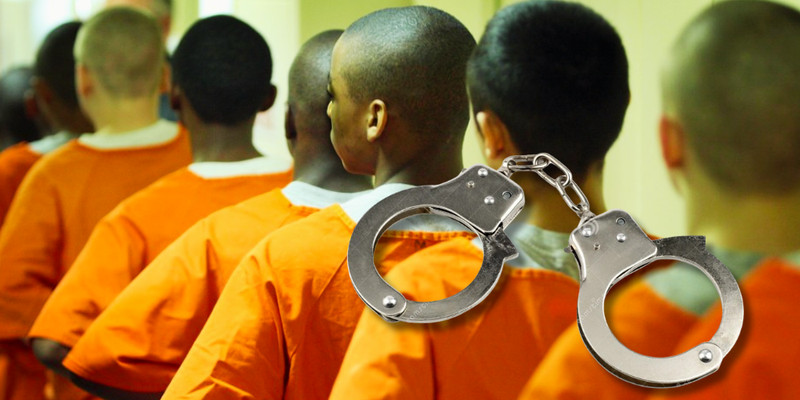
Due to their murderous actions, Robinson and Brewton received life sentences, while Atkins received a 40-year term (with a review after 25 years). The court gave Atkins a lighter sentence because of his age at the time of the killings and his willingness to testify.
While most people focus on the actions of the boys, I can’t help but also look at the people who raised (or didn’t raise) them to become takers in our society.
They were boys who thrived on robbing the innocent, taking what they didn’t earn themselves, and ultimately stealing the lives of children without regard for the destructive aftermath.
If a child is plotting and executing murders as a teenager, it is abundantly clear that the failure belongs to the parents, too.
In the interrogation footage for Robert Robinson, his mother repeatedly called him “N*gga” and “Motherf*cker” as if that’s how she speaks typically to him, and was more concerned with going back to work than standing by her child.
These boys mirrored a multitude of failures by one or both parents in their lives to teach them emotional regulation, to value their lives, and to give them a sense of purpose that doesn’t revolve around becoming neighborhood terrorists.
In a case where parents were held accountable, a Michigan court convicted Jennifer and James Crumbley, parents of the 15-year-old mass shooter Ethan Crumbley, on four counts of involuntary manslaughter, one for each child their son murdered. The two will serve 10 to 15 years for their son's crimes.
I’m not even sure if using the judicial system to punish parents with jail time for actions committed by their children is effective or would create a mountain of other unforeseen issues.
However, I believe we don’t need the government to hold a cultural standard of social shame when parents fail their children and withdraw from making excuses for their poor parenting prowess.
The culture surrounding parental criticism often involves making excuses for obviously flawed parents, using overly empathetic language to soften the blow aimed in their direction.
Unless a parent is directly involved in facilitating a crime, I don’t believe the judicial system should punish parents for actions committed by their children. Despite existing precedents, jailing parents as a typical response to negative child behavior would encourage more government intervention rather than promote genuine social change. The government cannot enforce a cultural standard of social shame when parents fail their children, or make excuses for their poor parenting prowess.
It’s not enough to blast the names and faces of child murderers on our television screens, but we should have equal amounts of scorn for the parents who failed them. Imagine a society that took parenting so seriously that we would know the names of the murderers as being synonymous with the adults who created these monsters—placing the murderer’s mugshot alongside their parents’ social media profile picture solely as a shaming tactic.
While the law wouldn’t prosecute them, they would be socially ostracized for grooming a neighborhood terrorist. If the parents of the victims have to live the rest of their lives suffering, why can’t the parents of the murderous tyrants who raised them? Throughout history, heinous activities and beliefs were deemed unacceptable not because of a lawmaker's pen, but because the people were fed up with the status quo.
Instead of stating where these parents fell short, we use phrases like “There is no manual for raising children” and “They did the best they could.” The uncomfortable truth is that your supposed best sometimes isn’t good enough, and by muttering this phrase, you are limiting yourself to your current “best” as a cop-out for improving yourself for the sake of your child.
If these boys were straight-A students and going to Ivy League schools, we’d intuitively assume that their parents were excellent and pivotal to their success. However, when these boys are incarcerated, we suppress our intuition and pretend not to understand who created these monsters to be more socially comfortable.
We are not only afraid of parental accountability for ourselves but for others because we all want the possibility of possessing these justifications if our children were to one day go awry.
Parental projection is the cause of over-rationalizing negative behavior, which is why you see so many seemingly well-adjusted adults cover up or avoid criticizing other parents. They’d never want to be on the receiving end of justified ridicule, so they defend others who deserve it as if it were themselves.
We can’t change what we aren’t willing to acknowledge, and until parents feel a sense of duty and responsibility for the successes or failures of their children, the problem will only get worse.