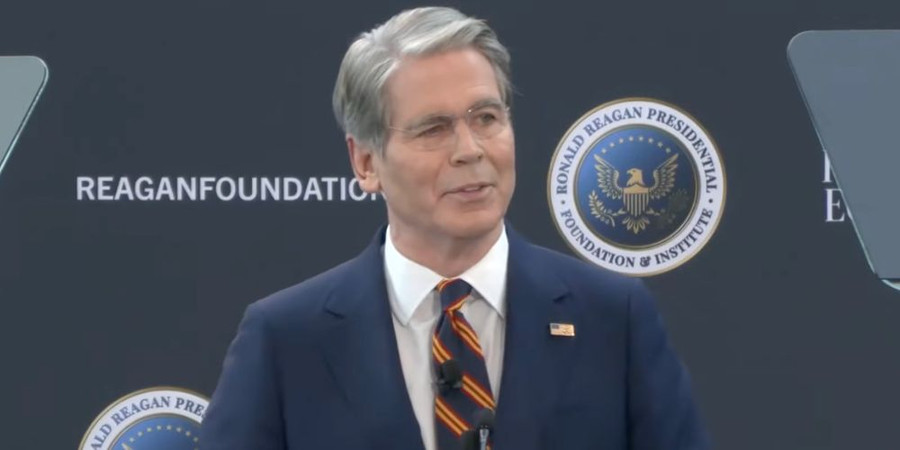
Sen. Marco Rubio’s chief disagreement with the Obama administration’s foreign policy strategy centers on its overreliance on global institutions to shape responses to unfolding events, before taking its own decisive action, he told an overflow audience at Brookings Institution Wednesday afternoon.
Rubio was warmly received by the audience, for a speech billed as a major foreign policy address by the freshman Republican and much-touted contender for the vice president spot on the GOP ticket for President. He is a member of the Senate Foreign Relations committee.
The Florida senator argued that America’s unique position of power and force for good in the world gave the nation the responsibility to intervene to bring military strength, humanitarian aid, economic measures, and even weapons to bear to combat instability and evil regimes.
“Why doesn’t someone else lead for a change? Why do we always have to be taking care of all the problems in the world? Isn’t it time for someone else to step up?” Rubio said of questions he is often asked. “I always begin my answer to that question with a question of my own. If we start doing less, who will start doing more? For example, would a world order where China, at least as we know it right now, was the leading power be as benignly disposed to the political and economic aspirations of other nations as we are?”
Among areas in need of decisive American involvement, Rubio said, are the tyrannical Assad regime in Syria, and Iran, where he said using military force to prevent the country from obtaining nuclear capabilities should remain an option.
“Ultimately, I think we need to be very clear,” Rubio said. “While we would prefer for negotiations to work and sanctions to convince them, the thought of Iran having a nuclear weapon is so horrifying that no option should be off the table.”
World powers that need to be held accountable, he said, include a China that counts close allies in North Korea and Iran and an “increasingly belligerent” Russia, who he said has returned little in exchange for nuclear weapons.
“In those instances, where the veto power of either China or Russia impede the world’s ability to deal with a significant threat, the U.S. will have to organize and lead coalitions with or without a [U.N.] Security Council resolution.”
Though Rubio took issue with his own party for preferring to turn inward and stay removed from international crises when U.S. intervention could make a difference, he also castigated the Obama administration for waiting on global partners when the nation should be taking decisive and unilateral action, now in Syria, and before in toppling a dictator in Libya.
“We did engage in Libya, we engaged pretty significantly,” he said. “...My argument is, if the U.S. had engaged more energetically, the job would have been done sooner.”
“Even now in Syria, I think the region is waiting for American leadership,” Rubio said. “The friends of Syria are real...you need the center of gravity to instigate this coalition and move it forward.”
Rubio did not address Afghanistan at length until he was asked, following the speech, about the conflict. The Florida senator said he was encouraged by improvements in training with Afghan special forces, but said the country would need an ongoing, though not indefinite American commitment, to prevent the nation from returning to Taliban control.
“It’s not quite clear what our commitment is,” Rubio said. “(The Afghan forces), they start hedging bets.”
In an introduction to Rubio’s speech, Sen. Joseph Lieberman (I-Conn.) praised the senator’s foreign policy as bipartisan and idealistic. “At moment when America faces serious challenges in America and throughout the world…Sen. Rubio brings to the public arena a contagious personal optimism,” Lieberman said.