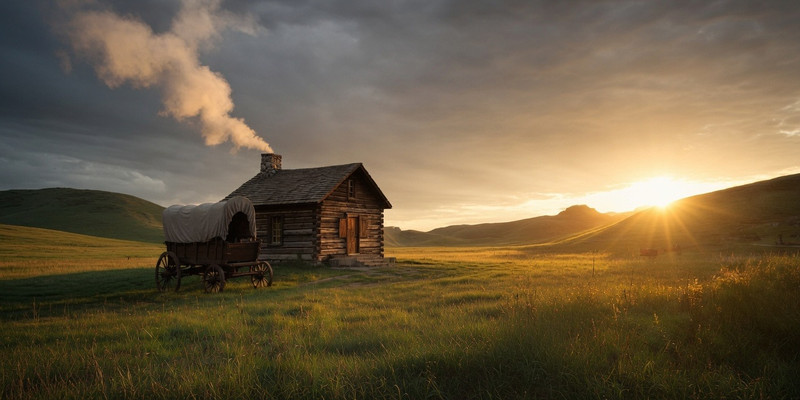

Netflix debuted its own reimagining of Little House on the Prairie this past week, with one season released all at once and a second already greenlit, just as Young Washington proved that audiences reward films that trust their source material, opening to $20.8 million and earning a sequel before the weekend even ended. Audiences are telling Hollywood what they want. Little House has a real chance to listen.
I'll admit I went into this new adaptation with negative bias. Showrunner Rebecca Sonnenshine has said she wanted to view this frontier classic through a new lens, one that doesn't fall back on tropes of masculinity. I'm not sure how that matches what's actually playing out on screen. In the first five minutes of episode one, Pa saves his family by getting the horses through the river. By episode four, a man is pressuring a shopkeeper to hand over medicine, trying to save the day with his own rugged resolve. Whether the show means to or not, masculinity keeps saving the day, the same trope Sonnenshine says she's avoiding.
Every adaptation of this story has carried its own lens. Wilder's daughter, Rose Wilder Lane, who helped shape her mother's original books into the series we know today, is considered one of the founding figures of the American libertarian movement. Sonnenshine's version isn't the first to shape Little House — it's simply the newest attempt.
The addition of an Osage family is the season's most uncertain thread. It's an interesting choice, and it will depend entirely on how the writers choose to tell it. Laura's smile at the end of episode two, watching the tribe walk by, left me weary rather than reassured. Episode three shows real conflict between Native characters trying to work within the new world and others trying to take what they believe settlers owe them, from a family with nothing left to give. The show doesn't shy away from the weight of that conflict either.
One thing genuinely missing so far is the Ingalls family's faith. The books were reserved about public displays of religion, but showed belief through action: daily prayer, church attendance, quiet devotion. So far, the only real mention is Charles helping build the church. It's telling that the first character in the entire series to actually say a prayer is a member of the Osage family, not an Ingalls.
In episode two, Jemma tells Caroline everything the women are doing to help build the town, adding, "we're even trying to get the vote." A few scenes later, when Caroline retells the conversation to Charles, she leaves out the suffrage comment entirely, perhaps a nod to Wilder's own real ambivalence on the subject. It's also worth noting that Jemma is the show's most status-obsessed, selfish woman, who turns Emily — a Black shop owner — away from her women's club under a flimsy excuse. Caroline, by contrast, raises her daughters with kindness and welcomes people others exclude.
It's a strange thing to watch a show hand its loudest political cause to its least likable character, while its most grounded, family-first woman gets none of the credit for holding the frontier together. Maybe I'm just riding the optimistic high of Young Washington, but there seem to be moments when the show might accidentally be telling the truth.
A woman is shown wearing trousers in episode three, and Laura remarks that she didn't know women could wear them. Laura has always been a tomboy in the books. She liked helping her father, while Mary favored their mother. It would be genuinely refreshing to see that played straight in 2026, a girl who prefers boots to dresses, without it being pulled into a bigger, modern statement about gender identity. Conservatives have spent years making the case that liking dirt and trousers doesn't require a label. If the show lets Laura be a tomboy and nothing more, it will have quietly proven a point the right has been making for years.
American myths are essential to the fabric of our nation. Washington never actually chopped down his father's cherry tree — the story existed to represent his true moral character. That is what American myths are meant to do. Little House on the Prairie has always functioned the same way, set between 1869 and 1885, about a hundred years after the Declaration of Independence was signed.
Seeing the real struggle of being a woman in the 1800s makes it clear how far things have come. Presenting the past as though it already looked like 2026 negates the entire premise. Hollywood keeps trying to remake old content and slap on fresh ideology, without realizing that it only causes the loyal audience to tear the remake apart. If they were really smart, they'd call it something else entirely. Then they might actually have a shot at building their own dedicated fanbase.
We got eight episodes right off the bat. Season two is already greenlit. Audiences have already told Hollywood what they want this summer. Little House still has time to listen.