MARK MECKLER: The Supreme Court just broke the Constitution—but the States can fix it
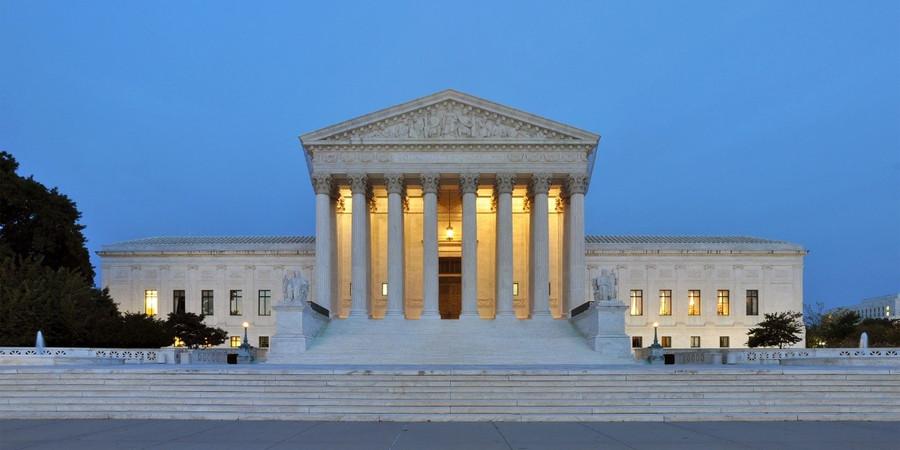
No contested history. No robes rewriting the compact. A bright-line rule set by the people, acting through their states. Photo: Joe Ravi CC-BY-SA 3.0
Five Lawyers, One Ruling, Zero Votes
On June 30, 2026, five unelected lawyers rewrote who belongs to America. In Trump v. Barbara, the Supreme Court struck down President Trump’s executive order on birthright citizenship and wrote into the Constitution a rule the American people never voted for: the child of every illegal alien present in violation of our laws, and every tourist who gives birth on our soil, becomes a citizen at the moment of their birth. This remains true if the child then returns to their home country and does not set foot back in the United States until they become an adult.
Understand what happened. Executive Order 14160, signed on the first day of President Trump’s second term, directed federal agencies, starting 30 days after the date of the order, to stop treating children born to parents unlawfully or temporarily present as citizens. The case made it's way to the Supreme Court where Chief Justice Roberts, joined by Justices Sotomayor, Kagan, Barrett, and Jackson, held that those children are “subject to the jurisdiction” of the United States and therefore citizens under the Fourteenth Amendment. The vote was 6-3. On the constitutional question, it was 5 to 3, with Justice Kavanaugh concurring only in the judgment.
That caveat matters, and I will come back to it. But first, the majority’s reasoning. Chief Justice Roberts read “subject to the jurisdiction thereof” to refer to anyone that our government can arrest and prosecute. By that logic, a tourist on a one-day visa is “subject to our jurisdiction,” so her baby, if born on that day, is an American. He leaned on English common law, a strained reading of United States v. Wong Kim Ark, and the ghost of Dred Scott.
Justice Jackson went further, calling the ruling an “anticaste” reset. Fine words. But dress it up however you like: five people in robes decided that citizenship — the most fundamental question a self-governing people can answer — is theirs to define and yours to accept. That is not law. That is rule by decree.
Roberts Was Wrong. Alito Was Right.
I say that as a lawyer who has spent fifteen years fighting for constitutional self-government. Roberts’s opinion is an ambitious history, and it is wrong.
Start with the men who wrote the Fourteenth Amendment. Senator Jacob Howard introduced the Citizenship Clause on the Senate floor and said it would “not, of course, include persons born in the United States who are foreigners, aliens, who belong to the families of ambassadors or foreign ministers.” Foreigners. Aliens. Read the words. Roberts pretends Howard meant only diplomats. He didn’t. He named a whole class — foreigners and aliens — and then gave one example of it. Senator Lyman Trumbull, the principal author of the Civil Rights Act of 1866, was blunter still: to be “subject to the jurisdiction,” he said, meant “not owing allegiance to anybody else,” a line Justice Alito quotes in dissent.
There are two kinds of jurisdiction, and the difference is the whole ballgame. There is territorial jurisdiction — the raw power to police anyone within our borders. And there is political jurisdiction — full allegiance, exclusive membership in the American community, no competing claim by any foreign king or Congress. Trumbull and Howard were clearly referring to the second. A baby born here to a British mother on a tourist visa is a British subject from the instant of birth. We do not own her allegiance. We never did.
Roberts’ reading collapses the category described in Senator Howard’s speech — and in doing so, it rewrites the meaning of the Fourteenth Amendment. The very fact that foreign diplomats are not entitled to birthright citizenship proves the point. They are not entitled to birthright citizenship because they “ow[e] allegiance to [some]body else.” But foreign nationals illegally present in our nation also owe allegiance to somebody else, the nation of their parents.
Then there is the precedent Roberts could not escape: Elk v. Wilkins. John Elk was born on American soil, left his tribe, lived among citizens, and submitted himself entirely to American law. And like all members of the Indian tribes, he was subject to the territorial jurisdiction of the United States. Even still, the Supreme Court held he was still not entitled to birthright citizenship because, like all members of the Indian tribes, he was born “ow[ing] immediate allegiance to [his] tribe.” The Elk Court said tribal Indians were no more “born in the United States and subject to the jurisdiction thereof” than “the children of subjects of any foreign government.” That is like the child of the Salvadoran national. That is like the child of the Chinese visa-holder. Same principle. Roberts waved Elk away. He never answered it.
And it does not save him. That 1898 case was narrow, and its own syllabus says so: it concerned a child of parents who had “a permanent domicil and residence in the United States.” The opinion, by its own terms, applied only to those whose parents had established a permanent domicile in the United States. People who had come to America with permission, made America their home, paid taxes, built a life, but not become citizens themselves. It did not decide — and did not come close to deciding — the case of a woman who broke our laws to sneak across our border two months before delivering a child. It did not decide the case of a Chinese national who comes to the United States on a tourist visa, delivers a child, brings that child back to China, and claims that child is a natural born U.S. citizen, eligible to run for President under our Constitution. Roberts stripped the word “domicile” out of a case built on it.
Justice Alito, in dissent, called the majority opinion “a serious mistake” that “produces grotesque results” and “preserves a powerful incentive to enter or remain in this country illegally.” He is correct. Under this ruling, a foreign national can fly here on a tourist visa for the express purpose of birthing a citizen, then fly home. This is not a hypothetical either, it is happening at an astonishing scale. At argument, Solicitor General John Sauer explained that “there are … 500 birth tourism companies in the People’s Republic of China whose business is to bring people here to give birth and return … to that nation.” According to one Senate Report, we don’t even have a process in place to track the number of people who enter the country for this purpose on tourist visas. Now, birth tourism will continue as a business model, blessed by the Supreme Court. That is not the American compact. The compact is consent. Citizenship is a chosen bond between a people and its government.
As the famous Justice Robert Jackson (no relation to the current, less esteemed, Justice Ketanji Brown Jackson) once explained, “[t]here is danger that, if the Court does not temper its doctrinaire logic with a little practical wisdom, it will convert the constitutional Bill of Rights into a suicide pact.” The Court risks doing that today, by holding that anyone who can successfully defy our laws and sneak across our borders can birth a citizen, and that a Chinese national, educated in schools controlled by the CCP and indoctrinated in the culture of our adversaries, can be a “natural born citizen” eligible to serve as President of the United States; provided only that his mother was vacationing in the United States when he was born.
Legislation Can’t Fix This. Only the States Can.
Now to Kavanaugh — and to the trap the Court has sprung.
Justice Kavanaugh refused to join the constitutional holding. He would have struck the order on narrow statutory grounds and told Congress it remains free to “enact new legislation establishing exceptions to birthright citizenship,” as his concurrence explains. Reassuring, on the surface. Read it again, and it is the opposite.
Here is the arithmetic. Five Justices have now declared that the Fourteenth Amendment itself forbids restricting birthright citizenship for the children of unlawful and temporary entrants. Kavanaugh’s invitation to Congress is a door that opens onto a wall. Pass a statute tomorrow, and it gets struck down the day after under Barbara. You cannot overturn a constitutional holding with a statute. While it is being suggested, the reality is that Congress is unlikely to have the spine, it has never worked, and it never will.
So take the fantasy off the table: Congress cannot fix this through legislation. The President already tried to fix it by Executive Order and lost. And the Court is not likely to overrule a precedent it only just issued. All three branches of the federal government are either complicit, powerless, or barred. That is the exact kind of dysfunction the Framers feared — a national government that has created a crisis it cannot, and will not, solve.
The Framers left us a key for exactly this lock. It is Article V. When the federal government will not restrain itself, the states can restrain it — by calling a convention to propose amendments, with no permission needed from Congress, the President, or the Court. That is the mission of Convention of States Action, the movement I co-founded. Our application rests on three subjects, and the second is the one Barbara was made for: limiting the power and jurisdiction of the federal government. A Convention of States can amend the Constitution to remove the Federal Government’s power to grant citizenship to the children of foreign nationals. When five judges seize the sole authority to define the American people, that is federal power run past every constitutional boundary.
To paraphrase the great Justice Scalia’s Obergefell dissent, “Understand well what this... is about[.] It is... about whether, in our democratic republic, th[is] decision should rest with the people acting through their elected representatives, or with five lawyers who happen to hold commissions authorizing them to resolve legal disputes according to law. The Constitution leaves no doubt about the answer.” This issue must be resolved by the people, and a Convention of States is the only way to bring about that resolution.
Twenty state legislatures have already passed our application. Fourteen to go.
A Call to the States
The amendment would not be complicated. In plain English, here is what it would do. It would prohibit the Federal Government from granting, or recognizing, the citizenship of any person whose parents both lacked United States Citizenship or Lawful Permanent Residency at the time of their birth.
If neither of your parent qualifies as a citizen or a Legal Permanent Resident, the Federal government would not automatically make you a citizen just because you happened to be born on U.S. soil — even if the Supreme Court previously said otherwise. The two decisions that said the opposite — Wong Kim Ark from 1898 and Trump v. Barbara from 2026 — would be overruled on this specific point. At the same time, everyone who already holds citizenship under the old rules would keep it. Neither the President nor a future Congress could rewrite the rules — no executive order, no statute, no judicial reinterpretation of vague constitutional language can hand out birthright citizenship, because this amendment deprives the Federal government of the authority to change that. And it becomes law only if 38 of 50 state legislatures ratify it.
That is it. Had this amendment been in force, Barbara would have been decided in a single sentence: neither class of children targeted by the order had a qualifying parent, so the Federal government lacked the power to make either a citizen at birth. No contested history. No robes rewriting the compact. A bright-line rule set by the people, acting through their states.
To every state legislator reading this: this is your moment. Article V is not a fantasy, and it is not a threat to the Constitution. It is the Constitution, the Framers’ own explicit remedy for a runaway national government. Five lawyers just proved why the Founder drafted it. Now do your job. Pass the application. Reclaim the power that was always yours. The states must act.
Related
More Politics