President Donald Trump revealed Wednesday that senior Iranian officials directly contacted him seeking an end to ongoing US military strikes, as Washington signaled additional attacks could be imminent if Tehran refuses to finalize a nuclear agreement.
According to Fox News chief foreign correspondent Trey Yingst, Trump disclosed the communication after a new round of US operations targeting Iranian military infrastructure. The president described the latest American strikes as "vicious" and "violent," telling Fox News that the operation involved 49 Tomahawk missiles alongside fighter aircraft targeting radar installations and air defense systems. The strikes reportedly hit locations roughly 40 miles outside Tehran as well as positions along Iran's southwestern coastline on the Persian Gulf.
Despite the outreach from Iranian officials, Trump indicated that military pressure would continue unless Tehran accepts a deal that permanently blocks it from obtaining nuclear weapons. “We'll bomb the sh*t out of them tomorrow,” Trump warned.
US Central Command (CENTCOM) confirmed Wednesday that American forces struck multiple Iranian military targets, including surveillance systems, communications infrastructure, and air defense capabilities. “U.S. Marine Corps, Air Force, and Navy assets fired precision munitions on Iranian targets that posed a threat to U.S. forces and international commercial ships transiting regional waters,” CENTCOM said. The command characterized the attacks as defensive measures responding to what it called Iran's continued aggression. “U.S. forces remain vigilant, lethal, and ready,” CENTCOM added.
Defense Secretary Pete Hegseth traveled to MacDill Air Force Base in Florida on Wednesday for meetings with CENTCOM leadership after visiting troops at Guantanamo Bay earlier in the day. During remarks to reporters, Hegseth signaled further military action was expected. "Central Command will be busy tonight because President [Donald J.] Trump said we will be hitting Iran hard, and we will be," Hegseth said. "Iran has a chance to make a good deal, a great deal, to codify what they said they've been willing to do — and they haven't been willing to do it."
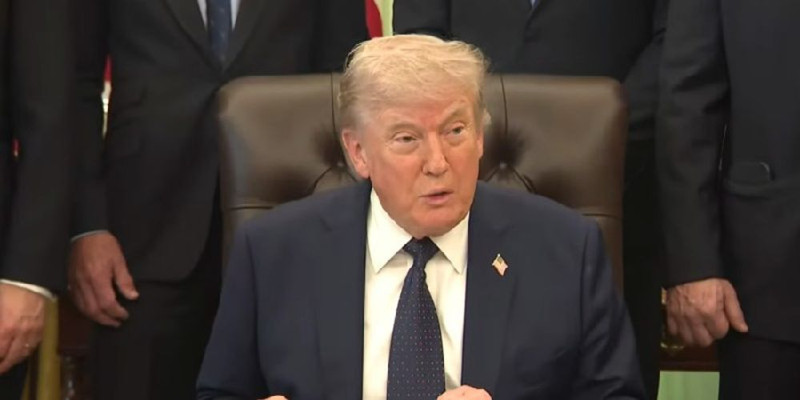
Speaking earlier at the White House, Trump argued that negotiations with Tehran have repeatedly stalled despite months of discussions. "I've been working with Iran for a number of months, and they should sign the deal," Trump said. "It's a good deal. It doesn't give them the right to have a nuclear weapon. In fact, it totally prohibits them from ever having a nuclear weapon."
The president also referenced the downing of a US AH-64 Apache helicopter near Oman earlier this week, noting that the crew was safely recovered. He vowed additional retaliation following earlier American strikes. "We hit them hard yesterday, and we're gonna hit them again hard today," Trump said. "We'll see what happens with the deal. We were really close to a deal. But they keep tapping us along. They keep playing us for suckers."
Hegseth credited CENTCOM's ongoing "Operation Epic Fury" with increasing pressure on Iran while maintaining that the administration's preferred outcome remains a negotiated agreement. "Adm. [Brad] Cooper and the team here at Centcom have done a phenomenal job from the beginning on Epic Fury, and through this blockade, ensuring that we have a chance to reach that end state — which is Iran will never have a nuclear weapon, which they say they don't want, and so since we're so close to that negotiated deal, if that's the case, they should step up and do it," Hegseth said.
The defense secretary also highlighted "Project Freedom," an operation launched in May to protect commercial shipping through the Strait of Hormuz and deter Iranian interference. "Project Freedom — the idea of running ships through the Strait of Hormuz — it never stopped, it just went underground," Hegseth said. "And so, there's some things the public knows, and some things the public doesn't know, but ultimately, we've been protecting commercial shipping going through the Strait of Hormuz."
According to Hegseth, US protection efforts have enabled roughly 100 million barrels of oil to move safely through the strategic waterway. "The United States of America controls the Strait of Hormuz," Hegseth said. "We're able to bring oil in and out and other things with partners and have done so now for weeks and weeks in ways the Iranians don't want to acknowledge. That's a powerful reality on the ground."
He concluded with a warning that Iran faces a choice between negotiation and further military escalation. "Iran has an opportunity to make a deal," Hegseth said. "That's the point. President Trump is a dealmaker — the best in the world. He's prepared to make that deal. Iran would be wise to take it. Otherwise, they would have to deal with the types of plans that I just had a chance to see inside Central Command."
According to Fox News chief foreign correspondent Trey Yingst, Trump disclosed the communication after a new round of US operations targeting Iranian military infrastructure. The president described the latest American strikes as "vicious" and "violent," telling Fox News that the operation involved 49 Tomahawk missiles alongside fighter aircraft targeting radar installations and air defense systems. The strikes reportedly hit locations roughly 40 miles outside Tehran as well as positions along Iran's southwestern coastline on the Persian Gulf.
Despite the outreach from Iranian officials, Trump indicated that military pressure would continue unless Tehran accepts a deal that permanently blocks it from obtaining nuclear weapons. “We'll bomb the sh*t out of them tomorrow,” Trump warned.
US Central Command (CENTCOM) confirmed Wednesday that American forces struck multiple Iranian military targets, including surveillance systems, communications infrastructure, and air defense capabilities. “U.S. Marine Corps, Air Force, and Navy assets fired precision munitions on Iranian targets that posed a threat to U.S. forces and international commercial ships transiting regional waters,” CENTCOM said. The command characterized the attacks as defensive measures responding to what it called Iran's continued aggression. “U.S. forces remain vigilant, lethal, and ready,” CENTCOM added.
Defense Secretary Pete Hegseth traveled to MacDill Air Force Base in Florida on Wednesday for meetings with CENTCOM leadership after visiting troops at Guantanamo Bay earlier in the day. During remarks to reporters, Hegseth signaled further military action was expected. "Central Command will be busy tonight because President [Donald J.] Trump said we will be hitting Iran hard, and we will be," Hegseth said. "Iran has a chance to make a good deal, a great deal, to codify what they said they've been willing to do — and they haven't been willing to do it."
Speaking earlier at the White House, Trump argued that negotiations with Tehran have repeatedly stalled despite months of discussions. "I've been working with Iran for a number of months, and they should sign the deal," Trump said. "It's a good deal. It doesn't give them the right to have a nuclear weapon. In fact, it totally prohibits them from ever having a nuclear weapon."
The president also referenced the downing of a US AH-64 Apache helicopter near Oman earlier this week, noting that the crew was safely recovered. He vowed additional retaliation following earlier American strikes. "We hit them hard yesterday, and we're gonna hit them again hard today," Trump said. "We'll see what happens with the deal. We were really close to a deal. But they keep tapping us along. They keep playing us for suckers."
Hegseth credited CENTCOM's ongoing "Operation Epic Fury" with increasing pressure on Iran while maintaining that the administration's preferred outcome remains a negotiated agreement. "Adm. [Brad] Cooper and the team here at Centcom have done a phenomenal job from the beginning on Epic Fury, and through this blockade, ensuring that we have a chance to reach that end state — which is Iran will never have a nuclear weapon, which they say they don't want, and so since we're so close to that negotiated deal, if that's the case, they should step up and do it," Hegseth said.
The defense secretary also highlighted "Project Freedom," an operation launched in May to protect commercial shipping through the Strait of Hormuz and deter Iranian interference. "Project Freedom — the idea of running ships through the Strait of Hormuz — it never stopped, it just went underground," Hegseth said. "And so, there's some things the public knows, and some things the public doesn't know, but ultimately, we've been protecting commercial shipping going through the Strait of Hormuz."
According to Hegseth, US protection efforts have enabled roughly 100 million barrels of oil to move safely through the strategic waterway. "The United States of America controls the Strait of Hormuz," Hegseth said. "We're able to bring oil in and out and other things with partners and have done so now for weeks and weeks in ways the Iranians don't want to acknowledge. That's a powerful reality on the ground."
He concluded with a warning that Iran faces a choice between negotiation and further military escalation. "Iran has an opportunity to make a deal," Hegseth said. "That's the point. President Trump is a dealmaker — the best in the world. He's prepared to make that deal. Iran would be wise to take it. Otherwise, they would have to deal with the types of plans that I just had a chance to see inside Central Command."