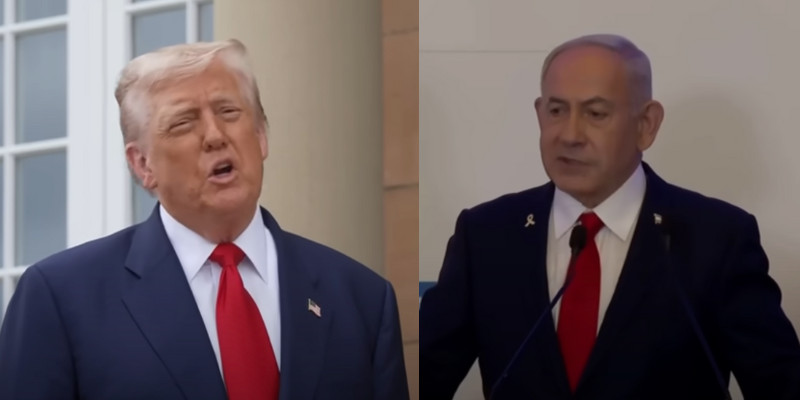

Israeli Prime Minister Benjamin Netanyahu said Sunday that Israel should begin phasing out American financial assistance over the next decade.
In an interview with CBS News’ 60 Minutes, Netanyahu linked declining American support for Israel directly to the rise of social media, which he described as a powerful force shaping public opinion against Israel during the wars in Gaza and across the Middle East. “I want to draw down to zero the American financial support,” Netanyahu said during the interview. “I think that it’s time that we weaned ourselves from the remaining military support.”
Israel currently receives roughly $3.8 billion annually in US military aid under a longstanding agreement that has historically enjoyed bipartisan backing in Washington. But Netanyahu suggested the political environment surrounding that support is rapidly changing. “Let’s start now and do it over the next decade,” he said. “I don’t want to wait for the next Congress. I want to start now.”
The remarks come as American public opinion toward Israel has shifted sharply during the ongoing war in Gaza and the broader regional conflict involving Iran and Iranian-backed militant groups.
According to a recent Pew survey cited during the interview, 60% of Americans now hold an unfavorable view of Israel, a nearly 20-point increase in just four years. Netanyahu blamed much of that shift on what he called the “eighth front” of the war: social media.
Holding up Major Garrett’s phone during the interview, Netanyahu warned about the ability of digital platforms to shape perception globally. “You can penetrate this machine,” Netanyahu said. “And I can paint you as a monster. And if I say it often enough, enough people will believe it.”
The Israeli leader argued that foreign governments and organized online campaigns have manipulated social media ecosystems to damage Israel’s image internationally. “We have several countries that basically manipulated social media,” Netanyahu said. “And they do it in a clever way. And that’s something that has hurt us badly.”
Throughout the interview, Netanyahu repeatedly returned to the idea that the battlefield now extends far beyond military operations. “Israel is besieged on the media front, on the propaganda front,” he said. “And we’ve not done well on the propaganda war.”
The comments reflect growing concern inside Israel over eroding support among younger Americans, particularly as images from Gaza circulate widely online. When Garrett noted that many younger Americans describe Israeli military operations in Gaza and Lebanon as “barbaric,” Netanyahu defended Israel’s conduct and argued the country has taken extraordinary steps to reduce civilian casualties. “Israel has gone to unbelievable lengths to get innocent civilians out of harm’s way,” Netanyahu said, citing mass text alerts, phone calls, leaflets, and evacuation warnings.
Still, he acknowledged that mistakes happen in war. “In war, armies sometimes miss, and civilians die,” Netanyahu said. “These are mistakes, these are not deliberate things that happen.”
Netanyahu’s proposal to phase out US financial assistance could mark a major shift in the US-Israel relationship. For decades, military aid has served not only as strategic support but as a symbol of the alliance between Washington and Jerusalem. The prime minister framed the move as part of Israel’s emergence as a regional technological and military power.
During the interview, he pointed to expanding economic and security relationships with Arab states, particularly in areas like artificial intelligence, energy, and advanced technology. “The degree of economic cooperation on energy, on AI, on quantum,” Netanyahu said, “the areas where Israel is so strong.”
The interview took place amid ongoing Israeli operations against Hezbollah in Lebanon and continued concerns over Iran’s nuclear program. Netanyahu insisted the conflict with Iran is “not over” and argued that Tehran’s remaining enriched uranium and nuclear infrastructure still must be dismantled.
On Sunday, President Donald Trump rejected Iran’s latest proposal to end the war. The president posted on Truth Social, “I have just read the response from Iran’s so-called “Representatives.” I don’t like it — TOTALLY UNACCEPTABLE!” According to Fox News, Iran’s response failed to address Washington’s demand for commitments regarding the rogue nation’s nuclear program and uranium reserves.
In an interview with CBS News’ 60 Minutes, Netanyahu linked declining American support for Israel directly to the rise of social media, which he described as a powerful force shaping public opinion against Israel during the wars in Gaza and across the Middle East. “I want to draw down to zero the American financial support,” Netanyahu said during the interview. “I think that it’s time that we weaned ourselves from the remaining military support.”
Israel currently receives roughly $3.8 billion annually in US military aid under a longstanding agreement that has historically enjoyed bipartisan backing in Washington. But Netanyahu suggested the political environment surrounding that support is rapidly changing. “Let’s start now and do it over the next decade,” he said. “I don’t want to wait for the next Congress. I want to start now.”
The remarks come as American public opinion toward Israel has shifted sharply during the ongoing war in Gaza and the broader regional conflict involving Iran and Iranian-backed militant groups.
According to a recent Pew survey cited during the interview, 60% of Americans now hold an unfavorable view of Israel, a nearly 20-point increase in just four years. Netanyahu blamed much of that shift on what he called the “eighth front” of the war: social media.
Holding up Major Garrett’s phone during the interview, Netanyahu warned about the ability of digital platforms to shape perception globally. “You can penetrate this machine,” Netanyahu said. “And I can paint you as a monster. And if I say it often enough, enough people will believe it.”
The Israeli leader argued that foreign governments and organized online campaigns have manipulated social media ecosystems to damage Israel’s image internationally. “We have several countries that basically manipulated social media,” Netanyahu said. “And they do it in a clever way. And that’s something that has hurt us badly.”
Throughout the interview, Netanyahu repeatedly returned to the idea that the battlefield now extends far beyond military operations. “Israel is besieged on the media front, on the propaganda front,” he said. “And we’ve not done well on the propaganda war.”
The comments reflect growing concern inside Israel over eroding support among younger Americans, particularly as images from Gaza circulate widely online. When Garrett noted that many younger Americans describe Israeli military operations in Gaza and Lebanon as “barbaric,” Netanyahu defended Israel’s conduct and argued the country has taken extraordinary steps to reduce civilian casualties. “Israel has gone to unbelievable lengths to get innocent civilians out of harm’s way,” Netanyahu said, citing mass text alerts, phone calls, leaflets, and evacuation warnings.
Still, he acknowledged that mistakes happen in war. “In war, armies sometimes miss, and civilians die,” Netanyahu said. “These are mistakes, these are not deliberate things that happen.”
Netanyahu’s proposal to phase out US financial assistance could mark a major shift in the US-Israel relationship. For decades, military aid has served not only as strategic support but as a symbol of the alliance between Washington and Jerusalem. The prime minister framed the move as part of Israel’s emergence as a regional technological and military power.
During the interview, he pointed to expanding economic and security relationships with Arab states, particularly in areas like artificial intelligence, energy, and advanced technology. “The degree of economic cooperation on energy, on AI, on quantum,” Netanyahu said, “the areas where Israel is so strong.”
The interview took place amid ongoing Israeli operations against Hezbollah in Lebanon and continued concerns over Iran’s nuclear program. Netanyahu insisted the conflict with Iran is “not over” and argued that Tehran’s remaining enriched uranium and nuclear infrastructure still must be dismantled.
On Sunday, President Donald Trump rejected Iran’s latest proposal to end the war. The president posted on Truth Social, “I have just read the response from Iran’s so-called “Representatives.” I don’t like it — TOTALLY UNACCEPTABLE!” According to Fox News, Iran’s response failed to address Washington’s demand for commitments regarding the rogue nation’s nuclear program and uranium reserves.