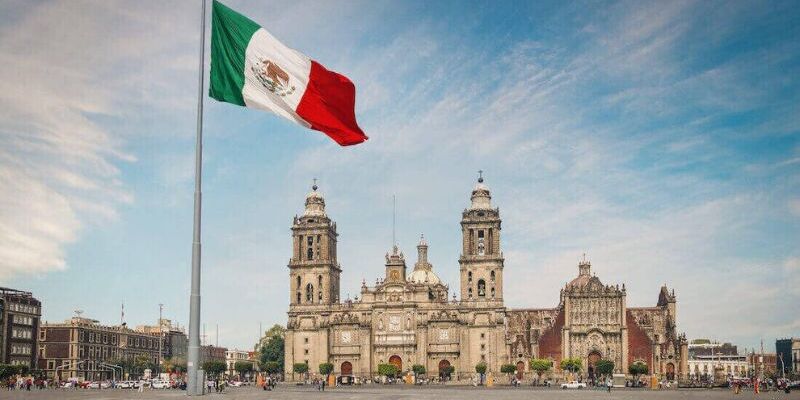

A nightclub in Mexico City is drawing widespread attention online after announcing a steep cover charge policy that requires US citizens to pay significantly more than other guests.
Club Japan, located in the city’s Roma Norte neighborhood, posted on Instagram that entry costs 5,000 pesos, or roughly $300, for Americans, while offering steep discounts to nearly everyone else. The policy quickly went viral, with the post receiving more than 26,000 likes and hundreds of comments, reports the Guardian.
In its announcement, the club wrote: “It’s not that ‘we charge gringos more’ it’s that we offer discounts to people that need it.” The post added, “The cover charge is $5,000 [pesos]. Citizens of the USA don’t get a discount.”
According to the pricing breakdown, citizens of countries other than the United States receive a 93 percent discount. Mexicans and other Latin Americans get 95 percent off, while students and teachers receive a 97 percent discount and pay 150 pesos.
Club owner Federico Crespo said the pricing structure was partly a response to tensions between Mexico and the US under President Donald Trump. “This is a response to a year of insults directed at us – as a country – by the United States,” Crespo said. “It’s very much a response to the many attacks against Mexico from Trump.”
He also said the club’s pricing model was meant to address local frustration over rising costs associated with foreign arrivals.
According to Crespo, the policy is also a response to “gentrification and touristification” in the Mexican capital, where neighborhoods such as Roma and Condesa have seen growing numbers of foreign residents and remote workers in recent years.
Mexico City experienced an influx of American visitors during the coronavirus pandemic as remote work policies allowed many to relocate temporarily or long-term. The trend contributed to rising rents, increased short-term rental activity, and changes in neighborhood demographics.
Last year, protests against gentrification broke out in the city, with demonstrators criticizing the growing presence of foreigners in high-demand districts. Some protests turned destructive, with reports of vandalism and anti-tourism graffiti.
Crespo said money collected from the higher American cover charges is redistributed to employees.
“It’s a way to give that money to the people most affected by this issue: rising rents, the soaring cost of living and the need to commute longer distances to get to work,” he said. “By giving the workers the money collected from cover charges, we help them out a little bit.”
Club Japan, located in the city’s Roma Norte neighborhood, posted on Instagram that entry costs 5,000 pesos, or roughly $300, for Americans, while offering steep discounts to nearly everyone else. The policy quickly went viral, with the post receiving more than 26,000 likes and hundreds of comments, reports the Guardian.
In its announcement, the club wrote: “It’s not that ‘we charge gringos more’ it’s that we offer discounts to people that need it.” The post added, “The cover charge is $5,000 [pesos]. Citizens of the USA don’t get a discount.”
According to the pricing breakdown, citizens of countries other than the United States receive a 93 percent discount. Mexicans and other Latin Americans get 95 percent off, while students and teachers receive a 97 percent discount and pay 150 pesos.
Club owner Federico Crespo said the pricing structure was partly a response to tensions between Mexico and the US under President Donald Trump. “This is a response to a year of insults directed at us – as a country – by the United States,” Crespo said. “It’s very much a response to the many attacks against Mexico from Trump.”
He also said the club’s pricing model was meant to address local frustration over rising costs associated with foreign arrivals.
According to Crespo, the policy is also a response to “gentrification and touristification” in the Mexican capital, where neighborhoods such as Roma and Condesa have seen growing numbers of foreign residents and remote workers in recent years.
Mexico City experienced an influx of American visitors during the coronavirus pandemic as remote work policies allowed many to relocate temporarily or long-term. The trend contributed to rising rents, increased short-term rental activity, and changes in neighborhood demographics.
Last year, protests against gentrification broke out in the city, with demonstrators criticizing the growing presence of foreigners in high-demand districts. Some protests turned destructive, with reports of vandalism and anti-tourism graffiti.
Crespo said money collected from the higher American cover charges is redistributed to employees.
“It’s a way to give that money to the people most affected by this issue: rising rents, the soaring cost of living and the need to commute longer distances to get to work,” he said. “By giving the workers the money collected from cover charges, we help them out a little bit.”