CHRISTIANE EMERY: Why do US public schools make accommodations for Ramadan but not Lent?
Public schools cannot claim separation of church and state while selectively accommodating religion when it aligns with progressive cultural preferences.
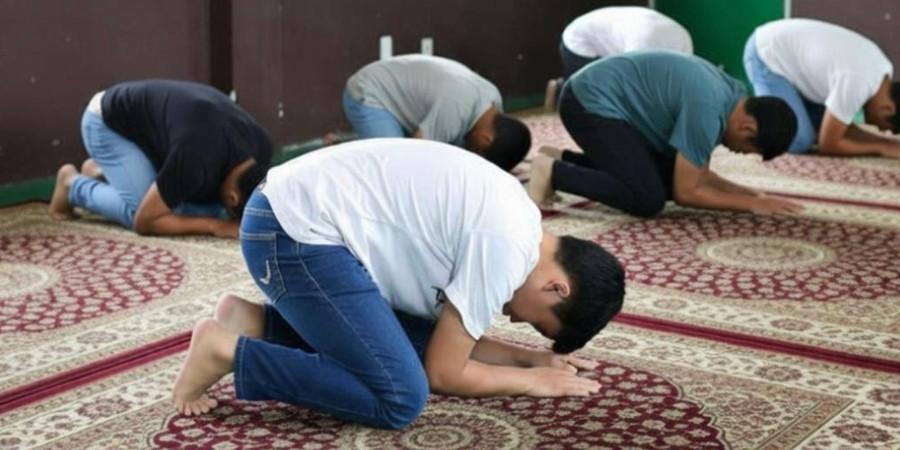
For the first time in roughly 80 years, Lent and Ramadan overlap. This concurrence has highlighted a disparity in how public schools acknowledge and accommodate religious observance.
As Ramadan begins, public schools across the country once again issue district-wide emails, adjust schedules, and provide accommodations designed to support Muslim students during a month of fasting and prayer. Meanwhile, Lent — a season of fasting, discipline, and spiritual reflection observed by millions of Catholic students — passes largely unacknowledged by administrations.
Public schools insist they are religiously neutral. But neutrality cannot mean accommodating religion when convenient and invoking "separation of church and state" when it is not.
Public schools cannot claim separation of church and state while selectively accommodating religion when it aligns with progressive cultural preferences. If schools truly want neutrality, it must be applied equally, not generously to Ramadan while Lent is ignored or quietly constrained. This is not about being anti-accommodation. It is about consistency, constitutional limits, and cultural honesty.
Teachers, parents, and administrators are instructed to "understand" Muslim students during Ramadan. They are asked to respect their students' observation by providing space for prayer and excusing lack of cognitive focus due to fasting. Schools establish prayer spaces and issue institutional guidance on supporting religious observance. Yet those same schools would reprimand a teacher for displaying a cross in the classroom.
You cannot claim separation of church and state while selectively mixing the two.
In some districts, schools provide take-home meal kits for students observing Ramadan. This goes beyond adjusting schedules; it involves taxpayer-funded support for a specific religious practice. At the same time, Catholic families observing Lent are expected to adapt quietly, even when the only food options a school provides violate their religious discipline. The same can be said of Jewish students during Passover.
Schools often cite studies suggesting that students fasting during Ramadan may experience fatigue and reduced cognitive focus by the end of the school day, and teachers are instructed to plan accordingly. Are public institutions teaching resilience and responsibility, or are they increasingly expected to bend around religious practices rather than remain neutral toward them?
If schools are willing to adjust expectations for Ramadan due to fasting-related fatigue, why are similar considerations not extended to Christian students during Lent or Jewish students during Passover?
Both Ramadan and Lent are deeply personal religious practices and should be respected as such. But it is worth noting that even within Islamic teaching, fasting during Ramadan is not mandatory for everyone. According to guidance from the Islamic Network Group, children, the elderly, and those who are ill, pregnant, or nursing are exempt from fasting. Participation is understood as a matter of personal capacity and conscience.
Lent, by contrast, carries no formal exemptions outlined by public institutions. It is a voluntary season of discipline embraced across age groups, without expectation of institutional adjustment. Yet public schools routinely bend policies, schedules, and resources for one observance while treating the other as invisible.
Respecting religious choice does not require schools to manage or mediate faith. It requires consistency, allowing students to practice their faith without the institution itself stepping in as facilitator for one belief system over another.
A parent in Prince William County, Virginia, wrote on X, "Same at my twins' middle school in Prince William County, Va. Schools set up dedicated prayer rooms & supervised times for Muslim students during Ramadan. But request the same for Christian prayer? Suddenly 'separation of church & state' kicks in."
On February 5th, 2026, the U.S. Department of Education reissued guidance on constitutionally protected prayer and religious expression in public elementary and secondary schools. The guidance outlines that schools must allow students to express and practice their religion so long as it does not infringe the rights of others and the school itself does not participate. Are the lines of participation being blurred when schools provide Ramadan meals, dedicated prayer rooms, or supervised prayer times?
For Christians, Lent is a 40-day season of prayer, fasting, and self-discipline commemorating Jesus Christ's time in the desert. For Muslims, Ramadan is a month dedicated to prayer, fasting, and spiritual renewal. Both traditions emphasize restraint, discipline, and spiritual reflection. Only one receives consistent institutional accommodation from public schools.
Public schools are not religious institutions. Private religious schools exist for families seeking faith-centered education. But public institutions still carry a constitutional obligation to treat religious expression equally, not selectively.
Selective accommodation is not neutrality. It is a preference. And when public schools decide which faiths are visible and which must remain silent, they are no longer upholding the First Amendment. They are reshaping culture under the guise of inclusion.
Related
More Faith & Family