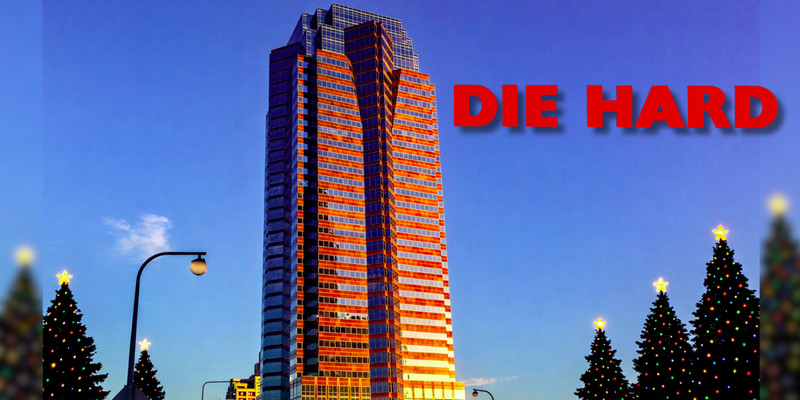

Every December, as reliably as eggnog and Mariah Carey, we re-litigate the same cultural question: Is Die Hard a Christmas movie?
The answer is yes. Not “yes, technically.” Not “yes, because it’s funny to say.” I mean yes in the way that matters, yes in the way that makes a movie a Christmas movie in the first place — because Christmas isn’t just the backdrop of Die Hard. Christmas is the engine that makes it run. If you strip Christmas out of Die Hard, you don’t get the same story. You don’t even get a story.
John McClane doesn’t fly to Los Angeles because he’s chasing bad guys. He goes because it’s the holidays, and he is trying to reconcile with his family, a true Christmas movie trope. This is the same story told in A Christmas Carol, Home Alone, and half of the Hallmark catalog, just with fewer carolers and more broken glass. By the way, did you just realize that Ms. Gennero's name is "Holly?"
Many characters in the movie, from Deputy Chief Dwayne T. Robinson to the utility workers in the street, note that the event takes place on Christmas. That’s why a random dude at the Nakatomi Christmas party will kiss another man and say, “Hey, Merry Christmas.” The movie even opens with Run DMC’s “Christmas in Hollis” until John McClane asks Argyle for some Christmas music. Of course, Argyle was going to say, “This is Christmas music.”
Exceptional thief/terrorist Hans Gruber even acknowledges the heist was planned on Christmas so that he could take the company employees hostage, resulting in the FBI cutting power to the building, so that the 7th lock would open, revealing the $640 million in negotiable bearer bonds, art and statues in the Nakatomi vault, allowing him and his men to sit on a beach “earning 20 percent.” When computer wiz Theo says the 7th lock is going to take a “miracle” to open, Hans replies, “Its Christmas Theo. It’s the time for miracles so be of good cheer.”
Christmas is essential to the plot. No Christmas, no Die Hard.
The entire crisis takes place because the Nakatomi corporation is hosting a Christmas party, the kind of corporate celebration where people wear ugly sweaters, drink too much, and pretend they like each other. The building is emptier than usual. Security is relaxed. People are distracted. John McClane is there to see his wife. It is precisely the kind of situation that makes a catastrophe possible.
Christmas isn’t just present. It’s structural, and the movie knows it.
The film is drenched in holiday iconography, from decorations and garlands to the constant presence of Christmas music, used not just to set the mood but to sharpen the irony. You don’t put “Christmas in Hollis” into the opening stretch of your movie if Christmas is incidental. You don’t lace your score with “Jingle Bells” tones if you don’t want audiences to feel the season in their bones. You don’t end your movie with “Let It Snow” unless you’re leaning into the tradition.
And then there’s that infamous moment, the one nobody forgets, the one that basically seals the case: A dead terrorist, propped up in a stool in an elevator, his feet smaller than John McClaine’s sisters, now bare (no not that bear), wearing a St Nick hat, on his sweatshirt, written in blood “Now I have a machine gun. Ho-ho-ho.”
And like every good Christmas movie, it gives us secondary redemption, too. Sergeant Al Powell is the emotional spine of the back half of the film. He’s a cop who carries shame and trauma, and who needs a win — not because the plot demands it, but because his spirit does. By the end, he finds his courage again. That’s the stuff Christmas movies are made of: ordinary people rediscovering something they lost.
Even the climactic imagery leans into the holiday language. When the paper rains down from the tower, it’s filmed like snowfall — a violent, corporate version of the magical Christmas-night ending. It’s the film’s own twisted “snow globe” moment: beautiful, chaotic, strangely joyful.
People argue against Die Hard being a Christmas movie by saying it isn’t about Santa, or that it’s an action film, or that Bruce Willis himself once said it isn’t a Christmas movie because it's “a f*cking Bruce Willis movie.”
But genre has never been the definition of a Christmas movie. Plenty of Christmas movies are romances. Plenty are comedies. Some are horrors (here’s looking at you, Gremlins). Some are tragedies. Some are animated. Some are musicals.
So no, calling Die Hard a Christmas movie isn’t a meme — it’s just accurate. What we’re really fighting about isn’t whether the film qualifies. It’s whether we’re allowed to admit that one of the most beloved Christmas movies ever made involves bleeding feet, Christmas packing tape, and Alan Rickman falling off a building.
If this is your definition of Christmas, you gotta be here for New Year's.
Merry Christmas. Now this Jew is going to eat Chinese food and watch Die Hard.
The answer is yes. Not “yes, technically.” Not “yes, because it’s funny to say.” I mean yes in the way that matters, yes in the way that makes a movie a Christmas movie in the first place — because Christmas isn’t just the backdrop of Die Hard. Christmas is the engine that makes it run. If you strip Christmas out of Die Hard, you don’t get the same story. You don’t even get a story.
John McClane doesn’t fly to Los Angeles because he’s chasing bad guys. He goes because it’s the holidays, and he is trying to reconcile with his family, a true Christmas movie trope. This is the same story told in A Christmas Carol, Home Alone, and half of the Hallmark catalog, just with fewer carolers and more broken glass. By the way, did you just realize that Ms. Gennero's name is "Holly?"
Many characters in the movie, from Deputy Chief Dwayne T. Robinson to the utility workers in the street, note that the event takes place on Christmas. That’s why a random dude at the Nakatomi Christmas party will kiss another man and say, “Hey, Merry Christmas.” The movie even opens with Run DMC’s “Christmas in Hollis” until John McClane asks Argyle for some Christmas music. Of course, Argyle was going to say, “This is Christmas music.”
Exceptional thief/terrorist Hans Gruber even acknowledges the heist was planned on Christmas so that he could take the company employees hostage, resulting in the FBI cutting power to the building, so that the 7th lock would open, revealing the $640 million in negotiable bearer bonds, art and statues in the Nakatomi vault, allowing him and his men to sit on a beach “earning 20 percent.” When computer wiz Theo says the 7th lock is going to take a “miracle” to open, Hans replies, “Its Christmas Theo. It’s the time for miracles so be of good cheer.”
Christmas is essential to the plot. No Christmas, no Die Hard.
The entire crisis takes place because the Nakatomi corporation is hosting a Christmas party, the kind of corporate celebration where people wear ugly sweaters, drink too much, and pretend they like each other. The building is emptier than usual. Security is relaxed. People are distracted. John McClane is there to see his wife. It is precisely the kind of situation that makes a catastrophe possible.
Christmas isn’t just present. It’s structural, and the movie knows it.
The film is drenched in holiday iconography, from decorations and garlands to the constant presence of Christmas music, used not just to set the mood but to sharpen the irony. You don’t put “Christmas in Hollis” into the opening stretch of your movie if Christmas is incidental. You don’t lace your score with “Jingle Bells” tones if you don’t want audiences to feel the season in their bones. You don’t end your movie with “Let It Snow” unless you’re leaning into the tradition.
And then there’s that infamous moment, the one nobody forgets, the one that basically seals the case: A dead terrorist, propped up in a stool in an elevator, his feet smaller than John McClaine’s sisters, now bare (no not that bear), wearing a St Nick hat, on his sweatshirt, written in blood “Now I have a machine gun. Ho-ho-ho.”
And like every good Christmas movie, it gives us secondary redemption, too. Sergeant Al Powell is the emotional spine of the back half of the film. He’s a cop who carries shame and trauma, and who needs a win — not because the plot demands it, but because his spirit does. By the end, he finds his courage again. That’s the stuff Christmas movies are made of: ordinary people rediscovering something they lost.
Even the climactic imagery leans into the holiday language. When the paper rains down from the tower, it’s filmed like snowfall — a violent, corporate version of the magical Christmas-night ending. It’s the film’s own twisted “snow globe” moment: beautiful, chaotic, strangely joyful.
People argue against Die Hard being a Christmas movie by saying it isn’t about Santa, or that it’s an action film, or that Bruce Willis himself once said it isn’t a Christmas movie because it's “a f*cking Bruce Willis movie.”
But genre has never been the definition of a Christmas movie. Plenty of Christmas movies are romances. Plenty are comedies. Some are horrors (here’s looking at you, Gremlins). Some are tragedies. Some are animated. Some are musicals.
So no, calling Die Hard a Christmas movie isn’t a meme — it’s just accurate. What we’re really fighting about isn’t whether the film qualifies. It’s whether we’re allowed to admit that one of the most beloved Christmas movies ever made involves bleeding feet, Christmas packing tape, and Alan Rickman falling off a building.
If this is your definition of Christmas, you gotta be here for New Year's.
Merry Christmas. Now this Jew is going to eat Chinese food and watch Die Hard.